

Archived: 26 September 2026
Abstract
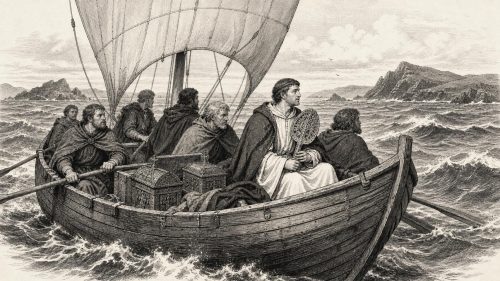
In 1079, Tairdelbach Ua Briain, king of Munster, demonstrated wide but negotiated power across Ireland. He campaigned through Dublin and Mide, where Máel Sechnaill submitted under the guarantee of Patrick’s successor and the Bachall Ísu, and intervened in Connacht, expelling Ruaidrí Ua Conchobair and plundering western districts. Regional warfare included cattle raiding and the assertion of authority at Carman’s assembly. Five Jewish visitors arrived by sea with gifts for Tairdelbach, the earliest recorded reference to Jews in Ireland, but were sent away. Deaths of church leaders and scholars highlighted Clonmacnoise, Armagh and learned networks linking a fragmented yet connected island.
Read Article
Archived: 26 September 2026
Abstract
In 1034, Ireland lacked an uncontested high king, as regional dynasties, churches and maritime networks shaped a fragmented political landscape. Donnchad mac Briain of Munster ravaged Osraige, challenging its ruler’s expanding Leinster authority, while Flaithbertach Ua Néill resumed control of Ailech after his son’s death. Killings and treachery destabilised Connacht, Brega, Tethba and neighbouring regions. Ecclesiastical losses included leading figures at Cork, Mungret and Clonmacnoise, and Kells’s lector drowned returning from Scotland with companions and relics. Amlaíb, Dublin’s royal pilgrim, was killed en route to Rome. Annals reveal elite conflict and religious connections, while rural communities bore warfare’s economic burdens.
Read Article