Local Government Act 1898

Roads Dispute

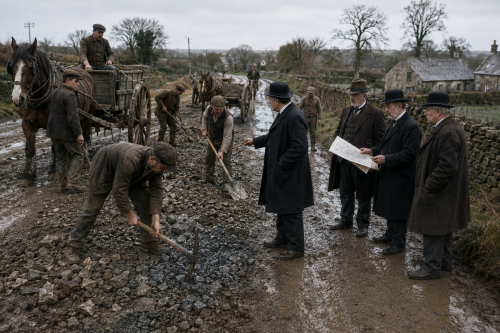
Arguments continued across County Limerick over whether public roads should be maintained through private contracts or by labourers employed directly under elected local authorities. The Munster News criticised what it regarded as Limerick County Council’s unsatisfactory handling of road tenders and the developing direct-labour question. The dispute followed the transfer of road administration from the Grand Jury system to the newly elected county and rural district councils. Councillors were now responsible for deciding how public money should be spent, who should receive employment and whether established contractors continued to offer the most economical and reliable method of keeping roads in repair.
Contracts Shortened

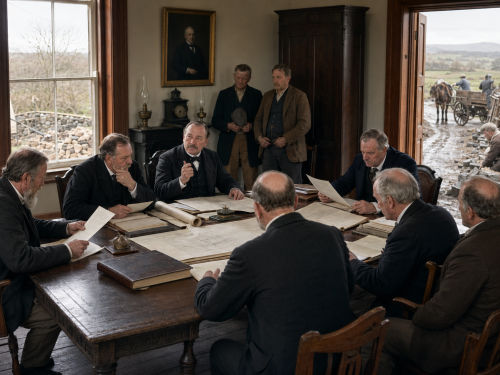
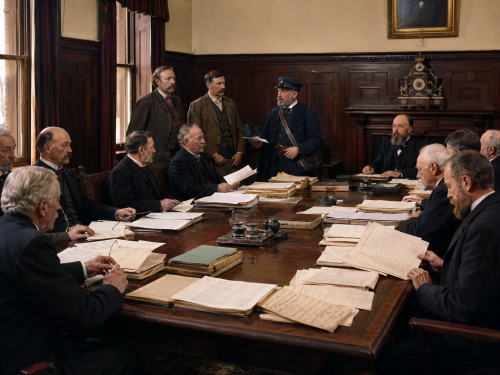
Limerick No. 1 District Council altered the system governing maintenance and repair contracts for public roads when members decided that future agreements would run for twelve months rather than the four-and-a-half-year term previously used. The decision followed an adjourned quarterly meeting held under the chairmanship of William Noonan and reported on 18 January 1900. Road tenders rejected at an earlier sitting had been referred to Limerick County Council, which declined to consider them and returned the entire question to the District Council. Members were therefore required to reconsider both the tenders and the basis upon which future road work would be awarded.

Claims Approved

The Treasury approved compensation claims submitted by two former deputy cess collectors whose employment had been affected by the transfer of local administration from the Grand Jury system. The decision, reported on 13 January 1900, reached Limerick County Council by telegram. Councillors had previously concluded that they possessed no legal authority under the Local Government (Ireland) Act of 1898 to compensate deputies who had not been formally appointed by the Grand Jury. The successful applicants therefore carried their cases beyond the Council, asking the Treasury to recognise the financial loss created when the older machinery of county taxation was replaced.

Labour Sanctioned

The Local Government Board approved Limerick County Council’s decision to undertake certain road works by direct labour where contractors had failed to tender. The ruling, reported on 5 January 1900, allowed the Council to place such roads under the County Surveyor and employ labourers without relying upon the customary contracting system. Approval did not introduce direct labour across every county road. It applied to works for which satisfactory private tenders had not been received, giving the newly established local authority a practical means of maintaining routes that might otherwise remain neglected.

Reunion Talks

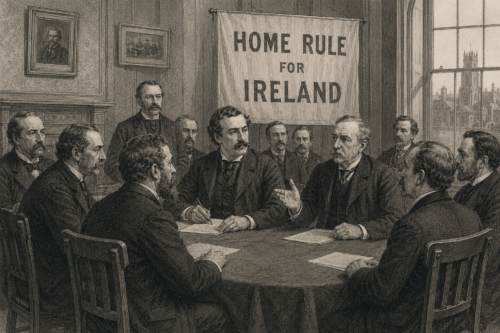
John Redmond’s Parnellite followers entered formal discussions with their former anti-Parnellite opponents as pressure mounted to end nearly a decade of nationalist division. Redmond had led the minority that remained loyal to Charles Stewart Parnell after the Irish Parliamentary Party split in December 1890. The larger anti-Parnellite body was principally associated with John Dillon, while Timothy Healy commanded another influential grouping. Their separate organisations had competed for authority, funds and electoral support throughout the 1890s, weakening the parliamentary movement and leaving constitutional nationalism without the concentrated leadership it had possessed under Parnell.

Now Sharing: Articles (154) Images (259) Total Items Archived (413)
Our Mission: 100,000 Items Total Percentage Achieved (0.41%)