

Related Archive: Public works

Hevey Institute and St Mel’s

Hevey Institute and St Mel’s

Archived: 10 October 2026

Abstract

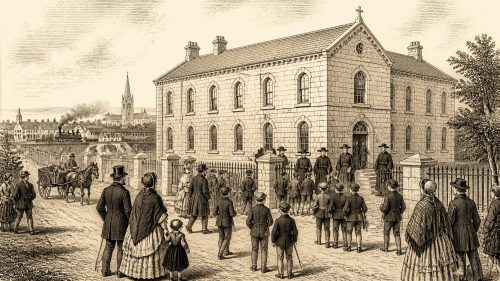
In 1856, post-Famine Ireland remained marked by depopulation, emigration, poverty and institutional reform. Poor Law debates addressed electoral fraud and the removal of destitute migrants from Britain, while estate sales and legislation on public works, drainage and valuation reshaped land, waterways and local taxation. St Mel’s Cathedral opened for worship in Longford, symbolising renewed Catholic confidence after construction halted during the Famine. Mullingar’s Hevey Institute combined charitable elementary schooling with classical education. In Dublin, Michael Henry Gill acquired McGlashan’s publishing business, while the murder of a railway cashier at Broadstone highlighted railway commerce. Reconstruction proceeded alongside continuing displacement and insecurity.
Read Article

The Labour Rate Winter

The Labour Rate Winter

Archived: 10 October 2026

Abstract

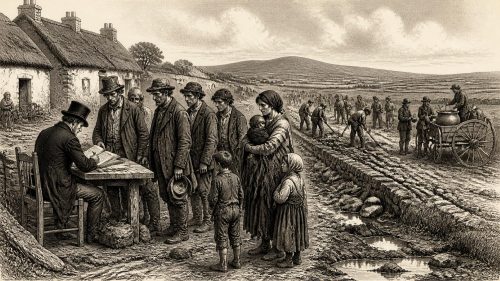
In 1846, a second, devastating potato blight transformed Ireland’s food crisis into catastrophe, destroying the staple relied upon by labourers, cottiers and smallholders. Although food continued to be produced and imported, poverty and rising prices denied many access. After Peel resigned, Russell’s government prioritised market supply and paid public works over direct food provision. The Labour Rate Act rapidly expanded employment schemes, but delayed wages, harsh outdoor labour, local debt and administrative failures deepened suffering and disease. Political division split the Repeal movement, while local and Quaker relief networks emerged. By winter, conditions had laid the foundations for Black ’47.

Read Article