Archived: 8 October 2026
Abstract
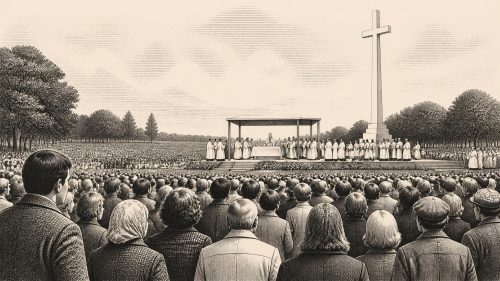
In 1979, Ireland confronted industrial disaster, political change, social reform, European integration and Troubles violence. The Betelgeuse explosion at Whiddy Island killed fifty people, exposing risks associated with oil trade. Ireland joined the European Monetary System, elected its first directly elected MEPs and hosted the European Council. Jack Lynch resigned, succeeded by Charles Haughey, whose cabinet included Máire Geoghegan-Quinn. Legislation established Údarás na Gaeltachta and cautiously legalised family planning. IRA attacks killed Lord Mountbatten and eighteen soldiers at Warrenpoint. Pope John Paul II’s visit, altered by security concerns, included an appeal for peace, encapsulating a modernising, divided and unsettled Ireland.
Read Article
Archived: 8 October 2026
Abstract
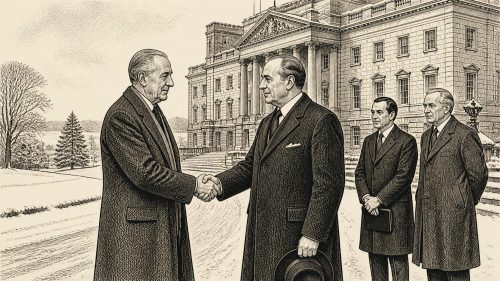
In 1965, Ireland cautiously embraced modernisation while enduring emigration, rural decline and cultural conservatism. Taoiseach Seán Lemass’s unprecedented Stormont meeting with Terence O’Neill opened limited North–South co-operation, followed by O’Neill’s Dublin visit. Casement’s repatriation symbolised improving Anglo-Irish relations. Fianna Fáil retained power in a television-covered election, while the Anglo-Irish Free Trade Area Agreement signalled departure from protectionism despite fears over employment. Legal reforms addressed land and inheritance; vernacular Mass and Galway Cathedral reflected changing Catholic life. Eurovision, the Young Scientist Exhibition and literary events demonstrated wider connections, although a newspaper strike and GAA restrictions exposed persistent constraints within Irish society.
Read Article
Archived: 10 October 2026
Abstract
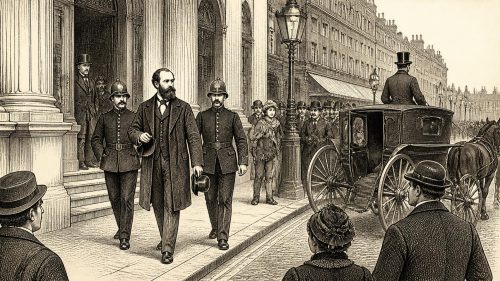
In 1881, Ireland’s Land War intensified as Gladstone’s government combined coercive detention powers with the Land Law (Ireland) Act. The Act advanced the Land League’s three Fs—fair rent, fixity of tenure and free sale—through judicial rents, security and protected tenant interests, but left arrears and ownership unresolved. Michael Davitt and Charles Stewart Parnell were imprisoned, while the Irish National Land League was suppressed after its No Rent Manifesto. Anna Parnell’s Ladies’ Land League organised relief and resistance. Census returns recorded continuing population decline and rural predominance. The year permanently weakened landlord authority while linking land reform, political protest and self-government.
Read Article
Archived: 10 October 2026
Abstract
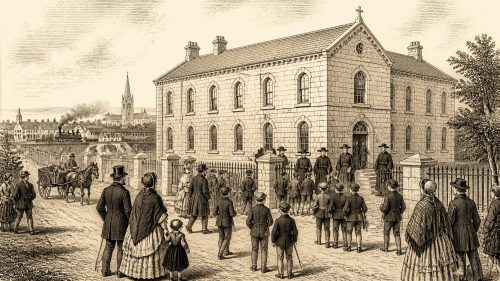
In 1856, post-Famine Ireland remained marked by depopulation, emigration, poverty and institutional reform. Poor Law debates addressed electoral fraud and the removal of destitute migrants from Britain, while estate sales and legislation on public works, drainage and valuation reshaped land, waterways and local taxation. St Mel’s Cathedral opened for worship in Longford, symbolising renewed Catholic confidence after construction halted during the Famine. Mullingar’s Hevey Institute combined charitable elementary schooling with classical education. In Dublin, Michael Henry Gill acquired McGlashan’s publishing business, while the murder of a railway cashier at Broadstone highlighted railway commerce. Reconstruction proceeded alongside continuing displacement and insecurity.
Read Article

Archived: 13 October 2026
Abstract
In 1723, Avoca in County Wicklow established a co-operative weaving mill where farmers brought wool for spinning, dyeing and weaving, alongside corn-grinding. Powered by the river and serving local households and mining communities, it illustrates rural adaptation despite restrictions on Irish woollen exports. Prolonged hot, dry weather brought relative agricultural stability, though drought posed risks. Ireland’s restricted Protestant Parliament considered revenue, manufacture, policing and trade. Wood’s English-minted copper coinage provoked anxieties over consent and commerce. Catholic Archbishop Bernard O’Gara’s appointment demonstrated institutional resilience under penal laws. Claims that Dr Steevens’ Hospital opened that year are unsupported; it opened in 1733.
Read Article
Archived: 14 October 2026
Abstract
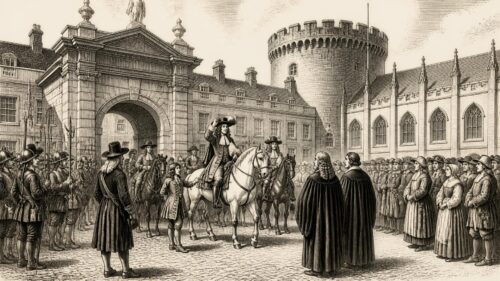
In 1677 James Butler, duke of Ormond, resumed the lord lieutenancy, succeeding Essex amid consequences of war, conquest and Restoration land settlement. His authority was constrained by control of revenue through Ranelagh’s undertaking, while his hoped-for parliament did not meet. Government addressed claims of 1649 royalist officers, currency regulation, night watches, local crime, fortifications and property disputes. Honours and ecclesiastical appointments reinforced Protestant authority, while Catholics remained restricted but not yet subject to later repression. Francis O’Molloy published the printed Irish grammar in Rome, exemplifying Catholic scholarship abroad. The deaths of Bellings, Lynch and Taaffe marked a passing political generation.
Read Article
Archived: 17 October 2026
Abstract
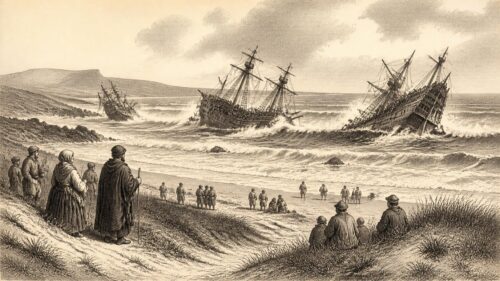
In 1588, remnants of Philip II’s Spanish Armada, driven around Scotland after defeat, wrecked along Ireland’s Atlantic and northern coasts. Survivors encountered drowning, plunder, shelter, negotiation and execution, depending on locality and political interest. Accounts by Francisco de Cuéllar, English officials and Irish annalists reveal perspectives. Lord Deputy William Fitzwilliam and Connacht president Richard Bingham feared Spanish aid to Irish resistance and ordered reprisals. Lords including Brian O’Rourke aided survivors, while others manoeuvred between Crown and Spanish interests. Fitzwilliam’s Connacht campaign linked shipwrecks to repression. Despite a plentiful harvest, 1588 deepened distrust, exposed authority, and heightened fears of Spanish intervention.
Read Article
Archived: 18 October 2026
Abstract
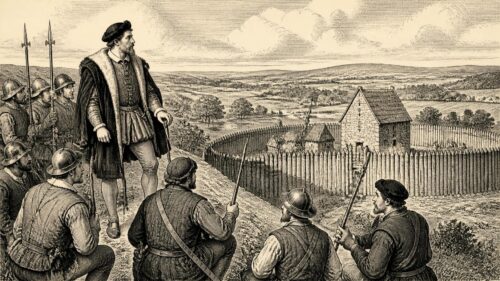
In 1533, Ireland was governed through competing crown, Gaelic and Anglo-Irish powers rather than uniform Dublin rule. Lord Deputy Gerald FitzGerald aided Ferganainm Ó Cearbhaill, capturing Shinrone Castle in Éile, yet a rival claimant soon emerged, exposing Geraldine dependence on alliances and rivalry with the Butlers. Annals record night seizures of Sligo and Ardnaree, punitive raids, executions and violent successions across Moylurg, Firceall and Clannaboy. These conflicts disrupted communities but lordship also rested on hospitality, learning, agriculture and church organisation. Kildare’s Dublin parliament regulated corn disputes within limited crown territory. Ireland remained Catholic, although Henry VIII’s changing position foreshadowed rupture.
Read Article
Archived: 18 October 2026
Abstract
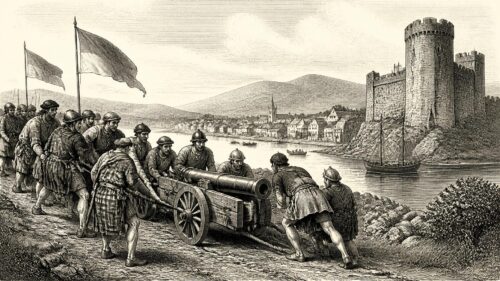
In 1516, Ireland was governed through overlapping royal, Gaelic and urban powers. As Henry VIII’s deputy, Kildare led a coalition that captured Leap Castle, secured hostages and imposed authority in the midlands. In the north-west, Manus O’Donnell obtained French-linked artillery after a pilgrim’s visit to Lough Derg, used it to take Sligo Castle, and later negotiated peace with O’Neill under Dublin’s mediation. Kildare’s Dublin parliament addressed markets, ports, taxation and defence. Religious life, travel and scholarship remained vital: friars drowned on Lough Erne, the Book of Fenagh was completed, and Desmond’s Gaelic lord died amid continuing regional warfare and connections.
Read Article

Archived: 19 October 2026
Abstract
During 1501, Ireland’s political life remained intensely regional despite Gerald FitzGerald, eighth earl of Kildare, serving as lord deputy. In Oriel, rival Mac Mahon branches fought, displacing opponents and causing significant deaths, while Maguire forces suffered heavily at Slieve Beagh. Rival O’Conor kinsmen captured Sligo castle by ladders, killing leading combatants. Churchman John Maguire and poet Donnell O’Higgin were commemorated for learning and hospitality. Edmund Burke was seized returning from pilgrimage to Spain and held for ransom. Finally, Turlough O’Brien of Thomond burned parts of Limerick and the Maigue plain, demonstrating warfare’s continuing economic and human impact throughout the island.
Read Article
Archived: 19 October 2026
Abstract
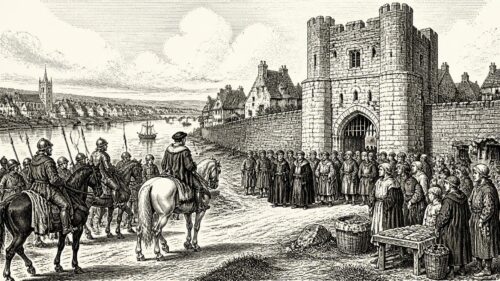
In 1494 Henry VII sent Sir Edward Poynings to Ireland to strengthen Tudor control, counter Yorkist support and reduce reliance on Gerald FitzGerald, earl of Kildare. Landing in October, Poynings led an Ulster expedition, securing submissions from O’Hanlon and Magennis, but relations with Kildare deteriorated. His Drogheda parliament, opened in December and continuing into 1495, began legislation, including the measure later called Poynings’ Law, restricting Irish parliamentary initiative. Elsewhere, regional lordships remained autonomous: dynastic killings, sieges around Sligo, conflicts in Fermanagh and Cavan, raiding and hostage-taking continued. Church, trade and daily life were shaped by warfare, contested authority and insecurity.
Read Article
Archived: 19 October 2026
Abstract
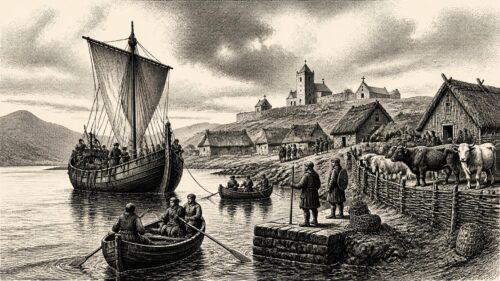
In 1478 Ireland experienced severe disruption from weather, disease and conflict. Annals describe a destructive Epiphany storm that damaged livestock, buildings, churches and Dublin windows, while Cormac MacCarthy was blinded during dynastic strife. A plague reportedly arrived by ship at Assaroe, spreading through north-western Ireland and causing deaths among nobles, clergy and learned families. Thomas FitzGerald’s death brought Gerald, later Gearóid Mór, to the Kildare earldom. In Connacht, contests for Sligo, Moylurg, Roscommon and Machaire Connacht involved sieges, devastation and changing lordships; Annaly saw partition after peace. Together, uneven records depict connected communities vulnerable to maritime disease, warfare and disaster.
Read Article
Archived: 19 October 2026
Abstract
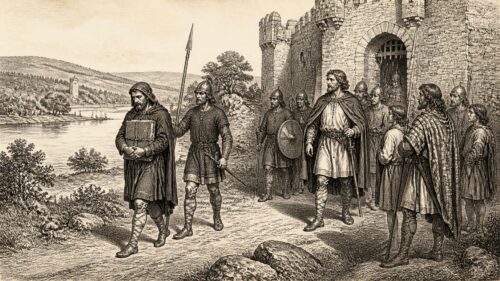
In 1470, Ireland remained politically fragmented, with the English lordship largely confined to the Pale while Gaelic and Gaelicised dynasties contested power through warfare, alliances, tribute and inauguration. Enrí Ó Néill campaigned in Clandeboye and faced internal rivalry; plague struck Fermanagh amid Maguire succession disputes. Aodh Ruadh Ó Domhnaill captured Sligo Castle, gained Lower Connacht’s submission and recovered Leabhar na hUidre and other dynastic treasures, though his Breifne intervention failed. Thomas FitzGerald became chief governor as parliament addressed local Pale concerns. John Ó Conchobair Kerry founded the Franciscan house at Lislaughtin there, illustrating lordly patronage alongside conflict and cultural prestige.
Read Article

Archived: 20 October 2026
Abstract
In 1445, Ireland’s fragmented political order was exposed by the burning of Sligo, attacked by O’Donnell, Maguire and discontented Ó Conchobhair kinsmen opposing Toirdhealbhach Carrach. Dynastic disputes also destabilised Annaly and West Breifne, where contested lordships prompted warfare, division or rival proclamations. Other annals record killings during raiding and travel, revealing pervasive local feud. English authority remained limited: John Talbot’s appointment as lieutenant did not bring immediate control, while Gaelic lords used written diplomacy and ecclesiastical seals. Irish nobles travelled to Santiago, clerics were commemorated, and Athenry’s Dominican friary housed thirty members, demonstrating religious networks amid conflict and political negotiation.
Read Article
Archived: 20 October 2026
Abstract
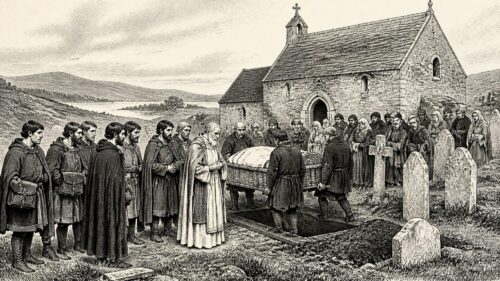
Annals for 1441 chiefly record deaths that exposed the importance of Ireland’s learned, ecclesiastical and lordly networks. Mailin mac Tanaide Ó Maolconaire, eminent historian and ollamh of Síol Muireadaigh, died in mid-February and was honourably buried at Cluain Coirpthe; other scholars, poets and churchmen also died. Conchobar Mac Donnchada, lord of Tír Oilella and patron of poets, was among them. Regional conflict continued through Mag Samradhain feuding, Maguire raids in Fermanagh, and Mac William Uachtarach’s capture of Ó Madden’s Shannon castle. Ecclesiastical offices linked kin, land and learning, while English administration remained significant chiefly in eastern Ireland during this year.
Read Article
Archived: 20 October 2026
Abstract
In 1439, Irish politics were shaped by local struggles over captives, castles, succession and recognition. Domhnall Ballach Maguire seized Tomás Óg Maguire at Enniskillen, securing his release only through hostages and control of the castle. Niall Garbh Ó Domhnaill died in English captivity, enabling Neachtan’s succession in Tír Chonaill, although sources dispute where he died. Cathal Ó Conchobair’s death triggered competing claims to Connacht’s kingship and warfare. Dublin suffered plague, while lordship changed through Donnchadh Dubh Ó hEadhra’s religious profession. A reported English deputy’s capture further illustrates fragmented authority, negotiated power and connections across Ireland and the Irish Sea alike.
Read Article
Archived: 20 October 2026
Abstract
In 1421, Irish annals recorded interlocking conflicts, successions and deaths across Connacht, Breifne, Fermanagh, Offaly, Ulster and Munster. Ruaidhrí Mac Diarmata’s death brought Tomaltach’s contested succession in Moylurg, while Murchadh Ó Conchobhair’s death preceded Calbhach’s accession in Uí Fhailghe. Ó Ruairc, allied with Ó Domhnaill and Mag Uidhir, campaigned destructively against Clann Donnchadha; retaliation damaged Ó Ruairc’s residence before peace followed. Cathal Ó Ruairc seized Inis Caoin on Lough Melvin through garrison betrayal, capturing its lord and castle. Notices also commemorated bishops, nobles, Mór Mumhan, and historian Gilla Riabhach Ó Cléirigh, revealing ideals of hospitality, piety, learning and martial defence.
Read Article
Archived: 21 October 2026
Abstract
During 1418, Ireland’s fragmented landscape was shaped by dynastic deaths, raids, fortification and scholarship. In Breifne, the deaths of Tigernán Mór Ó Ruairc, his heir Eógan, and East Breifne’s Risderd Ó Raigillig triggered contested successions; Risderd and his household drowned in Lough Sheelin. At Roscommon, Uilliam Ó Cellaig built a castle opposite the stronghold, resisting an Ó Conchobair-led siege. A royal council met at Naas, while Furnival’s raids in Iveagh met resistance and northern conflict involved Ó Domnaill and Ó Néill. Connacht saw cattle raids and violence. Meanwhile, the Great Book of Lecan neared completion, demonstrating scholarly patronage amid warfare.
Read Article
Archived: 21 October 2026
Abstract
In 1416, Ireland remained divided among Gaelic rulers, Anglo-Irish magnates and the Dublin-centred English lordship. Art Mór MacMurrough defeated Wexford’s English settlers, securing booty and hostages in a peace settlement, while alliances involving Talbots and Butlers complicated ethnic divisions. Annals record his death in 1416, though conflicting evidence places it in 1417, creating uncertainty over succession. Raids, feuds and battles affected Connacht, Breifne and Fermanagh. Friar Brian Mac Donnchadha rebuilt Sligo’s Dominican monastery after fire. Another blaze on Church Island destroyed books, precious objects and instruments, illustrating losses to Gaelic learning. Church offices and legal expertise nevertheless endured amid violence.
Read Article
Archived: 21 October 2026
Abstract
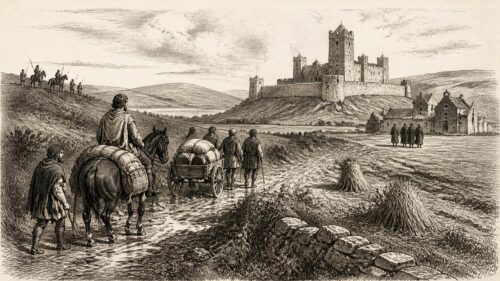
The most sharply dated Irish event of 1409 came in Connacht on the Monday after Michaelmas, the feast of St Michael on 29 September. A relieving force fought its way to the besieged castle of Roscommon with food and stores. The annalists regarded the operation as exceptionally daring. It was not a campaign of a unitary Irish kingdom, nor a clash simply between ‘Irish’ and ‘English’. It was a regional struggle among Gaelic dynasties and their allies, conducted around a formidable castle whose survival depended upon grain, supplies, mounted men and dependable political partnerships.Elsewhere, the year exposed the limited reach
Read Article
Archived: 21 October 2026
Abstract
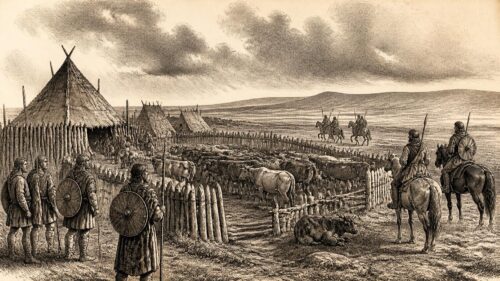
In 1397, Irish politics centred on rival lordships, notably Connacht’s struggle between Ó Conchobhair Donn and Ó Conchobhair Ruadh. Mac Donnchadha’s cattle-bearing camp at Cenn-eitigh was surprised and destroyed in mid-August, prompting retaliatory raids, new alliances and further gallowglass warfare. Conflict devastated crops, houses and herds amid summer food scarcity and a wet, destructive autumn. In Ulster, Niall Mór Ó Néill died and was succeeded by Niall Óg, who inherited continuing struggles. Roger Mortimer sought authority in Leinster and the midlands, building Finnea castle. Ecclesiastical deaths and journeys to Rome reflected enduring religious connections despite widespread instability across the island.
Read Article

Archived: 21 October 2026
Abstract
In 1386, Irish annals recorded local conflicts, raids and settlements rather than a single national event. Domnall Ó Conchobair’s coalition devastated Mac Wattin Barrett territory in Tirawley, killing leaders, taking a castle and destroying orchards. Connacht warfare shifted rapidly between raiding, pursuit, victory and negotiated peace among competing dynasties. Art Mór Mac Murchadha defeated the English of Ossory, while Midland feuds involved killings, castle seizures and hostage-taking. Richard II created Robert de Vere duke of Ireland, though he never visited; administration continued through deputies and chancery. Elite deaths and burials also marked status, kinship and lordship across a fragmented island.
Read Article
Archived: 22 October 2026
Abstract
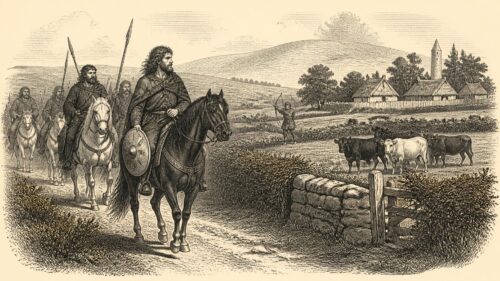
In 1371, Ireland remained politically fragmented, with royal, urban, Anglo-Irish, Gaelic and ecclesiastical authorities competing through law, warfare, patronage and local alliances. Dublin successfully petitioned Edward III against exactions imposed by lieutenant William de Windsor. In Ormond, Murchadh Ó Madden was killed by an exceptional arrow-shot, while Brian Ó Cennétig died amid regional conflict. Tadhg Óg Ó Conchobair was murdered after captivity in Sligo Castle. Annals associate Domhnall Ó Dubhda with capturing north Connacht castles and redistributing land. Archbishop John Ó Gráda died, plague claimed musician Amlaim Mac Senaig, and obituaries stressed hospitality, learning, patronage and genealogical memory across Ireland.
Read Article
Archived: 24 October 2026
Abstract
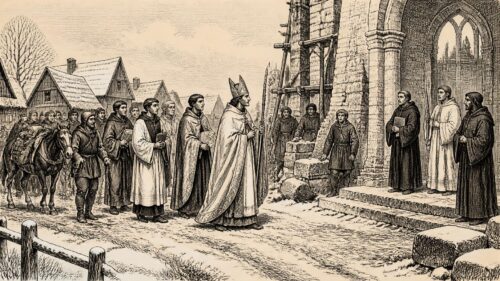
In 1312, ecclesiastical and governmental transitions highlighted tensions within Ireland’s lordship. William de Bermingham’s death created a vacancy at Tuam, where Máel Sechlain Mac Áeda, formerly bishop of Elphin, was formally translated on 19 December, strengthening Gaelic representation in a major metropolitan see. Religious life continued through developments at Boyle and episcopal deaths in Connacht. In Louth, a de Verdon rising defeated royal forces near Ardee, exposing fragile crown authority. Edmund Butler replaced John Wogan as keeper in August and administered Dublin while campaigning in Wicklow. These institutional changes preceded, but did not initiate, the crises of 1315 and afterwards.
Read Article
Archived: 24 October 2026
Abstract
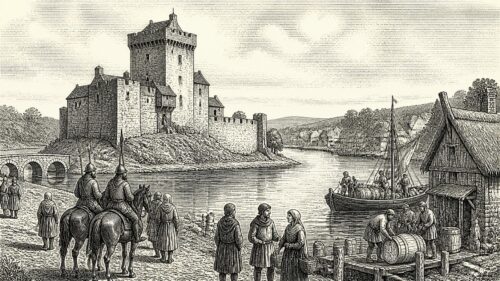
In 1310, Ireland remained politically fragmented despite Edward II’s lordship. At Kilkenny Parliament, John Wogan, Richard de Burgh and church leaders addressed disorder, revealing reliance on powerful magnates. In Connacht, Aed Brefnech Ó Conchobair’s destructive campaign against Mac Diarmata included killings, capture and burning; his allies then sacked Buninna Castle. Aed was subsequently murdered by mercenaries, allegedly bribed by William de Burgh, whose soldiers imposed oppressive quartering. Feidlim Ó Conchobair emerged as king of Connacht. Richard rebuilt Sligo Castle, asserting contested authority. The year also saw scholar Tanaide Ó Maelchonaire’s death, wine landing in Magh Cétné, and violence across Ireland.
Read Article

Archived: 24 October 2026
Abstract
In 1300, construction began at Ballymote Castle in County Sligo, probably under Richard de Burgh, the Red Earl of Ulster and lord of Connacht. The fortress signalled and supported de Burgh influence in contested Corran, though Gaelic and settler powers remained varied and interconnected. Annalistic notices associate deaths in the earl’s household with this period, highlighting succession’s importance, but dating is uncertain. Meanwhile, justiciar John Wogan ordered provisions from Irish ports for Edward I’s Scottish war. Castle-building, royal requisitioning, trade, labour, religious institutions, and local violence reveal Ireland as a politically fragmented yet increasingly interconnected island within wider overseas affairs.
Read Article

Archived: 24 October 2026
Abstract
In 1294 Richard de Burgh, the Red Earl of Ulster and lord of Connacht, was captured by John fitz Thomas FitzGerald and imprisoned at Lea Castle, intensifying a wider struggle for power in Connacht. Sligo Castle was destroyed amid rival campaigns, while killings, raids and disputed successions destabilised Gaelic lordships. FitzGerald and de Bermingham forces devastated Connacht but failed to secure lasting control. Deaths and successions affected regional dynasties, ecclesiastical offices and political marriages. Bad weather and harvest failure began a three-year dearth, compounded by warfare. Property transactions continued, revealing authority divided among crown, magnates, kings, chiefs and local institutions.
Read Article
Archived: 24 October 2026
Abstract
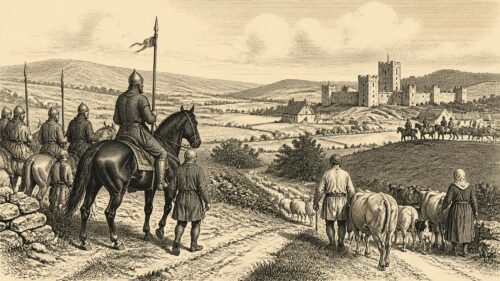
In 1292, Richard de Burgh, earl of Ulster and lord of Connacht, sought to enforce authority through campaigning, negotiation and violence. His advance to Roscommon failed to secure hostages from Magnus Ó Conchobair, but Magnus later submitted at Meelick and gained concessions. De Burgh’s raid on Leyney devastated resources without securing Domnall Ó hEgra’s obedience, while Mac Cochlain of Delvin was killed on his orders. Dynastic deaths further unsettled Connacht. In the south, Edward I settled Thomas fitz Maurice FitzGerald’s inheritance, regranting Decies, Desmond and Dungarvan under revised terms. These events exposed Crown authority’s dependence on continually unstable local agreements.
Read Article
Archived: 25 October 2026
Abstract
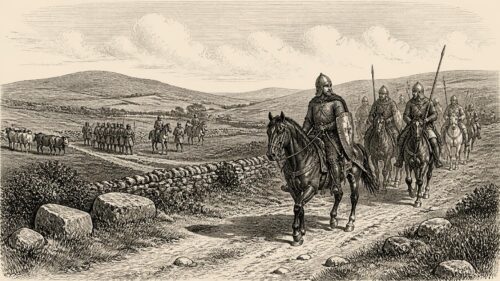
In 1273, Irish authority remained fragmented among royal officials, settler magnates and Gaelic dynasties. Jordan d’Exeter’s raid in Corann provoked a failed Connacht pursuit, killing several members of ruling and learned families. Elsewhere, Conchobar Buidhe Ó Ruairc of Brefne and Eochaid Mac Mathghamhna of Oriel were killed, while expulsions altered power in western Connacht. Maurice FitzGerald’s expedition into Thomond obtained O’Brien hostages and submission, though not lasting conquest. Geoffrey de Geneville arrived as justiciar, strengthening royal administration without eliminating regional independence. Richard de Carew died, and a Barry charter granted Cahirduggan church to Ballybeg Priory, illustrating ecclesiastical patronage amid warfare.
Read Article
Archived: 25 October 2026
Abstract
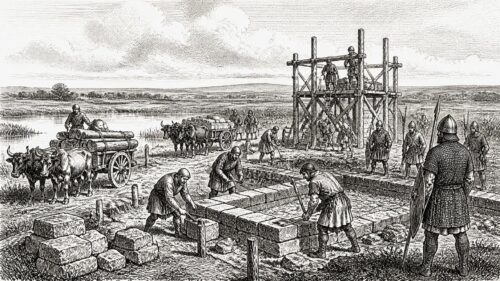
In 1269 Robert de Ufford, the English crown’s justiciar, began Roscommon Castle while Áed Ó Conchobair, king of Connacht, was ill, exploiting a temporary weakness to establish a durable royal foothold. The project disrupted local people and intensified Anglo-Irish pressure within Ó Conchobair territory, although it did not signify Connacht’s conquest. Sligo Castle’s rebuilding by Mac Muiris Mac Gerailt similarly demonstrated contested frontier control. Religious life featured Imar Ó Birn’s entry into Roscommon’s Dominican priory and aristocratic patronage. Annals also noted killings, the death of musician Áed Ó Finn, and uncertain reports of an earthquake and weather, requiring cautious chronology.
Read Article





