
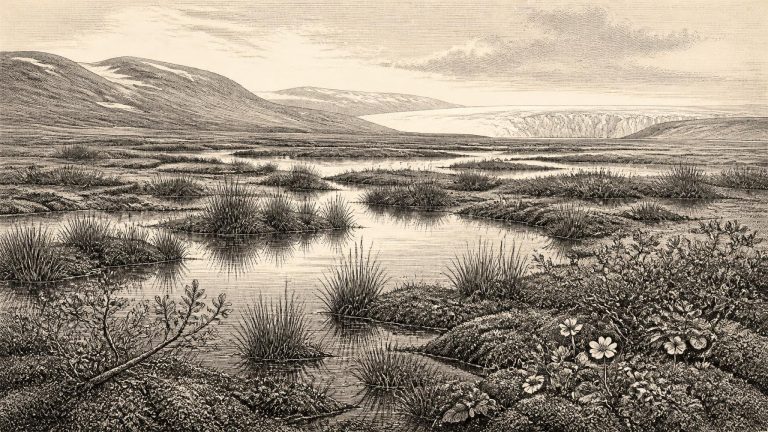
BIRM-166’s Sedge Marsh
Derryvree matters because roadworks in 1969 exposed a remarkably ordered sequence through a drumlin. Beneath lay till, the stony, unsorted debris deposited by glacier ice. Above it were fine sands, freshwater silts and organic-rich layers. A second till sealed the deposit. This was not a village site, but it preserves a local environmental sequence with an unusually clear message: ice had occupied the district; later, open water and wet ground persisted long enough for sediments, plants and insects to accumulate; eventually another glacial advance buried that landscape. The finding does not prove that all Ireland was ice-free at once. It does show that the island’s last-glacial history was episodic and regionally varied, rather than a simple uninterrupted white expanse.