Membership is completely free, giving members unlimited access to all available resources, services, features, and benefits without any restrictions or fees.
Welcome back. Sign in to continue enjoying unlimited access to all available resources, services, features, and member benefits at no cost.
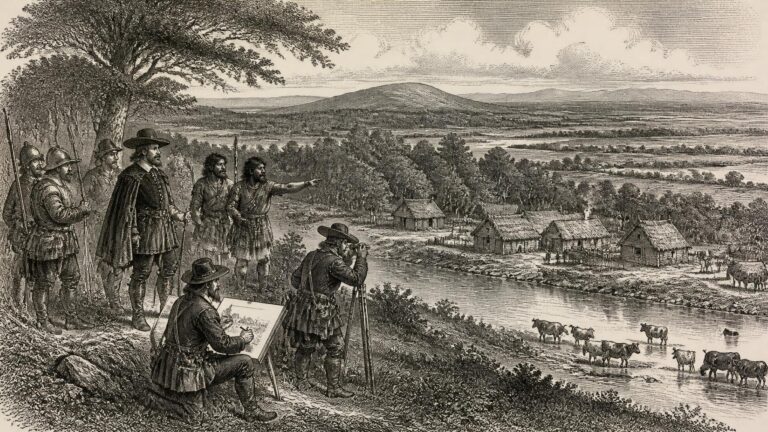
The central development was the 1609 survey of the escheated lands of Ulster, conventionally associated with Sir Josias Bodley. The Crown claimed extensive rights over territories formerly dominated by the great Gaelic lordships of the O’Neills and O’Donnells and by associated families. The project concentrated on six counties: Armagh, Cavan, Coleraine, Donegal, Fermanagh and Tyrone. This was not the whole province. Antrim and Down, where Scottish settlement and private arrangements already had importance, lay outside the principal scheme; Monaghan was also treated differently.
Cahir O’Doherty was not an obvious enemy of the English administration. Lord of Inishowen in north Donegal, he had assisted English forces during the Nine Years’ War and had received a royal patent confirming his lordship in 1603. He was a knight, a justice of the peace and an alderman of Derry. In early 1608 he even acted as foreman of the jury that indicted the departed Ulster earls for treason. These positions show the awkwardness of the political world created after the war: an Irish lord could be drawn into Crown institutions while still defending a local inheritance, kinship following and status founded on older Gaelic practice.
The earls had made peace with the crown only a few years earlier. Hugh O’Neill’s submission at Mellifont in March 1603 had preserved much of his landed position and title, while Ruaidhrí O’Donnell had been created earl of Tyrconnell later that year. Yet their accommodation with James I rested on very different ideas of authority. The government in Dublin sought sheriffs, common-law courts, fixed land titles and the direct obedience of the king’s subjects. The earls remained great regional magnates whose power had been shaped by Gaelic lordship: kinship, clientship, military service, customary dues and influence over dependent communities.