Archived: 16 October 2026
Abstract
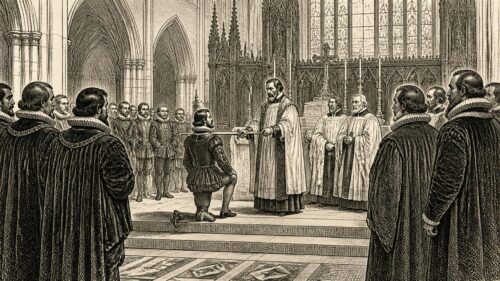
In 1616 Ireland was not at war, yet it was still being remade by the settlement that followed the Nine Years’ War. The disappearance of one old leader, the arrival of a new royal governor, and a civic confrontation in Waterford make the year unusually revealing. They show an Ireland governed from Dublin in the name of James I, but connected also to Rome, London, Spain, the Scottish west coast and the English border counties. They show, too, that conquest had not made questions of land, religion or political allegiance disappear. It had changed the institutions through which those questions
Read Article
Archived: 17 October 2026
Abstract
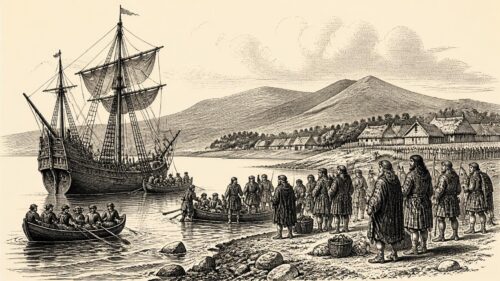
In September 1607, Hugh O’Neill, Ruaidhrí O’Donnell and Cúchonnacht Maguire left Rathmullan with families, followers and clerics, beginning the Flight of the Earls. Their departure reflected insecurity after the Nine Years’ War, as crown law, land investigations and rival Irish claimants undermined Gaelic lordship. Tadhg Ó Cianáin recorded the hazardous voyage: ninety-nine passengers sailed on a French ship, endured storms and shortages, and reached Normandy after twenty-one days. Continental Catholic communities welcomed them, but offered no assured military restoration. Their flight created an opening for stronger crown control in Ulster, preceding, rather than initiating, the later official Plantation of Ulster.
Read Article
Archived: 17 October 2026
Abstract
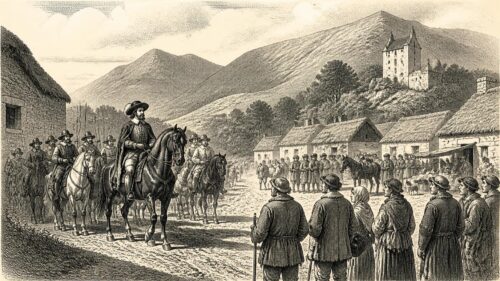
In 1606, the Irish kingdom was being remade less by one spectacular battle than by a series of administrative, legal and social interventions. Three years had passed since the end of the Nine Years’ War, but the settlement that followed remained insecure. Sir Arthur Chichester’s Dublin administration sought to make royal authority visible in places where it had been thin, contested or dependent on military force. A new county was set out in the Wicklow uplands; Scots began arriving in north Down under private landlords; courts travelled through Munster; Catholic townspeople met new pressure to attend Protestant worship; and Gaelic
Read Article
Archived: 17 October 2026
Abstract
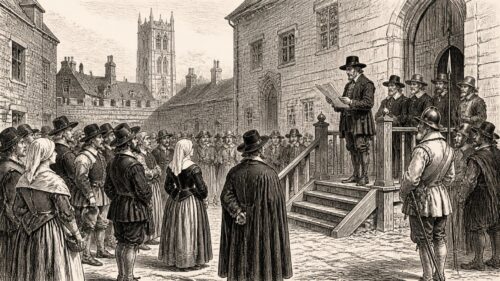
In 1605, Sir Arthur Chichester became lord deputy, seeking to convert victory in the Nine Years’ War into durable royal control through law, land reform, revenue and Protestant conformity. March’s proclamation declared Irish people direct subjects of James I, challenging Gaelic lordship and encouraging fixed rents and tenures. Hamilton’s November grant in County Down foreshadowed Scottish settlement, without constituting the later Ulster Plantation. July’s proclamation expelled Catholic clergy and demanded Church of Ireland attendance, while mandates targeted Dublin Catholics. Administrative changes strengthened Protestant authority. Continental Catholic education and military service across Europe also underscored an uneasy post-war settlement in Ireland.
Read Article
Archived: 17 October 2026
Abstract
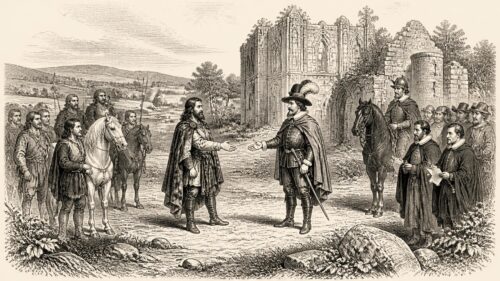
In 1603, Hugh O’Neill’s submission at Mellifont formally ended the Nine Years’ War, as James I succeeded Elizabeth I. O’Neill retained lands and title but surrendered key Gaelic powers, while Ulster faced recovery from severe military devastation and local rivalries. Southern and western Catholic towns, expecting religious toleration, resisted Protestant worship and delayed James’s proclamation; Crown forces compelled their submission without renewed general war. Royal patents in Ulster strengthened selected local lords directly under the Crown, weakening traditional overlordship. Trinity College’s expanding library reflected developing Protestant institutions. Peace ended major warfare but left land, religion, authority and political allegiance unresolved.
Read Article
Archived: 17 October 2026
Abstract
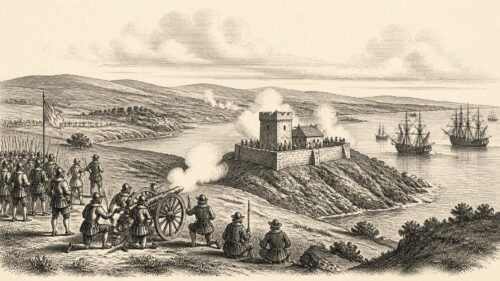
In 1602, the Nine Years’ War moved towards crown victory after Kinsale’s surrender removed Spain’s main force, though resistance persisted. Hugh Roe O’Donnell sailed to Spain seeking aid, but died there in August, weakening the Irish confederacy. In Munster, Sir George Carew besieged, captured and demolished Dunboy Castle, ending its role as a potential Spanish foothold and O’Sullivan Beare stronghold. In Ulster, Mountjoy used garrisons, allied forces and systematic destruction of crops and livestock to impose famine. Royal advances shattered Gaelic lordships; Ruaidhrí O’Donnell submitted in December, while Hugh O’Neill continued fighting until 1603. The conflict remained unresolved that winter.
Read Article

Archived: 17 October 2026
Abstract
In 1601, Spain’s landing at Kinsale internationalised the Nine Years’ War, offering Hugh O’Neill and Hugh Roe O’Donnell support but far from their Ulster bases. Don Juan del Águila’s 3,300 troops fortified Kinsale and Rinncorran, while Mountjoy and Carew imposed a land and naval siege. Elsewhere, crown garrisons, allied Irish lords, arrests and campaigning weakened resistance, while civilians endured plunder, requisitioning and famine. O’Donnell and O’Neill marched south to relieve the town, threatening besiegers’ supplies. A poorly coordinated Christmas Eve attack collapsed in disorder on 24 December, routing the confederates. O’Donnell sailed for Spain; Mountjoy regained initiative, although war continued.
Read Article
Archived: 17 October 2026
Abstract
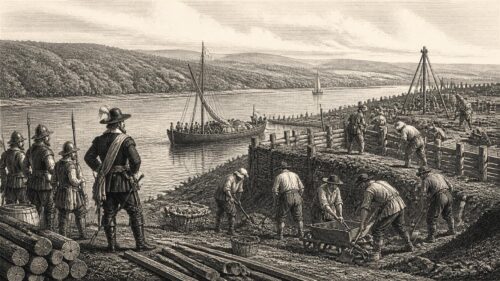
In 1600, the Nine Years’ War shifted strategically without decisive resolution. Lord Mountjoy and Sir George Carew restored English military organisation and recovered much of Munster through garrisons, raiding and coercion, while Ormond’s capture exposed continuing instability. Hugh O’Neill’s southern expedition demonstrated confederate reach but cost him Hugh Maguire and intensified internal disputes. Sir Henry Docwra’s landing at Lough Foyle created a vulnerable but enduring northern bridgehead, strengthened by Niall Garbh O’Donnell’s defection. At Moyry Pass, O’Neill blocked Mountjoy’s advance into Ulster. By year’s end, pressure on the confederacy had grown, making Spanish intervention at Kinsale increasingly urgent in 1601.
Read Article
Archived: 17 October 2026
Abstract
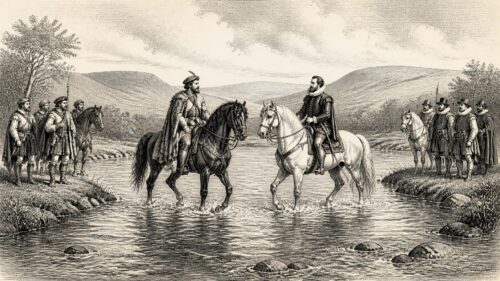
In 1599, Elizabeth I sent the earl of Essex to Ireland with an unprecedented army to suppress the Nine Years’ War. Despite capturing Cahir Castle and campaigning through Munster, his forces were weakened by supply difficulties, resistance, sickness and garrison demands. Sir Conyers Clifford’s defeat and death at Curlew Pass strengthened Hugh Roe O’Donnell’s confederates. Essex’s September river meeting with Hugh O’Neill at Bellaclinthe produced only a temporary truce. Essex then left Ireland without permission, provoking a court crisis. O’Neill subsequently appealed to Pale Catholics, while the year demonstrated that Tudor authority faced intertwined military, religious, political and economic challenges.
Read Article
Archived: 17 October 2026
Abstract
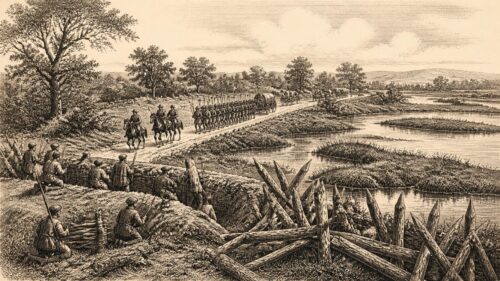
A Crisis at the BlackwaterIn 1598 the Nine Years’ War ceased to look like a difficult northern rebellion and became a crisis for English government across Ireland. The year’s decisive episode was the Battle of the Yellow Ford, fought on 14 August beside the River Blackwater in County Armagh. Its importance lay not merely in the destruction inflicted on a crown field army, but in what followed: the abandonment of forward positions in Ulster, renewed confidence among the confederates led by Hugh O’Neill, earl of Tyrone, and Hugh Roe O’Donnell of Tír Chonaill, and a rapid widening of revolt into
Read Article
Archived: 17 October 2026
Abstract
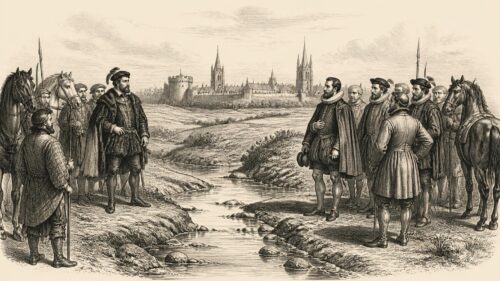
In 1597, Ireland’s war exposed the Tudor administration’s logistical and military weakness while Hugh O’Neill’s confederacy extended its influence. A gunpowder explosion in Dublin killed 126 people, damaged the capital’s supply system, and highlighted insecure wartime labour and logistics. The Crown killed Fiach MacHugh O’Byrne in Glenmalure, weakening but not pacifying Leinster. Hugh Roe O’Donnell raided Connacht, reaching Athenry and Galway. Lord Burgh’s Ulster offensive failed to unite royal forces, although Blackwater Fort was re-established; his death worsened the crisis. Irish victories near Carrickfergus and Daingean compelled talks outside Dundalk. O’Neill accepted a two-month cessation, gaining recognition without surrendering authority.
Read Article
Archived: 17 October 2026
Abstract
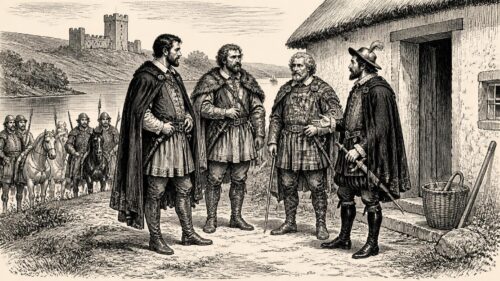
In 1596, attempts to settle the Ulster conflict through pardons and limited autonomy failed as Hugh O’Neill and Hugh Roe O’Donnell linked territorial claims with Catholic liberty. Spanish envoy Alonso de Cobos met them at Lifford, prompting an appeal to Philip II for troops and a Habsburg ruler, and tying Irish resistance to European war. In Connacht, Norreys’s large expedition stalled beside the River Robe when provisions ran out, revealing the importance of supply and alliances. Succession disputes, raids, coercive administration and religious tensions widened disorder across Ireland. Changes in Connacht’s government and continued local rivalries failed to restore stability.
Read Article
Archived: 17 October 2026
Abstract
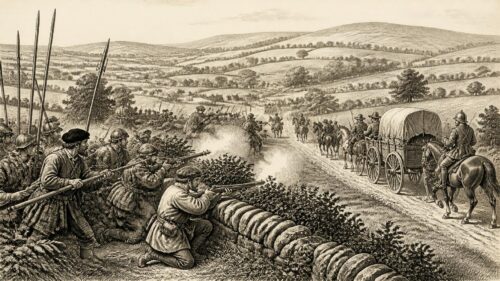
In 1595, the Nine Years’ War became an open challenge to Elizabeth I’s rule as Hugh O’Neill and Hugh Roe O’Donnell expanded resistance across Ulster and beyond. After the Blackwater fort’s seizure, Crown attempts to sustain exposed garrisons faltered. At Clontibret, O’Neill’s forces badly mauled Sir Henry Bagenal’s returning convoy through disciplined firearms, fieldworks and mobile warfare, though they did not destroy it. O’Donnell’s campaigns destabilised Connacht, using raids, hostages and alliances to extend influence. Fighting also ravaged Wicklow and civilian communities. Despite negotiation and continued Crown control of towns, 1595 established a broader, organised and destructive conflict in Ireland.
Read Article
Archived: 17 October 2026
Abstract
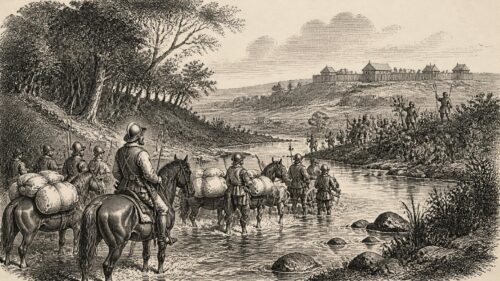
In 1594, a struggle centred on Enniskillen turned a dispute over crown authority in Fermanagh into a warning of a wider Irish war. The year is conventionally treated as the opening of the Nine Years’ War, though that label should not obscure how local its immediate stakes were. Hugh Maguire, lord of Fermanagh, was defending a lordship threatened by sheriffs, garrisons and the prospect of a Monaghan-style land settlement. Yet his allies included Hugh Roe O’Donnell of Tír Chonaill and men connected to Hugh O’Neill, earl of Tyrone. Their success on the Arney River showed that the English administration could
Read Article

Archived: 17 October 2026
Abstract
In 1593, resistance to the English appointment of Captain Humphrey Willis as sheriff of Fermanagh brought Hugh Maguire into conflict with crown authority. Supported by Cormac MacBaron O’Neill, Hugh Roe O’Donnell and Brian Óg O’Rourke, Maguire’s rising spread through Ulster and Connacht amid disputes over rents, cattle and jurisdiction. Meanwhile, Hugh O’Neill assumed effective rule of Tír Eoghain while maintaining loyalty to Elizabeth I. Catholic hopes of Spanish intervention accompanied the unrest, although no force arrived. Sir Henry Bagenal’s October expedition defeated Maguire at Erne Ford and devastated Fermanagh, but failed to establish lasting control, foreshadowing the Nine Years’ War.
Read Article

Archived: 17 October 2026
Abstract
In 1592 Hugh Roe O’Donnell escaped Dublin Castle, where he had been held to restrain Ulster alliances, and returned to Tír Chonaill. Supported by his mother Iníon Dubh, Scottish connections and Hugh O’Neill, he became The O’Donnell, resisted garrisons and negotiated a fragile submission at Dundalk. His revival intensified conflicts within Ulster and exposed limits of crown authority. In Dublin, Elizabeth I chartered the College of the Holy and Undivided Trinity on the former All Hallows priory, to educate Protestant clergy and officials. Meanwhile, Catholic diplomacy with Spain heightened anxieties. These developments foreshadowed wider political, religious and military confrontation ahead.
Read Article

Archived: 17 October 2026
Abstract
In 1591, Tudor authority pressed unevenly upon Gaelic Ireland through military, legal and administrative measures. Brian na Múrtha O’Rourke, lord of West Bréifne, fled to Scotland after invasion, was surrendered to England, tried for treason and executed at Tyburn, demonstrating the crown’s expanding reach. Monaghan’s contested settlement and mass pardons revealed efforts to reorganise lordship and land. Hugh O’Neill’s marriage to Mabel Bagenal intensified Ulster rivalries. Catholic appointments and continental contacts sustained religious networks and official fears of foreign intervention. Annalistic deaths and praise for lords preserved Gaelic values. Although no rebellion began, distrust and dispossession sharpened conditions preceding war.
Read Article

Archived: 17 October 2026
Abstract
In 1590, Hugh Roe MacMahon’s execution after a manipulated Monaghan trial signalled the Tudor government’s determination to replace Gaelic lordship with courts, garrisons and Crown-controlled landholding. Sir Richard Bingham’s campaigns in Connacht and Breifne secured hostages, devastated O’Rourke territory and established a strategic fort, though resistance revived. In Tyrconnell, Donnell O’Donnell’s death at Doire Leathan strengthened Hugh Roe’s eventual claim while he remained imprisoned. Sorley Boy MacDonnell died, prompting renewed territorial conflict, and Hugh O’Neill eliminated a dynastic rival. Despite warfare, learned culture and commercial development persisted. Ireland remained politically fragmented, as Crown expansion encountered resilient local powers across Ireland.
Read Article
Archived: 17 October 2026
Abstract
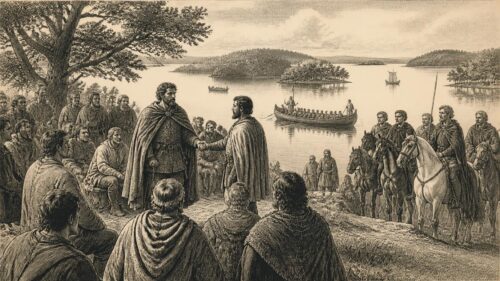
In 1589, Cú Chonnacht Óg Maguire’s death triggered a Fermanagh succession contest, resolved at Sciath Ghabhra when Donnell O’Donnell backed his son Hugh, reinforcing north-western alliances. MacMahon succession rivalry in Monaghan invited intervention by Lord Deputy Sir William Fitzwilliam, while Hugh O’Neill consolidated his position. In Connacht, opposition to Sir Richard Bingham’s Composition produced raids, government defeat, reprisals, an inquiry, Bingham’s acquittal and renewed campaigning. Munster commissioners assessed the incomplete plantation of confiscated Desmond lands. Ecclesiastical appointments and annalistic obituaries reflected enduring Catholic, Gaelic learned and social traditions. Together, these events exposed conflicts over lordship, land, royal administration and authority.
Read Article
Archived: 18 October 2026
Abstract
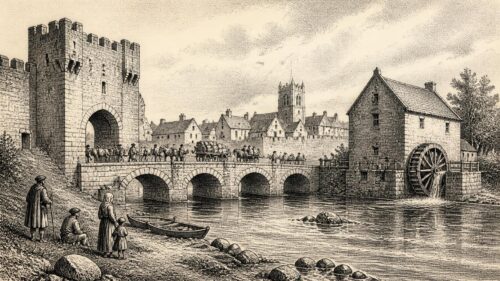
In 1562 Shane O’Neill travelled to Whitehall, submitting to Elizabeth I while contesting the crown’s control over the Tyrone succession. He asserted authority derived from Gaelic inauguration as the O’Neill; ministers delayed any settlement, fearing his power and the precedent. During negotiations, Brian O’Neill, rival Dungannon claimant, was killed by Turlough Luineach, leaving young Hugh heir in English eyes. Shane’s subsequent raids devastated neighbouring lordships, especially Fermanagh, exposing limits of crown protection. Elsewhere, Brian Ballach O’Rourke’s death prompted succession in West Breifne, while Galway’s new bridge, mill and gate displayed urban investment, trade and defence within Ireland’s varied political landscape.
Read Article

