Private Memory
At a Glance
Archive Rooms
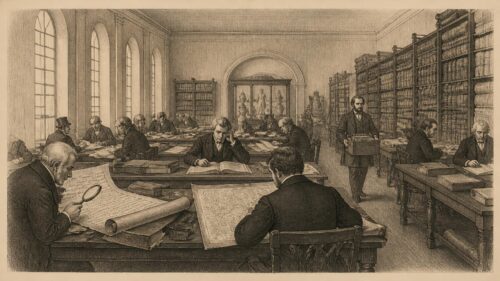
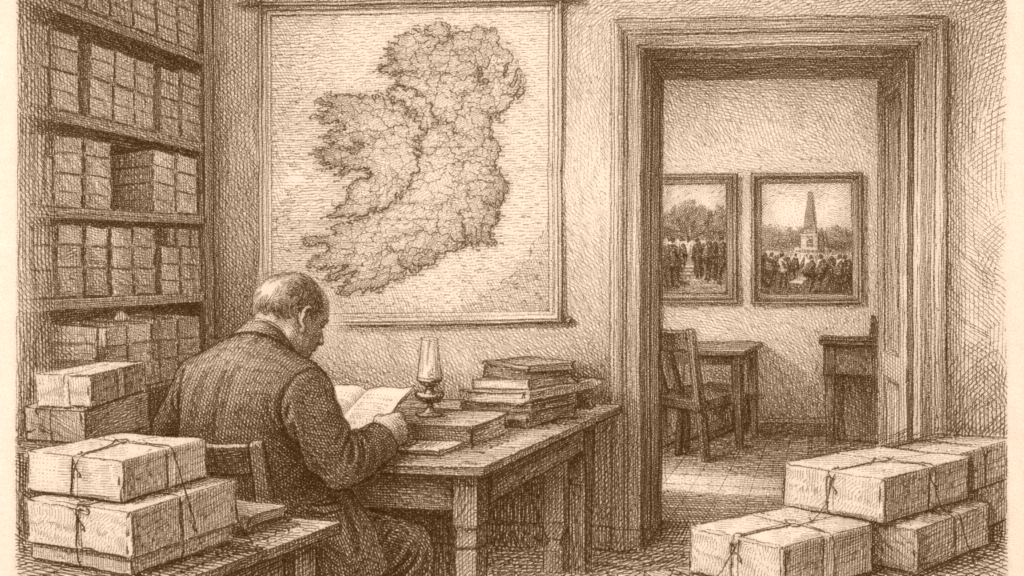
CAIN presents itself as a web service on conflict and politics in Northern Ireland and says it contains information and source material on the Troubles from 1968 to 2007. It also lists main sections that include background to the conflicts, key events, key issues, databases and bibliographies, Northern Ireland society, and conflict studies. The archive additionally notes that archived copies exist in several web repositories and that an offline copy appears in the Troubles Gallery of the Ulster Museum.
The same site describes a searchable database of external resources. Its subject menu includes history, culture, governance, media, the peace process, policing, politics, victims, and other categories. The page says the conflict generated a vast body of qualitative material such as interviews, video and audio recordings, and photographs, and that the catalogue helps people discover what is held in archives and collections and how to obtain access to it.
Public Records
PRONI states that thousands of digitised records from 1968 onwards are available online through its partnership with CAIN. It says the selected records mainly cover 1968 to 2001, with some additional files from 1964 and 1965 on education. The same page notes that the files came from several government departments and that more than 4,000 public records, amounting to over 19,000 pages, are now available through the partnership.
PRONI also says that newly accessible records are selected after each annual release and added to the CAIN site. Users can search these records by year of release, title, author, and year, and can filter them by keywords and phrases. The page therefore describes a process in which official papers are not only preserved but also made more searchable through a digital interface.
Family Testimony
PRONI describes the Legacy of the Past Record as a collection created by Ulster Human Rights Watch together with individuals impacted by the Troubles. It says the record currently consists of twenty-three reports, with fourteen containing input from families who lost a family member and nine concerning the personal and family life of affected individuals. The reports draw on official sources, including court and inquest files, and also on printed sources such as contemporary newspaper accounts.
The same page says the reports contain statements from those directly affected by the Troubles, including families describing the circumstances of a family member's death. It adds that nine filmed oral history testimonies are included, most conducted by Ray Hayden on behalf of UHRW, with transcriptions in English and French. PRONI also notes that the material can be accessed through onsite and eCatalogue references.
Legal Memory
The Northern Ireland Troubles (Legacy and Reconciliation) Act 2023 defines the Troubles for legal purposes as events and conduct related to Northern Ireland affairs between 1 January 1966 and 10 April 1998. It also states that the definition includes conduct connected with preventing, investigating, or otherwise dealing with the consequences of other related events. The Act further says that conduct includes acts and omissions and that Northern Ireland affairs include the constitutional status of Northern Ireland and political or sectarian hostility between people in Northern Ireland.
The same Act establishes the Independent Commission for Reconciliation and Information Recovery and gives it a principal objective of promoting reconciliation. Its functions include reviewing deaths and other harmful conduct, producing final reports, determining immunity requests for some Troubles-related offences, referring matters to prosecutors, and producing a historical record. A later government notice says the body was set up to undertake complex and sensitive investigations into deaths and serious injuries during the Troubles.
Digital Access
CAIN says it works on the design and compilation of the Accounts of the Conflict archive and website, and that its material covers the Troubles and politics in Northern Ireland. The site also points to NAI records hosted on CAIN, PRONI records hosted on CAIN, and sections on victims, survivors, commemoration, and deaths on this day. These listed components show an archive built around access, classification, and repeated navigation rather than a single fixed presentation.
The external-database page says the catalogue is intended for academic researchers, documentary film makers, secondary school students, and interested members of the public. It adds that the archived material will help commemorate the experience of people who lived through the conflict and that the catalogue will be updated periodically as new material becomes known. The page also mentions material at risk of being lost forever if not archived.
Ongoing Record
The available materials do not offer a single uniform memory of the Troubles. Instead, they separate official records, public databases, legal definitions, and family testimony into distinct collections. CAIN, PRONI, and the Legacy of the Past Record each preserve different kinds of material, while the 2023 Act and later government statements place review, record-making, and reconciliation inside an official framework. The sources show overlap, but they also show that access depends on the form in which memory was preserved.
One clear omission in these excerpts is a complete narrative that links all the collections together. Instead, each page defines its own scope: CAIN lists topics and archives, PRONI identifies record ranges and access tools, the Legacy of the Past Record gathers reports and testimonies, and the Act specifies a statutory period and functions. The picture is therefore one of multiple public memories, preserved in parallel and still being added to.