
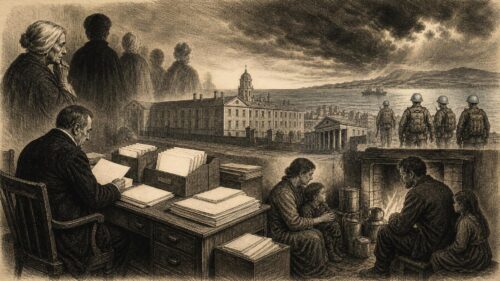
Redress, Prices And Peacekeeping
On 30 March 2026, Ireland’s public record was shaped less by one spectacular event than by several revealing pressures: delayed justice for Magdalene survivors, a sudden energy-led inflation shock, the vulnerability of Irish peacekeeping commitments, and unresolved legacies of republican violence. The day also brought scrutiny of children’s mental health waiting lists, heritage governance at Kilmainham, and cultural memory through a Seán O’Casey commemorative coin. Together these developments showed a State still negotiating accountability, social provision and international responsibility, while ordinary households faced renewed cost-of-living anxiety rooted in global conflict and Ireland’s energy dependence and exposed institutional limits at home.
View Record
Energy, Memory And Games
A quiet Sunday nonetheless exposed several currents in Irish public life: Government anxiety over fuel prices, new arguments about who deserves help, and continuing pressure for accountability in old miscarriages of justice. At Croke Park, Donegal and Meath gave Gaelic football’s league finals fresh political and cultural resonance. On Dublin’s Liffey, President Catherine Connolly launched Curachaí na Life, linking Gaeltacht craft, urban recreation and the Irish language. Reports that 134 wartime seafarers had finally been recognised widened debates about neutrality and memory, while housing and transport stories showed everyday life being remade by cost, access and shared public space, yet
View Record
Energy Shock, Alumina, Education And The Public Power Of Sport
Between 22 and 28 March 2026, Ireland’s week was shaped by energy shock, geopolitical exposure, social investment and sporting memory. Government cut fuel taxes and extended supports as war in the Middle East pushed prices upward. A major investigation into Aughinish Alumina forced uncomfortable questions about neutrality, jobs and Russia’s war supply chains. Education policy moved with a new DEIS strategy and a national skills roundtable. The deaths of broadcaster Michael Lyster and public servant Dan Flinter marked generational change, while Kate O’Connor’s world bronze and Ireland’s Prague penalty heartbreak revealed sport’s enduring public power across the island that week.
View Record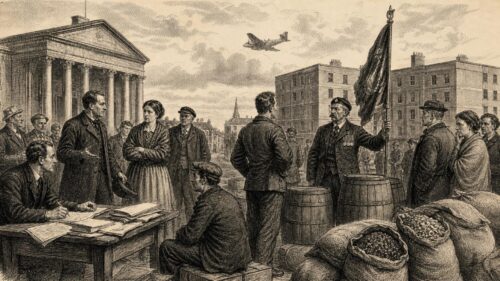
Homes, Energy And Public Trust
Events and reports from 28 March 2026 captured an Ireland under pressure from housing shortages, energy-price shocks, public-service reform and changing ideas about evidence. President Catherine Connolly linked veterans’ welfare to record homelessness, while Dublin council tenants protested rent rises. Ministers faced criticism over fuel supports and farmers warned of fertiliser insecurity. The Labour Court’s AI guidance marked a new legal concern: unreliable machine-generated submissions. Defence Forces use of an Air Corps strategic aircraft in Lebanon showed a changing security posture. Sport, daylight saving and local identity supplied a quieter counterpoint to a day shaped by cost, capability and trust.
View Record
Fuel, Homes, Safety And Screens
On 27 March 2026, Irish public life showed a state trying to manage overlapping pressures: energy shocks from war, record homelessness, public safety after Grace Lynch’s death, children’s welfare, online regulation and European responsibility. Taoiseach Micheál Martin warned in Limerick that government could not protect every sector from fuel costs, while February homelessness reached 17,308 people. Ministers prepared a scrambler ban and EU-level meetings before Ireland’s Council presidency. Courts and campaigners tested digital accountability, and a painful football defeat drew a vast audience. The day captured older Irish questions of protection, sovereignty, social care and belonging in modern life too.
View Record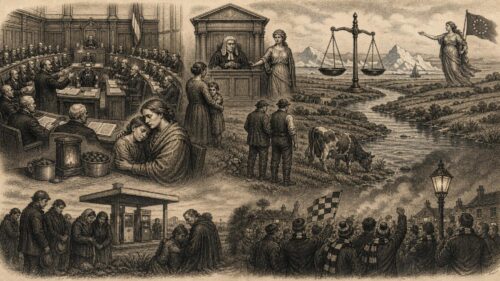
Prices, Rights And Public Trust
On 26 March 2026, Irish public life showed how external shocks, private harm and global responsibility met in domestic institutions. The Central Bank warned that the Middle East energy crisis could push inflation above 4 per cent, while Dáil exchanges tested the Government’s fuel response. Judges adopted a domestic-violence sentencing guideline, an EU legal opinion sharpened scrutiny of nitrates and water quality, and Mairead McGuinness received an EU religious-freedom role. Planning beside Creeslough reopened questions of memory, and Ireland’s World Cup play-off defeat showed sport’s communal force. The day was not singular, but historically revealing in Ireland and democracy too.
View Record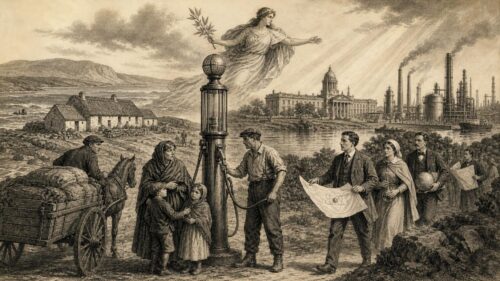
Fuel, Neutrality And Public Trust
On 25 March 2026, Ireland’s public agenda was dominated by the first effects of emergency fuel-tax cuts, introduced as Middle East war pushed diesel, petrol and heating costs higher. The day also exposed deeper questions: how a neutral State should respond to Russian-linked industrial supply chains, whether defence policy was changing, and how housing failures threatened Gaeltacht communities. Public-health and knowledge debates widened, from a proposed commercial sunbed ban to an all-island Science Media Centre and rapid workplace use of AI. CSO well-being figures and fresh hospital delays added a social ledger of security, inequality and trust for citizens too.
View Record
Alumina, Care And Public Pressure
On 24 March 2026 Ireland’s public record centred on responsibility: the Aughinish Alumina supply-chain investigation, an Ombudsman warning on children in care, a student accommodation strategy, fuel and consumer protections, and debates over transport capacity. The day linked global war, domestic welfare, housing shortages and everyday costs. It also carried cultural and scientific notes, from Meitheal tourism trading in Killarney to a Galway-led exoplanet discovery and fresh arguments over Irish-language visibility in Belfast. Taken together, the archive shows a State balancing economic openness, social protection and national identity under international pressure and infrastructural strain during a volatile year for Ireland.
View Record
Schools Rights And Shared Futures
On 23 March 2026, Irish public life was shaped by consultation, inclusion and practical resilience. The Education Convention brought children, parents and educators into long-term policy making, while funding announcements supported LGBTIQ+ services, Shared Island language projects and conservation advice for traditional homes. TidyTowns renewed the link between local pride and environmental action. Financial regulation moved from the older Consumer Protection Code towards a digital-age framework, as energy and fertiliser shocks threatened household budgets and food prices. Health leadership and Kate O’Connor’s athletics success added human markers to a day of steady institutional change across the State and island society
View Record
Memory, Neutrality And Sporting Change
Sunday 22 March 2026 was not a single-crisis day, but it captured several Irish transitions: grief becoming public remembrance at Buncrana, neutrality being tested by war and defence technology, and sport carrying both continuity and disruption. Michael Lyster’s death recalled an era when television helped make Gaelic games a national conversation, while Kate O’Connor’s world indoor bronze pointed to a broader Irish athletics horizon. Court reports on healthcare directives and liability showed changing ideas about autonomy and risk. In Waterford and Donegal, safety, community responsibility and memory framed how private loss entered public life across the island during unsettled times.
View Record