

History in the Making
We are building Ireland’s historical archive day by day, week by week, month by month and year by year, documenting the events, people and developments shaping our nation’s story. Follow history as it unfolds, discover significant moments as they happen, and explore how today’s news becomes tomorrow’s heritage in our expanding collection of Irish historical records.
2026 CE — Monthly Archives
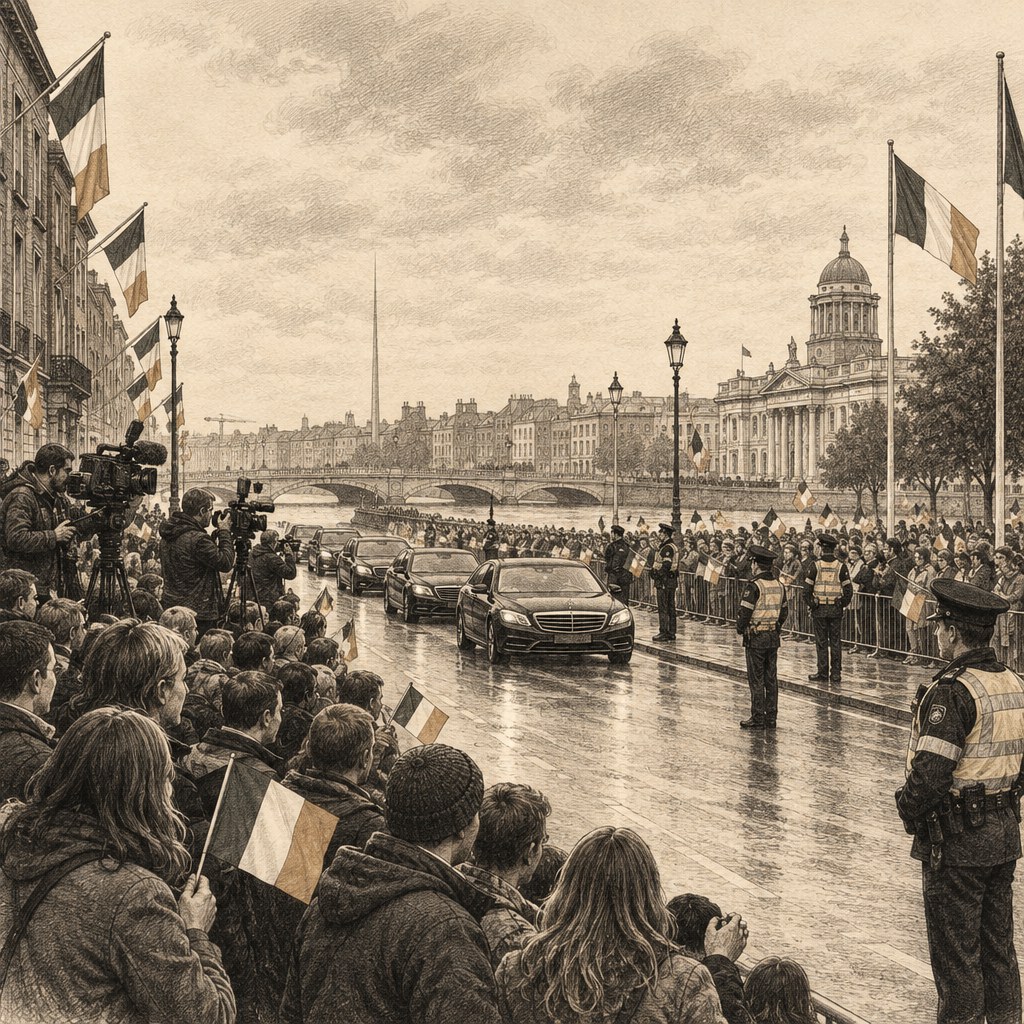
Memory, Diplomacy and Change
Archived: 1 October 2026
Abstract
September 2026 connected remembrance, new technology, international diplomacy and unresolved questions about Ireland’s future. Dromcollogher commemorated the forty-eight people who died in its 1926 cinema fire. Ireland’s new AI Office held its inaugural board meeting as European regulation developed. President Donald Trump’s visit prompted debate about Irish reunification, American relations and foreign policy, while Ireland participated in the United Nations General Assembly. In Portadown, protests surrounding an Orange Order parade revived memories of Drumcree and continuing disputes over identity and public space. Together, these events showed history being shaped through commemoration, institutions, diplomacy, protest and public disagreement across the island.
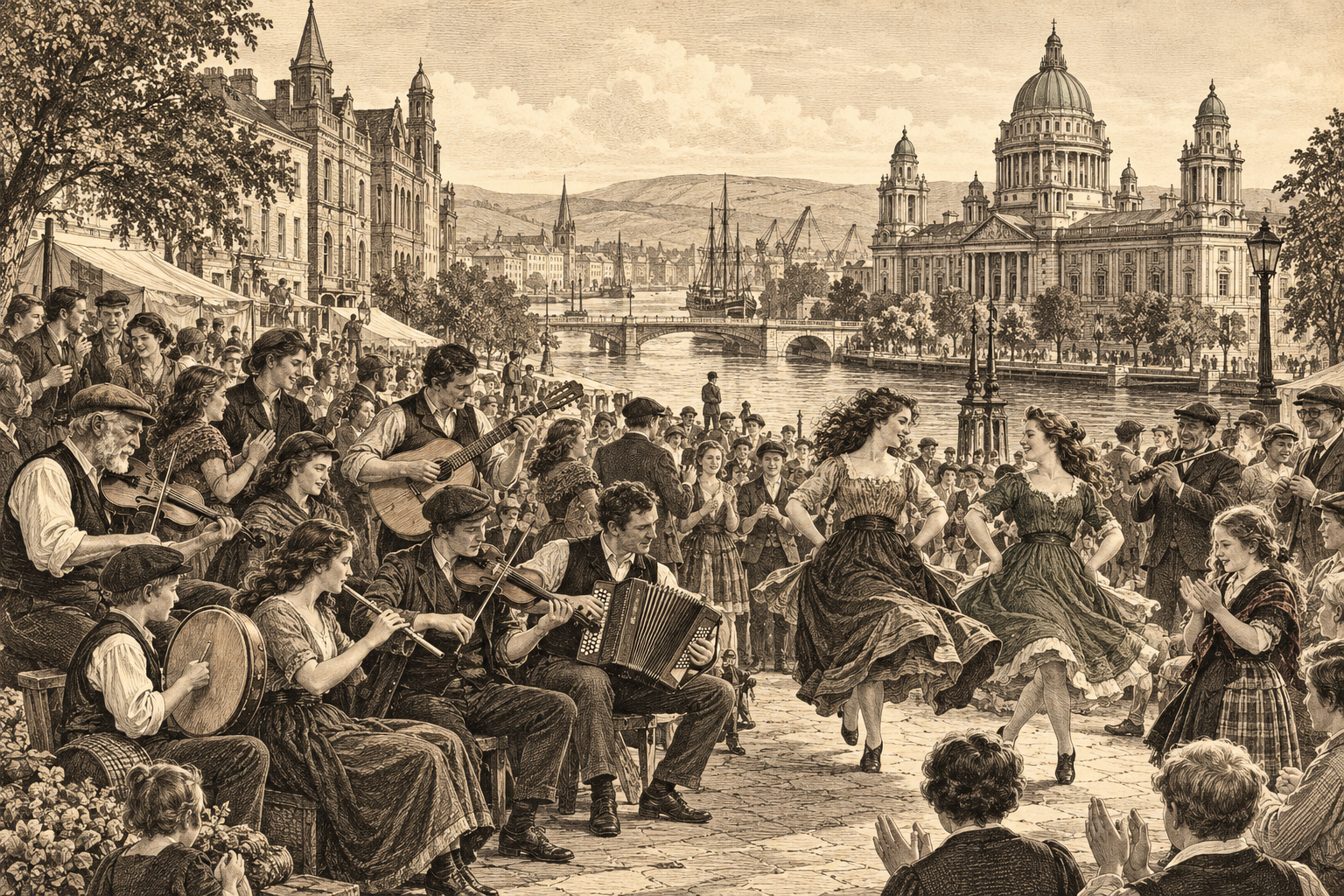
Heritage, Music and Diplomacy
Archived: 1 September 2026
Abstract
August 2026 brought together living tradition, public heritage, European responsibility and international diplomacy. Belfast hosted Fleadh Cheoil na hÉireann, filling civic spaces with music, dance and participation across communities. National Heritage Week encouraged people throughout Ireland to explore buildings, archaeology, crafts, landscapes and local records preserved by volunteers. Meanwhile, Ireland continued chairing meetings during its Presidency of the Council of the European Union, addressing security, energy, competitiveness and future budgets. Confirmation of an approaching United States presidential visit also prompted national debate. The month showed Ireland engaging confidently with inherited culture while preparing for decisions and relationships shaping its future.
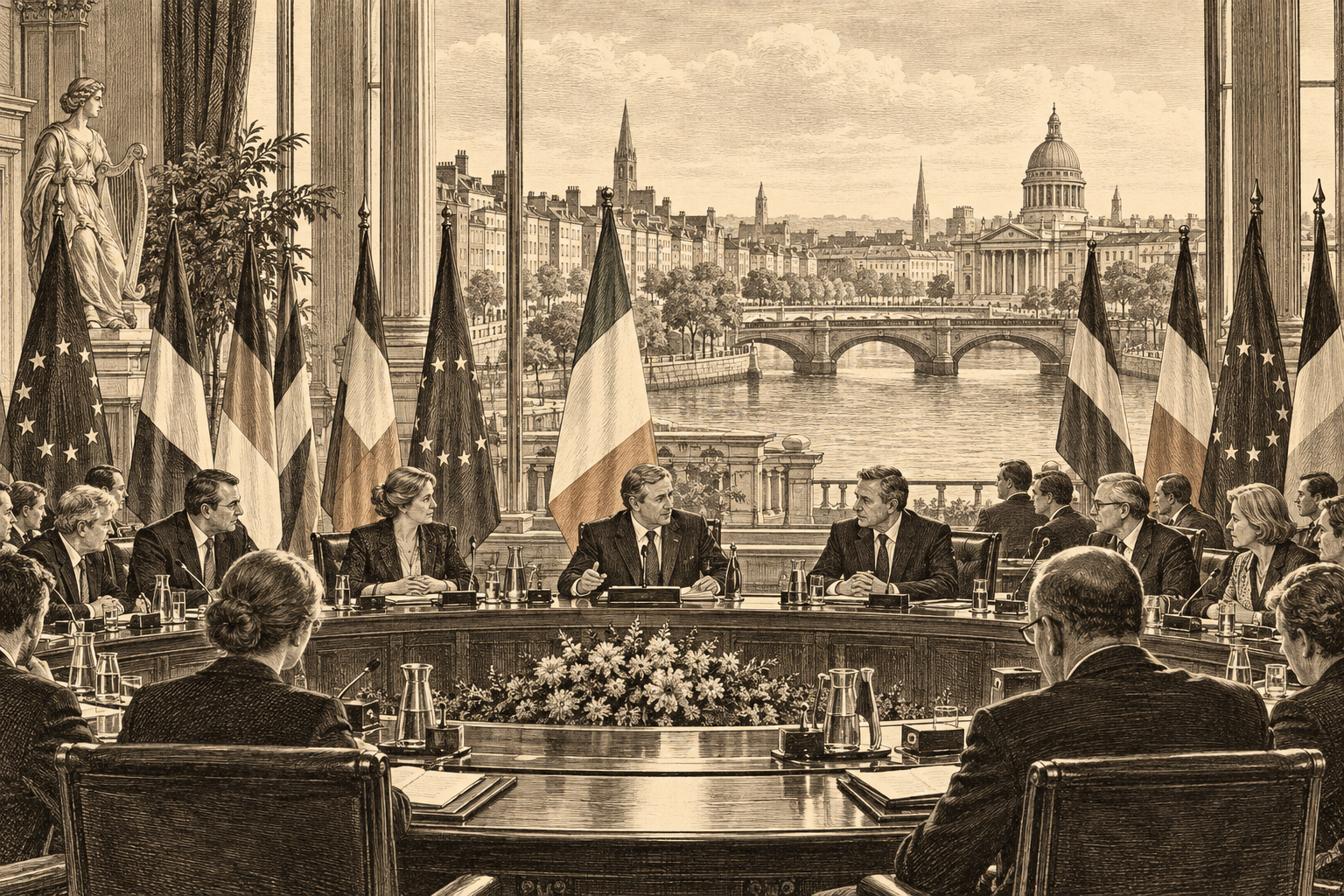
Ireland at the Centre of Europe
Archived: 1 August 2026
Abstract
Ireland assumed the Presidency of the Council of the European Union on 1 July 2026, beginning six months of unusually visible European responsibility. Irish ministers and officials chaired meetings, negotiated compromises and advanced legislation among twenty-seven member states during war, economic uncertainty, migration pressures and debate over security. The presidency highlighted Ireland’s transformation since joining the European Economic Community in 1973 and its dependence upon stable international cooperation. Domestic concerns about housing, healthcare, living costs and public spending nevertheless remained urgent. July’s importance lay in the sustained administrative work through which a small state sought to influence decisions across Europe.

Economy, Trust and Europe
Archived: 1 July 2026
Abstract
June 2026 brought economic planning, declining trust in news and final preparations for Ireland’s European Union presidency into focus. The National Economic Dialogue gathered government, employers, trade unions and community organisations to debate housing, services, infrastructure and living costs before the next budget. The Digital News Report recorded falling trust and widespread news avoidance, raising concerns about democratic participation and shared public knowledge. Government departments also prepared programmes, venues and negotiating positions for the presidency beginning in July. Together, these developments revealed a country deciding how to distribute resources, maintain national public trust and exercise responsibility beyond its own borders.
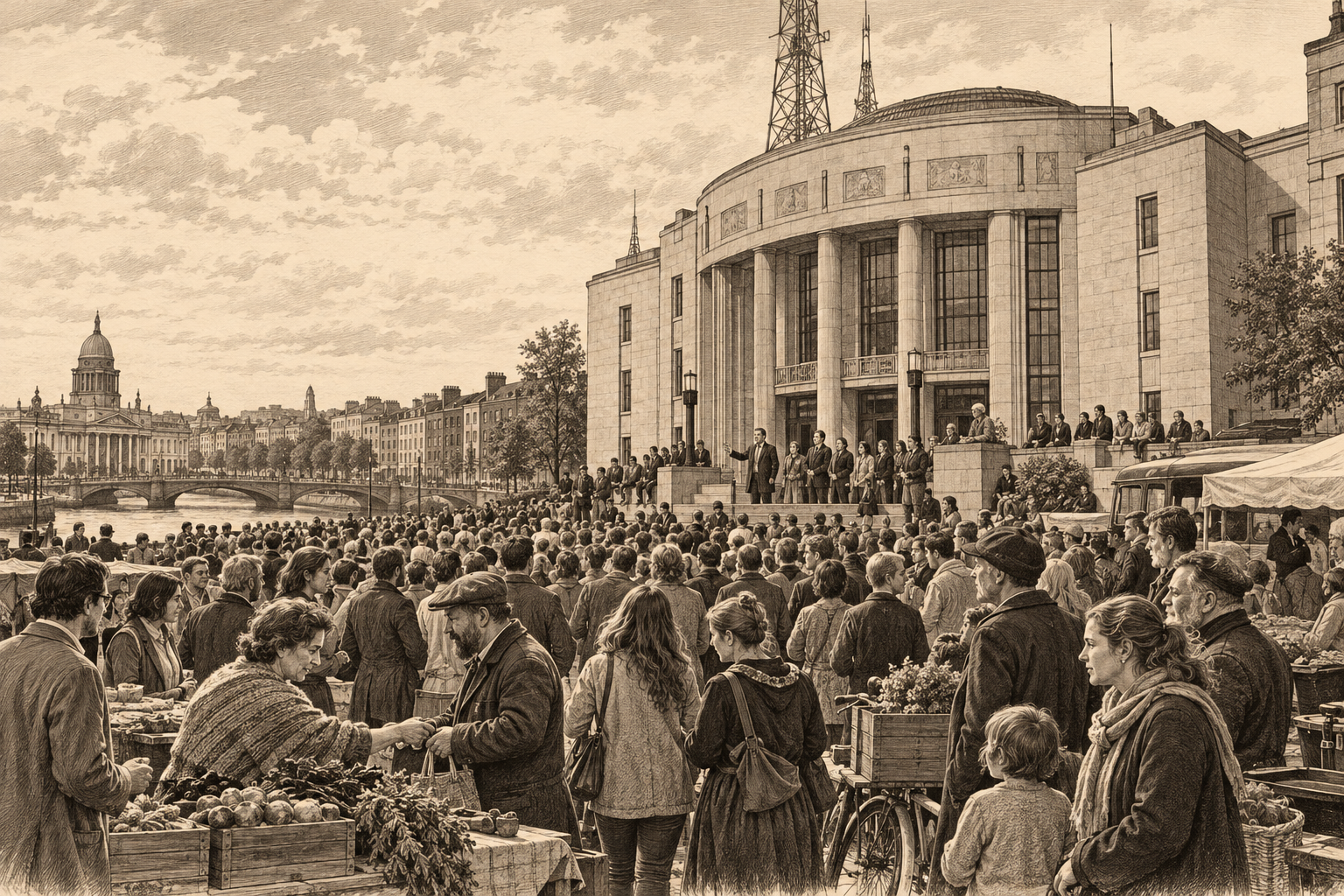
Values Under Pressure
Archived: 1 June 2026
Abstract
May 2026 tested Ireland’s international identity through culture, foreign policy and economic uncertainty. RTÉ did not participate in the Eurovision Song Contest because of Israel’s involvement during the continuing destruction in Gaza, turning entertainment into a visible political statement. Government also confirmed plans to restrict imports from Israeli settlements in the occupied West Bank, prompting debate about international law, trade and relations with the United States. Meanwhile, Ireland’s services sector contracted for the first time in five years. Together, these developments showed how global conflict, economic change and declared national values increasingly shaped decisions experienced within Ireland itself.

Fuel Protests and Political Crisis
Archived: 1 May 2026
Abstract
April 2026 brought serious social and political disruption as farmers, hauliers, taxi drivers and others protested against fuel prices and living costs. Convoys and blockades interrupted access to ports, distribution facilities and the Whitegate refinery, creating widespread shortages. Gardaí and Defence Forces vehicles restored tanker access before government announced a substantial support package. The crisis led to a ministerial resignation and a confidence vote, which the coalition survived. Separately, further infant remains were announced at the former Bon Secours Mother and Baby Home in Tuam. The month exposed deep concerns about prices, institutional responsiveness and political legitimacy.

Ireland and the Age of AI
Archived: 1 April 2026
Abstract
March 2026 showed artificial intelligence becoming a central question of Irish economic policy, public administration and social responsibility. Government announced that Ireland’s International AI Summit would launch European AI Innovation Month during preparations for the country’s European Union presidency. Ireland’s concentration of major technology companies created opportunity while imposing unusual regulatory responsibilities. Debate focused upon innovation, privacy, employment, education and accountability when automated systems influence public life. The month also raised questions about authentic historical evidence as generated text, images and sound became increasingly convincing. Ireland was not merely adopting technology; it was helping define rules governing its place in society.

Rights, Reform and Responsibility
Archived: 1 March 2026
Abstract
February 2026 placed rights, public administration and international responsibility at the centre of Irish civic life. A United Nations human-rights expert visited Ireland to meet government, civil-society organisations and affected communities while housing, migration and access to services remained prominent. Four years after Russia’s full-scale invasion of Ukraine, Ireland continued European support and protection for displaced Ukrainians. A national Digital Government conference examined improving public services while protecting privacy and accessibility. Minimum-wage, welfare and pension changes also affected household incomes. Together, these events asked how a modern state could translate declared values into fair systems that work effectively for every citizen.

A New Year of Social Change
Archived: 1 February 2026
Abstract
January 2026 began with changes affecting wages, pensions, welfare and household finances across Ireland. A higher national minimum wage increased earnings for many workers, while expanded pension auto-enrolment sought to improve long-term retirement security. Social-welfare adjustments offered additional support amid continuing concern about housing, healthcare and living costs. These measures reflected a state attempting to balance immediate pressures with future needs. Their significance was experienced not only through national statistics but in individual payslips, budgets and decisions. The opening month established themes that would continue throughout 2026: economic security, public-service capacity and expectations of fair, responsive government.