
Unlikely Nurse
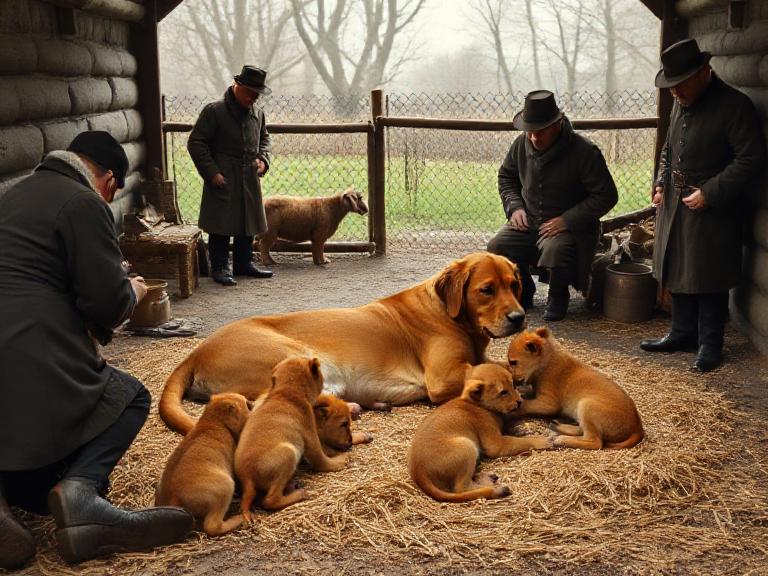
Three young lion cubs raised with the assistance of an Irish red setter were placed on public view at Dublin Zoo on 16 January, attracting attention to one of the most unusual episodes in the Gardens’ long breeding history. The cubs had been born to the lioness Hypatia, but she refused to nurse them. Keepers were therefore forced to seek another source of milk if the litter was to survive. A goat was first employed for several days before the setter assumed the role of foster mother, accepting the vulnerable cubs and feeding them alongside the close supervision of zoo staff.
The sight of a domestic dog nursing lions brought together animals rarely associated within the same enclosure. Visitors were able to observe the cubs at close quarters while the setter remained calm and protective in their presence. Her success demonstrated the practical improvisation required in zoological collections before specialised artificial feeding methods became widely available. Keepers depended upon experience, judgement and the willingness of suitable foster animals when mothers rejected their offspring. The setter’s temperament made her particularly valuable, since the cubs required regular feeding, warmth and tolerance during the earliest and most dangerous period of their development.
Dublin Zoo had already earned an international reputation for breeding lions, an activity that began during the nineteenth century and supplied animals to zoological collections and travelling exhibitions abroad. Successful litters brought prestige and income, but the survival rate among newborn cubs could be uncertain. Lionesses sometimes failed to rear their young, illness could spread quickly, and keepers possessed only limited veterinary knowledge by modern standards. The birth of three cubs therefore represented both an achievement and a challenge. Their appearance before the public allowed the Society to display the results of its breeding programme while drawing visitors during the quieter winter season.
The episode also reflected contemporary attitudes towards zoological gardens. Animals were presented for education, scientific observation and popular entertainment, although standards of care differed greatly from those expected today. Visitors came to the Phoenix Park to see creatures otherwise known chiefly through books, engravings, imperial exhibitions and travellers’ accounts. The fostered cubs offered an especially memorable spectacle because their survival depended upon an ordinary Irish dog. The contrast between the familiar setter and the exotic lions gave the display its appeal, transforming a difficult problem of animal care into a story readily understood by adults and children alike.
Behind the public curiosity lay the persistent labour of keepers responsible for feeding, cleaning and watching the young animals. The cubs required attention beyond the setter’s nursing, including protection from cold, observation for weakness and careful management as they grew stronger. Their display testified to a rescue effort that had begun when Hypatia rejected them and continued through the temporary use of a goat and the setter’s successful fostering. On 16 January, the unusual family became one of Dublin’s most discussed attractions, offering visitors a striking example of dependence crossing the boundary between domestic animal and wild predator.
Primary Sources
- Royal Zoological Society of Ireland, Annual Report for 1899, including the contemporary account and photograph of the Irish red setter nursing the three lion cubs.
- Royal Zoological Society of Ireland, council and animal-register records for 1899–1900 concerning the birth, fostering and exhibition of the lion cubs.
- C. J. Cornish, The Zoological Gardens of Europe: Their History and Chief Features, London, 1902, account of Hypatia’s three cubs being nursed first by a goat and then by an Irish red setter.
- Contemporary Dublin newspaper reports dated 16 and 17 January 1900 concerning the public exhibition of the fostered lion cubs at Dublin Zoo.
- National Library of Ireland, Dublin Zoo annual-report holdings and Royal Zoological Society of Ireland published records.