
February 2026: Rights, Responsibility and the Digital State
February 2026 brought attention to human rights, international solidarity and the changing digital state. A United Nations human rights expert visited Ireland, engaging officials and civil society as housing, migration and access to services remained important concerns. The country also marked four years since Russia’s full scale invasion of Ukraine and renewed discussion of European support. A digital government conference at Croke Park examined more accessible and efficient services while raising questions about privacy and exclusion. Measures affecting wages, pensions and welfare continued to shape household finances. These stories capture the relationship between national institutions and citizens’ experience of public
Dateline
February 2026 placed questions of rights, public administration and international responsibility at the centre of Irish civic life. From 9 to 20 February a United Nations human-rights expert undertook an official visit to Ireland, meeting government representatives, civil-society organisations and affected communities. Such visits examine both progress and persistent difficulties, creating an external record against which state policies can later be assessed.
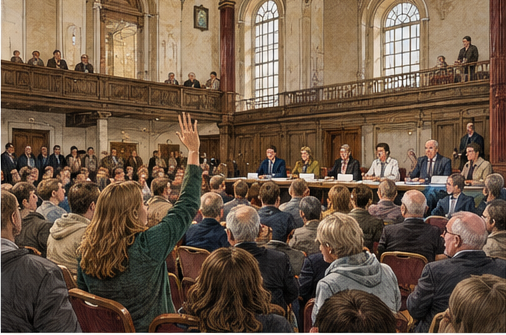
The visit took place while housing, migration and access to essential services remained prominent public concerns. Human rights are expressed through treaties and legislation, but their practical meaning is tested in accommodation, healthcare, education and equal treatment. Meetings with officials provide the state’s account; testimony from organisations and individuals records how policy is experienced. The distance between those perspectives often reveals where reform is most urgently required.
February also marked four years since Russia’s full-scale invasion of Ukraine. Irish ministers joined European discussions on continued support, security and the humanitarian consequences of the war. Thousands of Ukrainians had found protection in Ireland since 2022, making the conflict part of local as well as foreign history. Schools, communities and public services had adapted, while families displaced by war attempted to build temporary or permanent lives far from home.
At the same time, attention turned towards the digital state. A national Digital Government conference held at Croke Park on 24 February brought together hundreds of participants to examine how public services were being transformed. Digital systems promised faster access and more efficient administration, yet also raised questions about exclusion, privacy and accountability. A service available online is not necessarily accessible to citizens who lack equipment, confidence or reliable connectivity.
Economic and social measures introduced at the beginning of the year continued to take effect. Increases in the national minimum wage and welfare payments offered additional support, while deductions connected with pension auto-enrolment began to alter household pay. These policies illustrated the constant balance between immediate income and long-term security. Their effects were felt individually, even when debated through national statistics.
February’s history was therefore institutional rather than dominated by a single dramatic event. International scrutiny, European solidarity, digital reform and social policy all asked variations of the same question: how should a modern state translate its declared values into systems that work fairly? The answers remained incomplete, but the month produced meetings, reports and experiences that would shape later judgment.