

September 2026: Culture, Sport and Contested Parades
September 2026 combined national cultural celebration, international sport and longstanding political disagreements. Culture Night and theatre festivals brought performances, exhibitions and heritage events to audiences throughout Ireland. The Football Association of Ireland confirmed that the men’s national team would play Israel following a player vote, provoking public discussion. In Northern Ireland, a proposed Orange Order parade on Garvaghy Road in Portadown revived debate over marching routes and residents’ rights, leading to protests and legal proceedings. Meanwhile, the Central Statistics Office published figures on unemployment, inflation, retail sales and tourism. The month illustrates the breadth of contemporary Irish public life. Overall.
View Record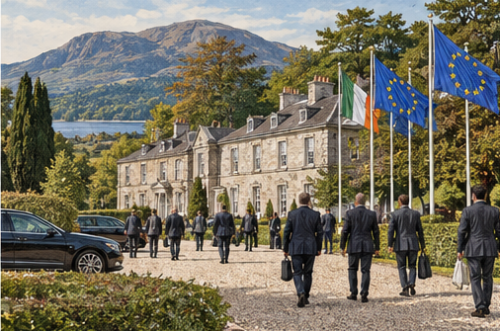
August 2026: Diplomacy, Security and Public Life
August 2026 saw Ireland continue its Presidency of the Council of the European Union while preparing for international meetings and visits. An informal gathering of European Union defence ministers was scheduled for County Wicklow at the end of the month. Security agencies also prepared arrangements for a forthcoming visit by the United States president. Garda records documented road safety campaigns, criminal investigations, arrests and appeals across the country. August’s public record therefore combined international diplomacy with the ongoing duties of national and local institutions. It also anticipated the busy September programme as diplomatic responsibilities and public safety planning continued. Overall.
View Record
July 2026: Ireland’s EU Presidency and a Record Summer
July 2026 brought Ireland to the centre of European affairs as its Presidency of the Council of the European Union began. Government departments outlined priorities for enterprise, employment and tourism. Policy announcements also addressed artificial intelligence, pregnancy loss leave and competitiveness. The country experienced exceptional summer weather: Met Éireann subsequently described July as the second hottest July since 1900, with a national mean temperature of 17.25 degrees Celsius. Official statistics tracked housing, tourism, retail activity and output. European diplomacy, national policy, economic measurement and unusually hot weather together give the month a distinctive place in Ireland’s contemporary historical record. Overall.
View Record
June 2026: Resources, Trust and Public Responsibility
June 2026 brought economic consultation, concerns about trust in news and preparations for Ireland's European Union Presidency. At Dublin Castle, the National Economic Dialogue brought together representatives of government, business, labour and civil society to debate priorities for the next budget. Research into news consumption reported growing avoidance and declining trust, raising questions about how citizens obtain reliable public information. Government departments prepared meeting programmes, security arrangements and negotiating positions for the EU Presidency beginning in July. June shows how the allocation of resources, the circulation of information and international diplomatic responsibilities can shape a country's direction even without a
View Record
May 2026: Principles Under Pressure
May 2026 highlighted the influence of international conflicts on Irish cultural and political decisions. Ireland's absence from the Eurovision Song Contest became a prominent example of debate over participation during war. The Government also advanced plans to restrict imports from Israeli settlements in the occupied West Bank, drawing different responses on international law, trade and diplomacy. Economic concern increased when a survey indicated contraction in the services sector after an extended period of growth. Domestic debates over housing, prices and government performance continued alongside these developments. The month reflected tensions between the country's declared values, international relationships and the economic
View Record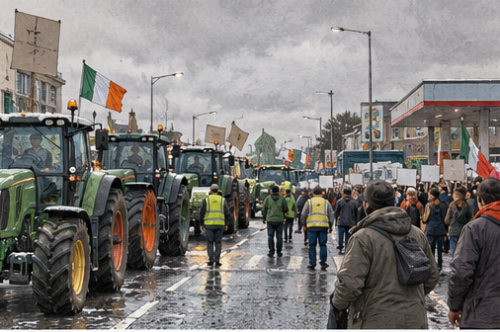
April 2026: Fuel, Protest and Political Survival
April 2026 saw fuel price protests disrupt transport and supply networks across Ireland. Farmers, hauliers and other demonstrators blocked routes and facilities as the cost of living generated widespread anger. Garda interventions helped restore access to the Whitegate refinery, while the Government announced fuel supports and tax reductions. A parliamentary confidence vote subsequently tested the coalition, which survived. In another significant development, reports from the former Mother and Baby Home at Tuam renewed national attention to the treatment and commemoration of institutionalised women and children. April demonstrated the interconnected consequences of economic pressure, public protest, political survival and historical accountability.
View Record
March 2026: Governing the Age of Artificial Intelligence
March 2026 made artificial intelligence an important subject of Irish economic strategy and public responsibility. The Government announced an international AI summit as preparations continued for Ireland’s Presidency of the Council of the European Union. Questions about innovation, regulation and the influence of automated systems prompted wider debate over public accountability. Archivists and historians also confronted increasingly convincing synthetic images, writing and recordings, making provenance more important than ever. Alongside these developments, housing, healthcare and household costs continued to dominate daily concerns. The month reveals an Ireland balancing technological ambition with the practical responsibilities of government and public trust. Overall.
View Record
February 2026: Rights, Responsibility and the Digital State
February 2026 brought attention to human rights, international solidarity and the changing digital state. A United Nations human rights expert visited Ireland, engaging officials and civil society as housing, migration and access to services remained important concerns. The country also marked four years since Russia's full scale invasion of Ukraine and renewed discussion of European support. A digital government conference at Croke Park examined more accessible and efficient services while raising questions about privacy and exclusion. Measures affecting wages, pensions and welfare continued to shape household finances. These stories capture the relationship between national institutions and citizens' experience of public
View Record
January 2026: Foundations for the Year Ahead
January 2026 marked an important change in Irish working life as pension auto enrolment began, creating a new retirement savings system supported by employees, employers and the state. Increases in the minimum wage and welfare payments also took effect, while housing and household expenses remained central concerns. Taoiseach Micheál Martin held talks with Chinese President Xi Jinping in Beijing, highlighting Ireland's diplomatic and commercial relationships. The Government also announced a plan to manage energy intensive development and pressure on the electricity grid. Together these developments illustrate a month of structural policy change whose consequences extend beyond the first weeks of
View Record