
Archived: 5 October 2026
Abstract
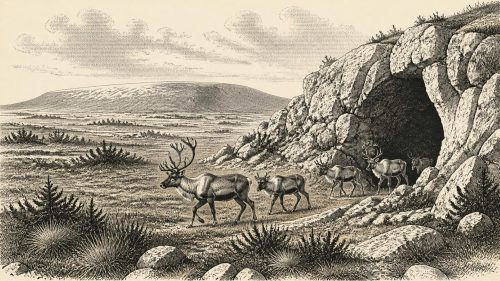
Thirty thousand years BCE is not a recoverable Irish historical year but falls within a broad Late Pleistocene range. At Derryvree, County Fermanagh, freshwater sediments between glacial tills record an ice-free wetland interval, dated approximately 36,900–31,700 calibrated years BP. Plant and insect remains indicate cold, treeless tundra-steppe conditions before expanding ice sheets reshaped Ireland. Cave faunas, notably Castlepook’s, demonstrate connections with north-west European ecosystems, including reindeer, mammoth, giant deer and predators. No secure human settlement exists; a possibly cut reindeer bone suggests only uncertain contact. Evidence supports changing environments and intermittent access, not political, cultural or social reconstruction in detail.
Read Article
Archived: 5 October 2026
Abstract
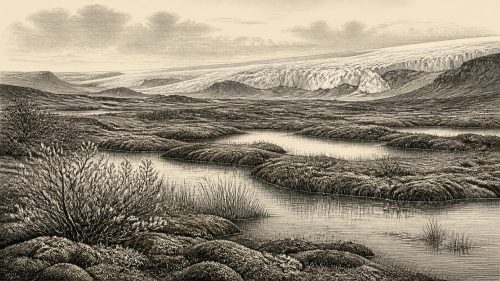
Thirty thousand years BCE is an artificial chronological label, not a recorded Irish event. During Marine Isotope Stage 3, Ireland experienced fluctuating cold conditions before the Last Glacial Maximum, supporting varied, locally productive open habitats amid ice, wetlands and periglacial terrain. Castlepook Cave in County Cork preserves Ireland’s richest pre-maximum vertebrate record, though its mixed, disturbed deposits span millennia and cannot reconstruct a single fauna. Mammoth, reindeer, giant deer, carnivores and smaller cold-adapted animals indicate changing ecosystems; Fermanagh plant remains document wetlands. A possibly tool-marked reindeer bone suggests an early human visit, but settlement remains unproven. Evidence remains highly fragmentary.
Read Article
Archived: 5 October 2026
Abstract
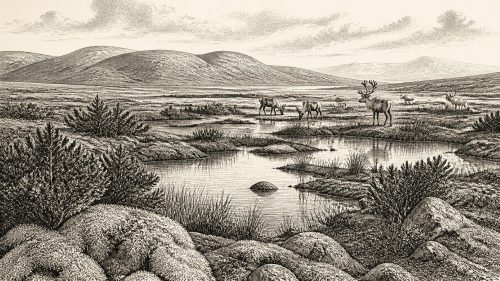
At the notional date of 30,225 BCE, Ireland lay within the climatically unstable later Pleistocene, not a precisely datable historical year. Derryvree, County Fermanagh, preserves freshwater silts and organic deposits between two tills, showing a locally ice-free interval with shallow water and treeless, tundra-like vegetation before renewed glaciation. Its radiocarbon range encompasses the date broadly. Ice expansion varied regionally, preventing conclusions about nationwide conditions or routes across exposed seas. Castlepook Cave records diverse cold-stage fauna, but deposits span multiple periods. A possibly tool-marked reindeer bone suggests human activity, yet no secure evidence demonstrates Palaeolithic settlement, society, or occupation in Ireland.
Read Article
Archived: 5 October 2026
Abstract
Ireland around 32,200 calibrated years before present lay within an unstable cold phase of the Midlandian glaciation, not a historically datable year. At Derryvree, County Fermanagh, freshwater sediments between tills record temporary ice-free conditions: treeless tundra and muskeg with grasses, sedges, juniper, mosses, wet hollows and pools. Cave deposits, notably Castlepook in County Cork, preserve remains of reindeer, mammoth, giant deer and other Ice Age animals, demonstrating ecological links with Europe. A possibly cut-marked reindeer bone hints at human visitation, but no secure settlement, tools or human remains exist. Evidence therefore supports environmental reconstruction, not political, social or cultural history.
Read Article

Archived: 5 October 2026
Abstract
Thirty thousand years BCE is not a recorded Irish date but a calibrated horizon within the unstable Late Pleistocene. Derryvree, County Fermanagh, preserves freshwater organic sediments between glacial tills, dated by BIRM-166 to a broad interval encompassing 30,227 BCE. Its plants indicate treeless, periglacial wetlands with tundra vegetation, later overridden by ice. The site demonstrates local environmental change, not island-wide conditions or a single event. Cave remains at Castlepook show that varied cold-adapted fauna reached Ireland, although their chronology remains complex. A possibly butchered reindeer bone suggests provisional human presence, but no secure evidence confirms settlement, society, or continuous occupation.
Read Article

Archived: 5 October 2026
Abstract
At 30,228 BCE, Ireland has no recoverable annual history; evidence instead derives from uncertain Late Pleistocene deposits and fauna. Derryvree, County Fermanagh, records a freshwater wetland between glacial advances, with cold, treeless vegetation including sedges, mosses and aquatic plants, indicating a tundra-like environment. Castlepook Cave, County Cork, preserves remains of reindeer, mammoth, giant deer and other cold-adapted animals, although its poorly recorded deposits cannot date a single moment. A potentially cut-marked reindeer bone suggests brief Upper Palaeolithic human activity, but proves neither settlement nor continuity. Environmental instability preceded the Last Glacial Maximum, which destroyed or buried much earlier surviving evidence.
Read Article

Archived: 5 October 2026
Abstract
Around 30,229 BCE, Ireland lay within the unstable Late Pleistocene, not a documented historical year. Derryvree, County Fermanagh, preserves freshwater sediments indicating an ice-free tundra wetland during a broadly comparable interval, with mosses, sedges, herbs and sparse woody plants. Crag Cave records climatic fluctuations, while Castlepook Cave’s mixed faunal deposits show mammoth, reindeer, giant deer, predators and other cold-adapted animals. A possibly stone-tool-marked reindeer bone suggests occasional Upper Palaeolithic human activity, but permanent settlement remains unproven. Lower sea levels altered access routes. Later glaciation reshaped landscapes and limited surviving evidence, leaving environmental traces rather than records of communities or events.
Read Article
Archived: 5 October 2026
Abstract
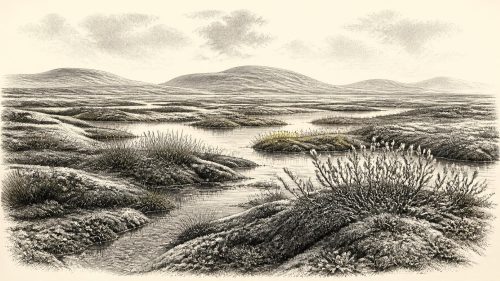
Modern date 30,230 BCE is only a filing label; Derryvree’s radiocarbon-dated organic silts instead represent a broad interval around 34,950–29,750 BCE. Exposed between lower and upper glacial tills, they record an ice-free Fermanagh basin with freshwater, tundra vegetation and intensely seasonal conditions during MIS 3. Plants indicate wetlands, shallow pools and treeless cold-country mosaics. Castlepook Cave preserves a time-depth fauna including mammoth, reindeer, giant deer, predators and lemmings, showing varied cold-stage habitats. A possibly butchered reindeer bone suggests episodic human visitation, but lacks secure associated tools or occupation. Later ice buried and reshaped such landscapes; Derryvree remains an environmental archive.
Read Article
Archived: 5 October 2026
Abstract
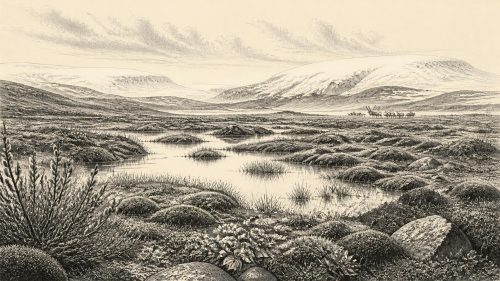
30,231 BCE cannot be treated as a Irish year, but lies within the later Pleistocene, Marine Isotope Stage 3. At Derryvree, County Fermanagh, sediments between glacial tills preserve evidence of a cold, treeless freshwater wetland, with mosses, sedges, insects and hardy plants, during an interval between ice advances. Ireland’s pre-Last Glacial Maximum environment was varied, not uniformly ice-covered, and altered coastlines offered uncertain animal routes. Cave remains indicate cold-adapted mammals, including reindeer and giant deer, reached Ireland. A possible cut-marked reindeer bone suggests human activity, but no secure settlement evidence exists. The period is understood through fragmentary records, not events.
Read Article

Archived: 5 October 2026
Abstract
Around 30,232 BCE, Ireland experienced a variable Late Pleistocene climate during MIS 3, before the Last Glacial Maximum. Derryvree deposits in County Fermanagh indicate ice-free tundra wetlands with grasses, sedges, mosses, pools and limited shrubs between glacial advances. Southern caves, notably Castlepook in County Cork, preserve remains of reindeer, mammoth, giant deer and predators, demonstrating intermittent ecological connections with Britain and continental Europe. A cut-marked reindeer femur may indicate Upper Palaeolithic butchery and brief human visits, but cannot prove permanent settlement. No securely associated tools, camps, culture or social organisation survive. Evidence shows harsh landscapes, mobile fauna and possible people.
Read Article


