Art MacMurrough-Kavanagh
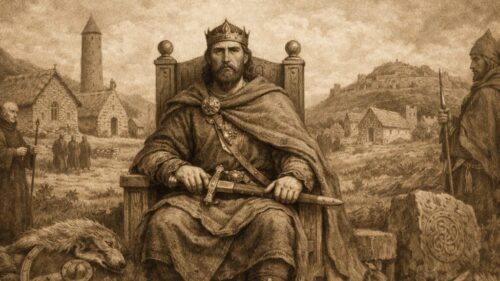
Art MacMurrough, also called Art Mac Murrogh Kavanagh, was king of Leinster in the later fourteenth and early fifteenth centuries. One biography states that he was born in 1357, was knighted when he was seven, and succeeded to the government of Leinster when he was twenty after his father died. From his sixteenth year, he is said to have resisted encroachments and to have levied exactions upon the colonists in return for leaving the roads open between the northern and southern parts of the Pale. Many Leinster septs, claiming descent from Cahir Mor, obeyed him as their chief.
Dateline
Art MacMurrough, also called Art Mac Murrogh Kavanagh, was king of Leinster in the later fourteenth and early fifteenth centuries. One biography states that he was born in 1357, was knighted when he was seven, and succeeded to the government of Leinster when he was twenty after his father died.
Leinster Power
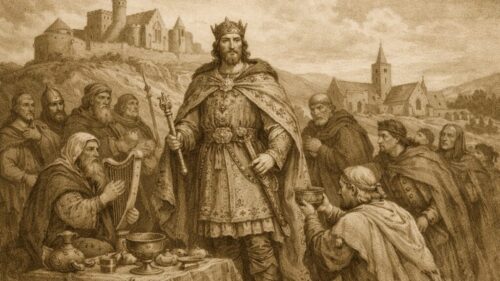
From his sixteenth year, he is said to have resisted encroachments and to have levied exactions upon the colonists in return for leaving the roads open between the northern and southern parts of the Pale. Many Leinster septs, claiming descent from Cahir Mor, obeyed him as their chief. Later tradition described him as holding “the sovereignty and the charters of the province” in his hand, and as being replete with hospitality, knowledge, and chivalry.
Marriage Alliance
He strengthened his position by marrying the Baroness of Narragh, daughter of Maurice, fourth Earl of Kildare. The estates attached to that marriage were seized and granted by the crown to others, on the ground that she had forfeited them by marrying one of the principal enemies of the King of England. The war that followed was one cause of Richard II’s expedition to Ireland in 1394.
Royal Encounter
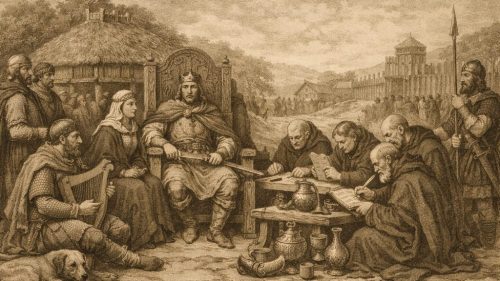
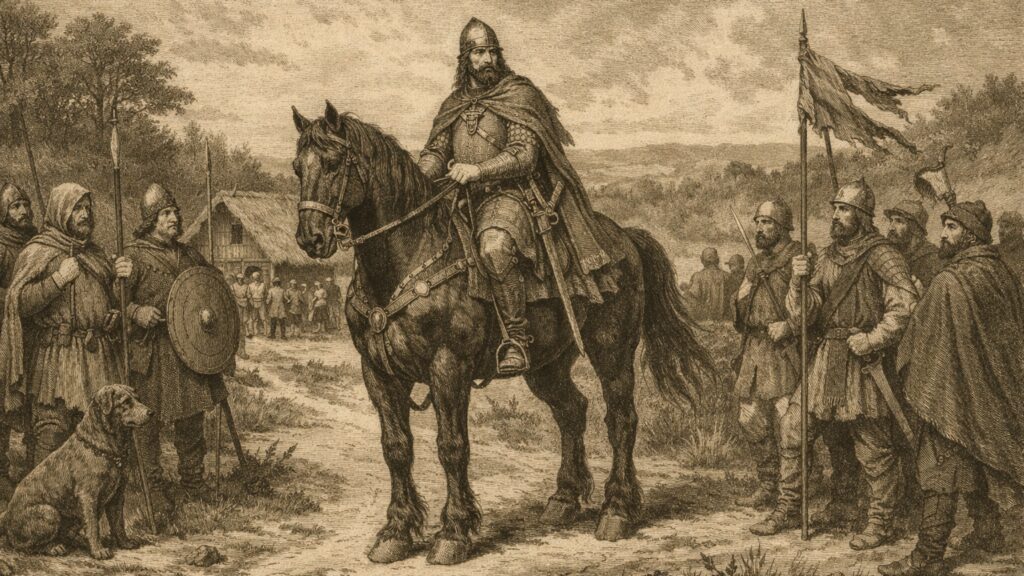
When Richard II arrived at Waterford, Art made a descent upon New Ross, ravaged it, and carried off booty and hostages. In February 1395 he met the king’s commissioners at Ballygorry near Carlow, mounted on a black horse, and swore allegiance on condition that his wife’s lands should be restored, an annuity paid, and equivalent lands granted in exchange for those he was asked to surrender. The following month he was entertained in Dublin with great splendour and accepted knighthood from Richard after keeping vigil in Christ Church.
Later Warfare
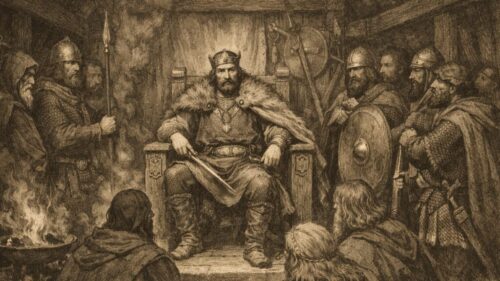
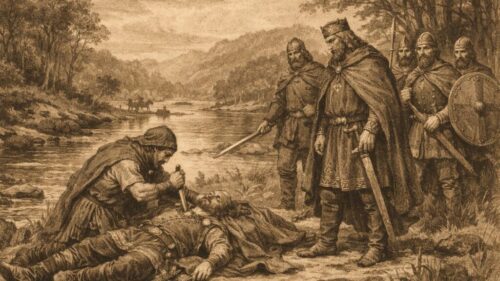
After Richard returned to England, hostages including sons of MacMurrough were taken with him. Art soon returned to hostilities: in 1397 he took Carlow, and in 1398 he defeated an Anglo-Irish army on the banks of the Nore, where Roger Mortimer, the viceroy, fell. He later told Richard that he would neither submit nor obey him, that he was the rightful king of Ireland, and that he would never cease from war and the defence of his country while he lived. He afterwards held Camolin, Enniscorthy, and Wexford, and in 1408 advanced against Dublin and defeated the garrison under Lord Thomas of Lancaster.
Final Years
The Four Masters record a victory in 1413 by “Mac Murrough (Art, the son of Art Kavanagh), Lord of Leinster,” over the English of Contae Reagh, with many slain and others taken prisoner. Another biography states that he died at New Ross a week after Christmas in 1417, in the sixtieth year of his age.
Source References
Hover over a number to see the source. Select it to open the source.