Ruaidrí Ua Conchobair
Ruaidrí Ua Conchobair is named in the annals in connection with events of the twelfth century. The surviving notices identify him by name and place him among the rulers of Connacht. They record him in actions involving military movement, the taking of hostages, inauguration, tribute, and the reception of important figures into his house. The notices are brief and episodic, but they preserve a sequence of events in which Ruaidrí appears repeatedly in the political affairs of the western and southern Irish kingdoms. The annals identify him as Ruaidhri Ua Conchobair and place him among the rulers of Connacht.
Dateline
Ruaidrí Ua Conchobair is named in the annals in connection with events of the twelfth century. The surviving notices identify him by name and place him among the rulers of Connacht. They record him in actions involving military movement, the taking of hostages, inauguration, tribute, and the reception of important figures into his house. The notices are brief and episodic, but they preserve a sequence of events in which Ruaidrí appears repeatedly in the political affairs of the western and southern Irish kingdoms.
Royal Lineage
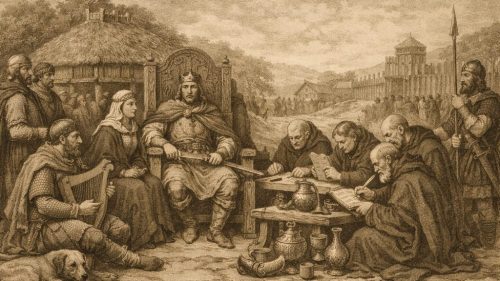
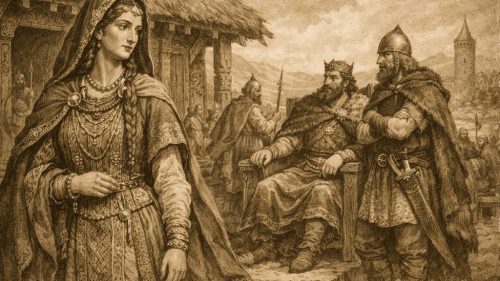
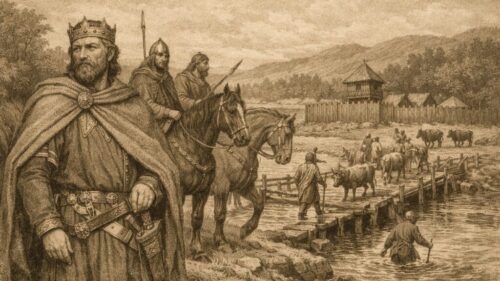
The annals identify him as Ruaidhri Ua Conchobair and place him among the rulers of Connacht. In 1165, an army led by Ruaidhri Ua Conchobair and the men of Connacht went to Desmond, and the chiefs of Desmond came into his house together with their lord, Diarmait son of Cormac Mac Carthy. The entry records the movement of an armed force and the arrival of the chiefs of Desmond at his house.
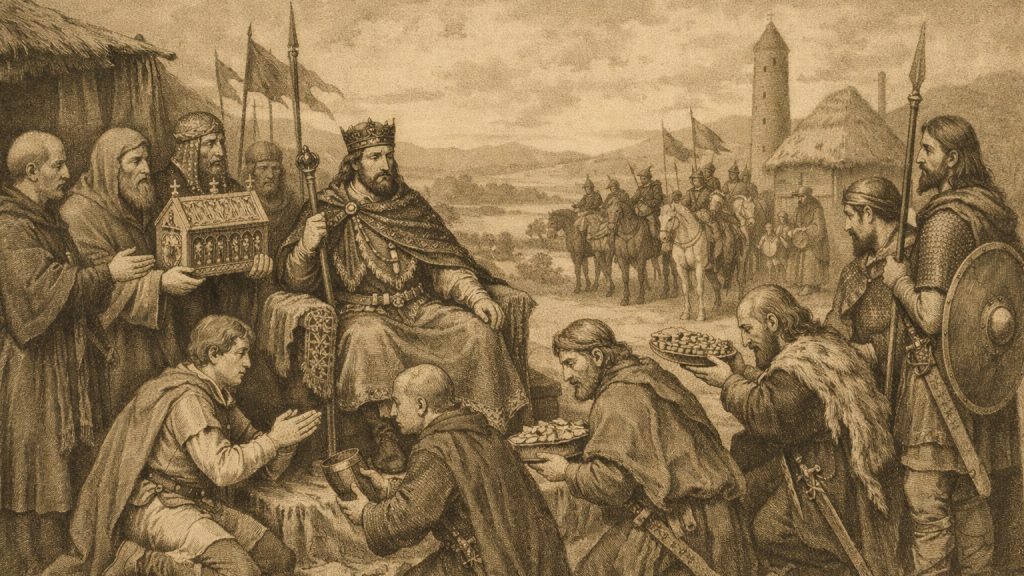
In 1166, the annals state that Ruaidhri Ua Conchobhair had the shrine of Manchan of Maethail covered, and that an embroidering of gold was carried over it by him. The entry says that this was done in as good a style as a relic was ever covered in Ireland. The notice is confined to the shrine and its covering, and it preserves the detail that gold embroidery was carried over it by him.
Connacht Power
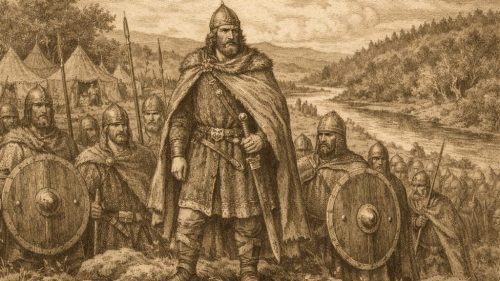
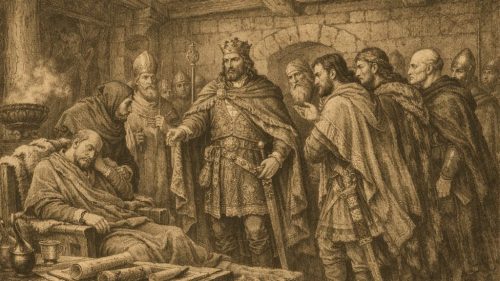
Other entries from the same year describe Ruaidhri leading armed forces beyond Connacht. The annals say that he led an army with the Connaughtmen, the men of Meath, and those of Teathbha to Ath-cliath, and that he was there inaugurated king as honourably as any king of the Gaeidhil was ever inaugurated. The same notice adds that he gave stipends to the foreigners in many cows, and that he levied a tax of four thousand cows upon the men of Ireland for them. The record places inauguration, tribute, and the presence of foreigners together in the same sequence of events.
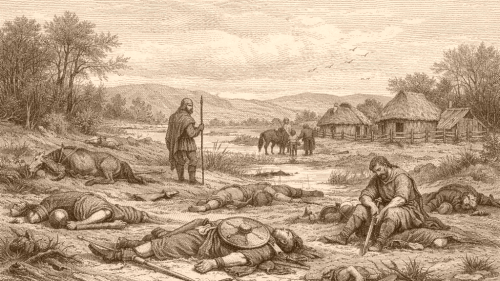
From Ath-cliath, the foreigners accompanied Ruaidhri to Droicheat-atha, where Donnchadh Ua Cearbhaill and the chieftains of Airghialla came into his house and gave him their hostages. The annals then say that Ruaidhri proceeded with the same forces back to Leinster and took hostages there. He afterwards advanced to Fidh-dorcha and cleared the pass of that wood, and next proceeded into Ui-Ceinnsealaigh, where he took the hostages of Diarmaid Mac Murchadha and of the Ui-Ceinnsealaigh in general. These entries preserve a sequence of movement, submission, and hostage-taking.
Munster Settlement
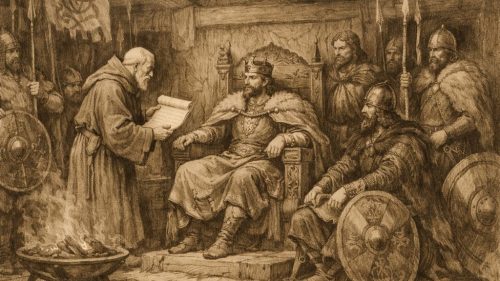
The annals also record a further expedition into the south. Another great army of the men of Connaught, Breifne, and Meath was led by Ruaidhri Ua Conchobhair into Leinster, into Osraighe, and afterwards into Munster. The text says that all the kings of Leath-Mhogha came into his house and submitted to him. It then states that he divided Munster into two parts, giving one to the Sil-Briain and the other to Diarmaid son of Cormac Mac Carthaigh. The notice records the movement of a large army, the submission of kings, and the division of Munster.
The same body of evidence also places Ruaidhri in relation to events in the north-west. In 1166, he led an army to Eas-Ruaidh and took the hostages of the Cinel-Conaill. The annals preserve this as a separate notice from his movements in Ath-cliath, Droicheat-atha, Leinster, and Munster. The record is made up of such separate entries, each of which notes a particular campaign, a reception, or the taking of hostages.
Monastic Patronage
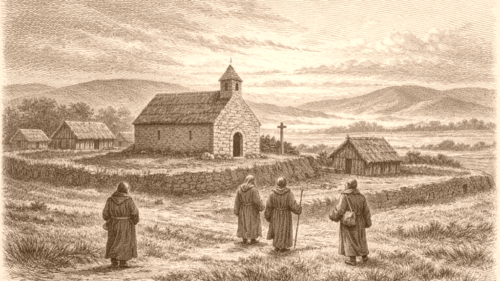
Alongside warfare and kingship, Ruaidhri appears in connection with an ecclesiastical object. The annals state that he covered the shrine of Manchan of Maethail and that an embroidering of gold was carried over it by him. The same entry says that the shrine was covered in as good a style as a relic was ever covered in Ireland. The surviving notice is limited to the shrine and the gold embroidery carried over it by Ruaidhri.
The surviving notices do not give comparable detail for his family life or later career in these extracts. What they do preserve are isolated entries concerning military movements, the receiving of chiefs, the taking of hostages, inauguration at Ath-cliath, the levy of cows, the division of Munster, and the covering of the shrine of Manchan of Maethail. They also record his movement to Eas-Ruaidh and the taking of the hostages of the Cinel-Conaill. Taken together, these annalistic notices present a sequence of dated events associated with Ruaidhri Ua Conchobhair and his activities in Connacht, Leinster, Munster, Meath, Teathbha, Desmond, Airghialla, and the north-west.
Source References
Hover over a number to see the source. Select it to open the source.