Joseph Biggar
Joseph Biggar was an Irish politician born in Belfast in 1828. He was educated at the Belfast Academy and entered his father’s business as a provision merchant. He became head of the firm in 1861 and carried it on until 1880. From 1869 onwards, Biggar took an active part in local politics in Belfast. He was elected a town councillor in 1871 and acted for several years as chairman of the Belfast Water Commission. His parents were Presbyterians, and he was received into the Roman Catholic Church in 1877. Biggar joined Isaac Butt’s Home Rule Association in 1870.
Dateline
Joseph Biggar was an Irish politician born in Belfast in 1828. He was educated at the Belfast Academy and entered his father’s business as a provision merchant. He became head of the firm in 1861 and carried it on until 1880.
Belfast Politics
From 1869 onwards, Biggar took an active part in local politics in Belfast. He was elected a town councillor in 1871 and acted for several years as chairman of the Belfast Water Commission. His parents were Presbyterians, and he was received into the Roman Catholic Church in 1877.
Home Rule
Biggar joined Isaac Butt’s Home Rule Association in 1870. In 1872 he contested Londonderry in the nationalist interest and finished last of the three candidates. At the general election of 1874 he was returned as one of the Home Rule members for County Cavan, and he sat for that constituency until his death. Hansard records him as a member for Cavan from 1874 and later for West Cavan from 1885.
Parliamentary Tactics
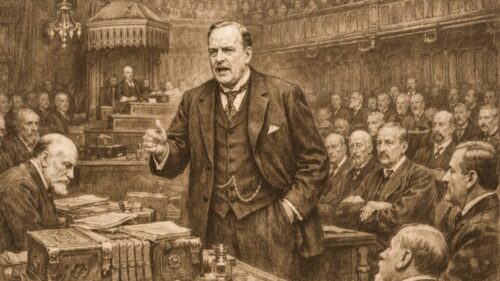
He made two motions to report progress at the close of his first parliamentary session in 1874. During 1875 he became prominent for parliamentary obstruction, using long speeches, questions, and similar tactics to delay business. At the close of 1875 he joined the Irish Republican Brotherhood and was soon afterwards elected to its supreme council, but in August 1877 he was expelled after refusing to accept a break with parliamentary politics.
Later Years
Biggar was elected one of the treasurers of the newly founded Land League on 21 October 1879. He was indicted with Parnell in the autumn of 1880 during the land agitation, but the prosecution failed. In January and February 1881 he took part in the long sittings in the Commons and was among the Irish members suspended for disorderly conduct. He later came under the 1887 special commission’s scrutiny. Biggar died of heart disease at 124 Sugden Road, Clapham Common, on 19 February 1890, and was buried in St Patrick’s Church, Donegal Street, Belfast, on 24 February.
Source References
Hover over a number to see the source. Select it to open the source.