Segais Battle502 CE
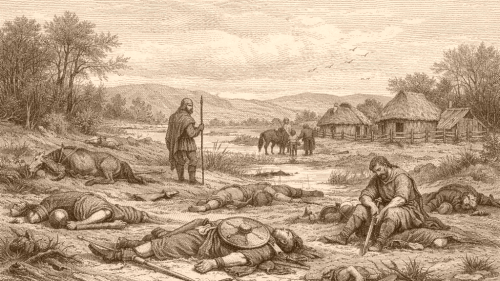
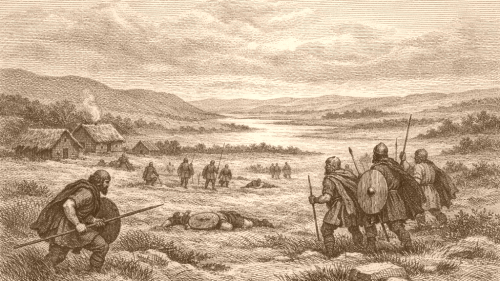
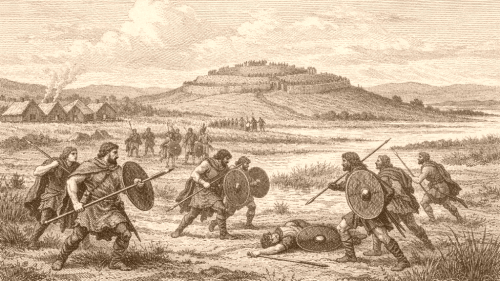
The surviving annals do not preserve a large body of material for 502 CE. The Annals of Ulster place the battle of Segais under a year written as 501 or 502, while the Annals of Tigernach and the Annals of Inisfallen preserve related battle notices in their own year structures. The evidence shows sparse coverage and some chronological uncertainty rather than a single securely fixed event.
Dateline
Dating Uncertainty
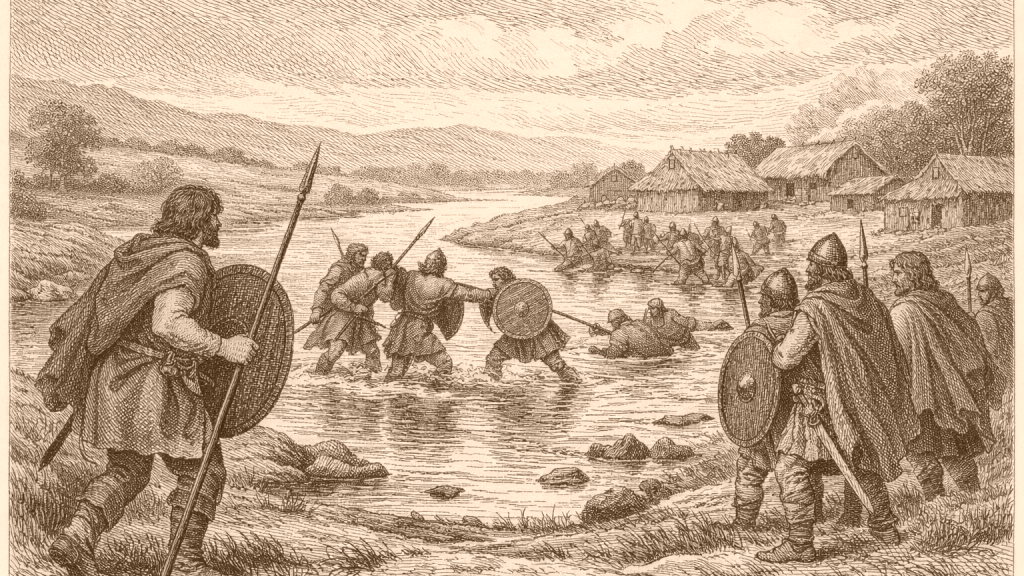
The Annals of Ulster place the battle of Segais under a year heading written as 501 or 502, which makes the entry relevant to 502 CE but not absolutely fixed to it. The same notice identifies Muirchertach Mac Erca as the victor and says Duach, king of Connacht, fell in the battle. [1]
Irish Entries
In the Annals of Tigernach, T502 records the battle of Inde Mór in the district of Uí Gabla, won by the Leinstermen over Illand son of Dunlang, with Muircheartach son of Erc named as victor. T502 also records the death of bishop Iubar on the ninth of the Kalends of May, aged 303. [2]
The Annals of Inisfallen preserve a brief notice for Segais and explicitly link it to the Annals of Ulster’s 502 entry. Their wording also names Mac Erce as victor and says Tenga Uma fell. [3]
Sparse Coverage
Taken together, these annalistic notices show that the surviving record for 502 CE is narrow and uneven. The material preserved here centers on battle entries and a death notice, while the dating itself remains less secure in Ulster than in the other excerpts. [1] [2] [3]
Source References
Hover over a number to see the source. Select it to open the source.