Francis Sheehy-Skeffington
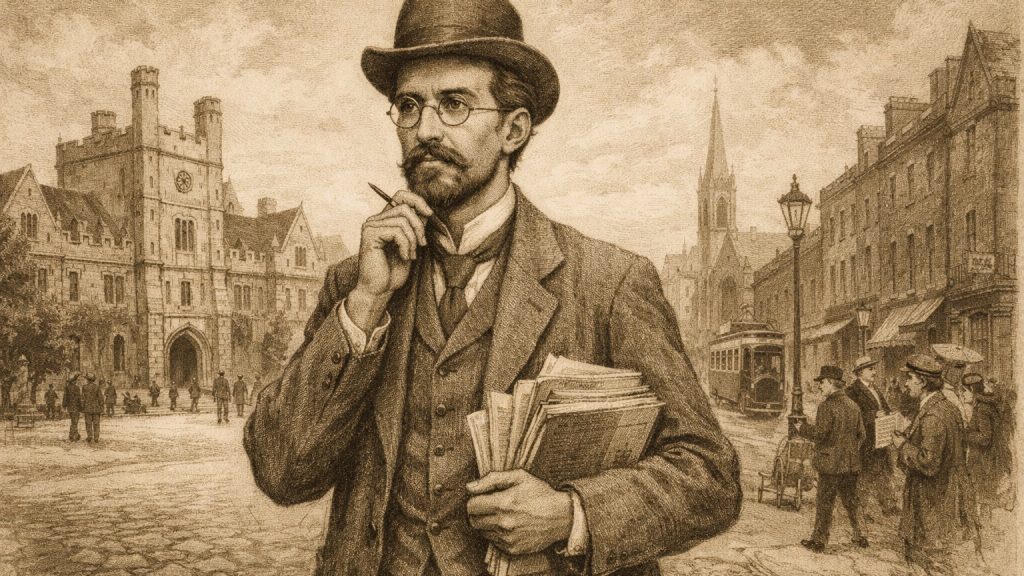
Francis Sheehy-Skeffington studied at University College, Dublin, where he was a friend of James Joyce. While there, the two men had essays that had been rejected by St Stephen’s privately printed in 1901 as Two Essays. He later worked as registrar of the college and married Hanna Sheehy during that period. Sheehy-Skeffington worked with Hanna in a range of socialist and radical causes, including women’s suffrage. He became editor of The Irish Citizen, which he had co-founded in 1912. During the 1913 lock-out, he served on the Peace Committee.
Dateline
Francis Sheehy-Skeffington studied at University College, Dublin, where he was a friend of James Joyce. While there, the two men had essays that had been rejected by St Stephen’s privately printed in 1901 as Two Essays. He later worked as registrar of the college and married Hanna Sheehy during that period.
Public Work
Sheehy-Skeffington worked with Hanna in a range of socialist and radical causes, including women’s suffrage. He became editor of The Irish Citizen, which he had co-founded in 1912. During the 1913 lock-out, he served on the Peace Committee. He also became vice-chairman of the Irish Citizen Army in 1913, on the understanding that it would remain defensive, and he left when it adopted a political and military stance.
War Years
After the outbreak of war in 1914, he campaigned against recruitment and was sentenced to six months’ imprisonment. During the Easter Rising, he was arrested at Portobello Bridge in Rathmines and detained in Portobello Barracks. The following morning, he was summarily shot at the behest of Captain J. C. Bowen-Colthurst.
Source References
Hover over a number to see the source. Select it to open the source.