Rosie Hackett
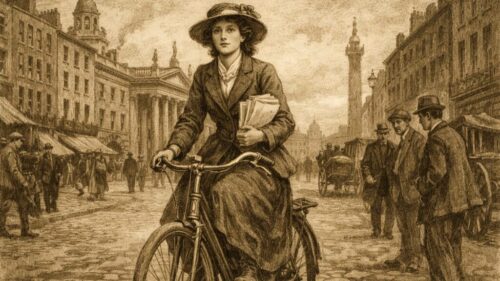
Rosie Hackett, christened Rosanna, was born in Dublin in 1892. She was living with her mother and sister in a tenement building on Bolton Street in 1901, after her father died when she was young. As a teenager, she worked as a packer in a paper store and later as a messenger for Jacob’s Biscuits. She joined the Irish Transport and General Workers Union in 1909. On 22 August 1911, she helped to galvanise and organise more than 3,000 women working in the factory, and they won better working conditions and increased pay.
Dateline
Rosie Hackett, christened Rosanna, was born in Dublin in 1892. She was living with her mother and sister in a tenement building on Bolton Street in 1901, after her father died when she was young.
Early Work
As a teenager, she worked as a packer in a paper store and later as a messenger for Jacob’s Biscuits. She joined the Irish Transport and General Workers Union in 1909. On 22 August 1911, she helped to galvanise and organise more than 3,000 women working in the factory, and they won better working conditions and increased pay.
Trade Union
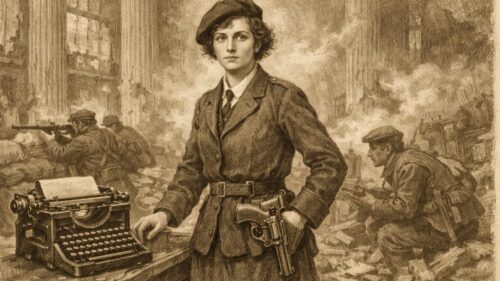
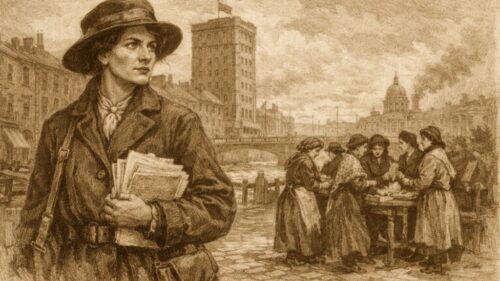
After the 1911 strike, Hackett cofounded the Irish Women Workers’ Union with Delia Larkin. During the 1913 Dublin Lockout, she helped provide strikers with basic food and moral support. In 1914 she lost her job in Jacob’s for her part in the Lockout, then took a post as a clerk in the IWWU in Liberty Hall and worked alongside Delia Larkin and Helena Maloney. It was there that she became connected with the Irish Citizen Army.
Rising Role
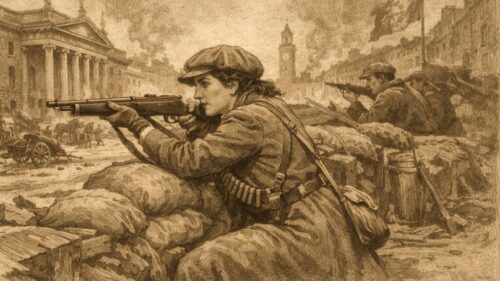
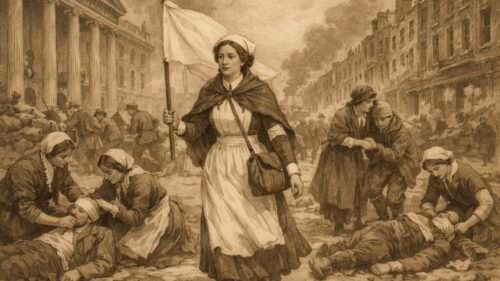
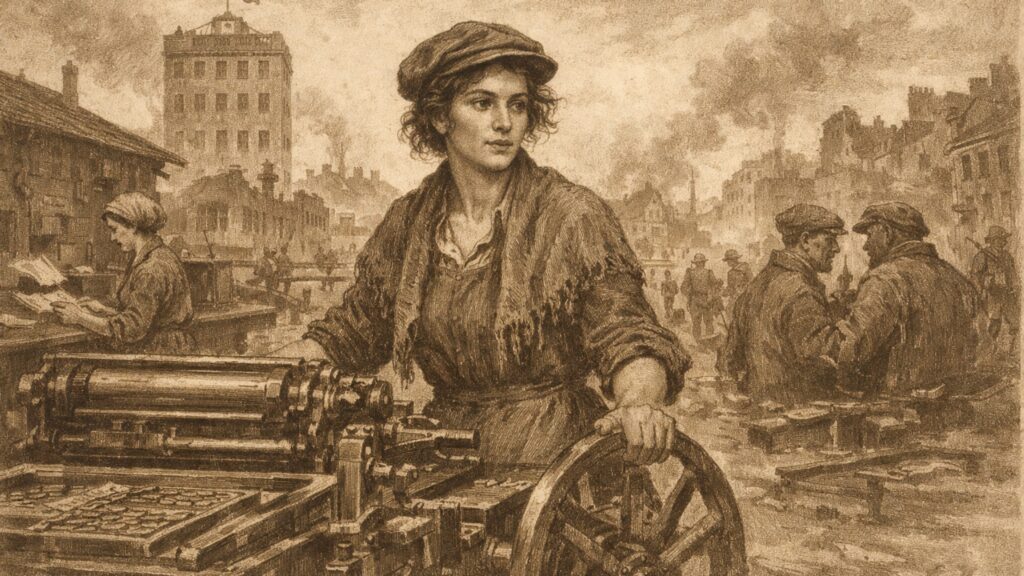
Hackett was among the small group at Stephen’s Green and the Royal College of Surgeons during the Easter Rising. She was also involved with the group that printed the first 1916 Proclamation and gave it to James Connolly. RTÉ records that she had been bringing messages to and from Liberty Hall for Connolly in the week leading up to the Rising, and that on 22 April 1916 she became the first woman to see the Proclamation being printed at Liberty Hall. After the surrender at the Royal College of Surgeons, she and others were taken to Kilmainham Jail, where they were imprisoned for ten days before being released on general release.
Later Years
After the Rising, Hackett re-founded the IWWU with Louie Bennett and Helen Chenevix. She continued her work in Liberty Hall for over 40 years. In 1970, she was awarded a gold medal for giving 60 years of her life to the trade union movement. She died in 1976, aged 82.
Source References
Hover over a number to see the source. Select it to open the source.