Winifred Carney
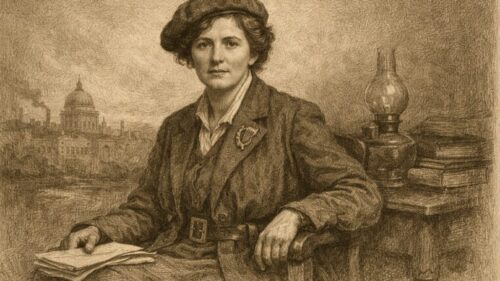
Early Life Winifred Carney was born in County Down in December 1887. Her father was Alfred Carney, a commercial traveller and Protestant, and her mother was Sarah Carney, née Cassidy, a Catholic. After her parents separated in her childhood, her mother supported the family by running a shop on the Falls Road in Belfast. Trade Union In 1912 Carney became secretary of the Irish Textile Workers’ Union in Belfast. During the Dublin Lockout of 1913 she took part in fundraising in Belfast for workers affected by the dispute.
Dateline
Early Life
Winifred Carney was born in County Down in December 1887. Her father was Alfred Carney, a commercial traveller and Protestant, and her mother was Sarah Carney, née Cassidy, a Catholic. After her parents separated in her childhood, her mother supported the family by running a shop on the Falls Road in Belfast.
Trade Union
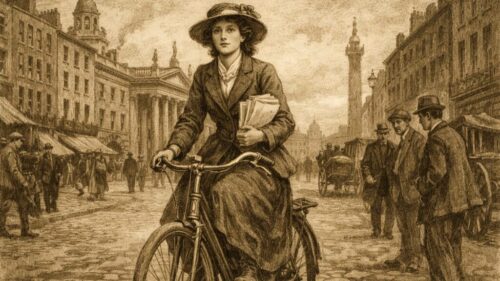
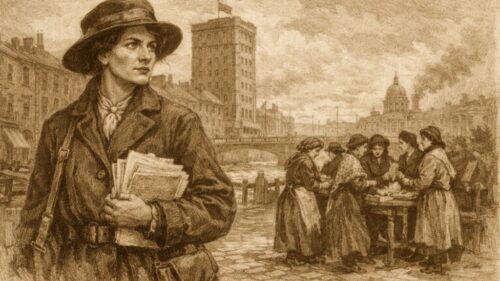
In 1912 Carney became secretary of the Irish Textile Workers’ Union in Belfast. During the Dublin Lockout of 1913 she took part in fundraising in Belfast for workers affected by the dispute. Through her work in the women’s section of the union she became James Connolly’s personal secretary, and she also became a member of the Irish Citizen Army.
Easter Week
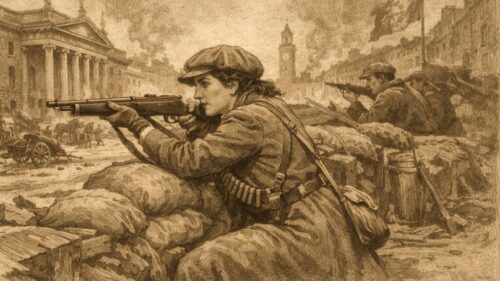
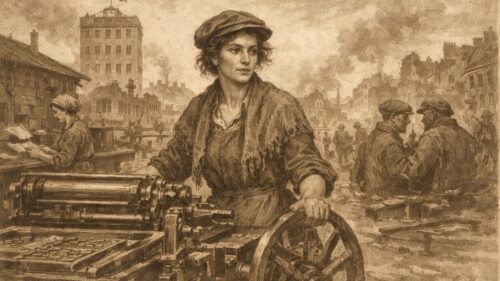
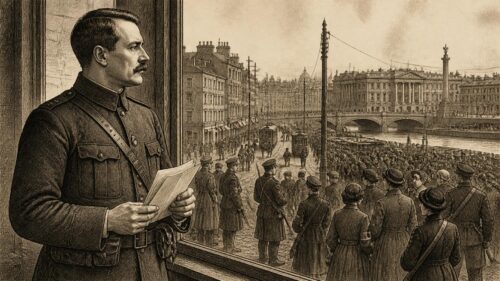
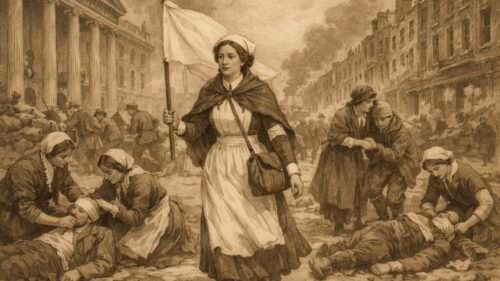
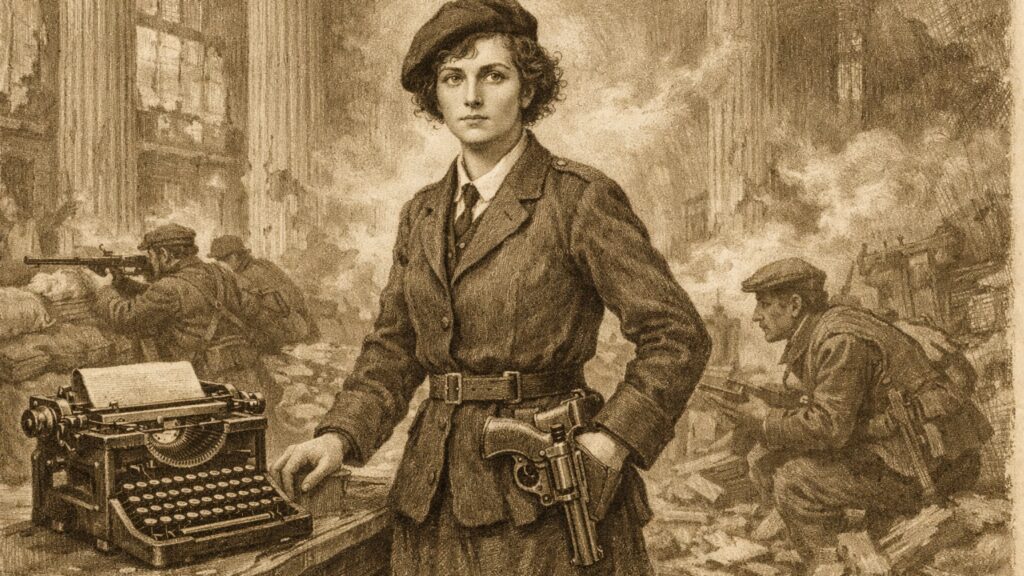
During Easter Week 1916, Carney served as Connolly’s aide-de-camp and typed mobilisation orders and dispatches in Liberty Hall. On Easter Monday she was among the initial group who seized the GPO, arriving with a typewriter and a Webley revolver. She refused to leave the GPO on Friday of that week despite Pearse’s orders, and was among the last women to leave, travelling from the GPO to Moore Street.
Later Years
Carney was arrested at the Rotunda the following Saturday. She was detained in Kilmainham Jail and then deported to Aylesbury Prison in England, where she remained interned until her release on Christmas Eve 1916. After returning to Belfast in 1917, she later became President of Cumann na mBan Belfast for a period and served on its Executive. In 1924 she joined the Labour Party and worked with the Irish Transport and General Workers’ Union. In 1928 she married George McBride, a Belfast socialist and unionist and former British soldier. She died in Belfast, Antrim, in 1943 aged 55.
Source References
Hover over a number to see the source. Select it to open the source.