C. S. Lewis
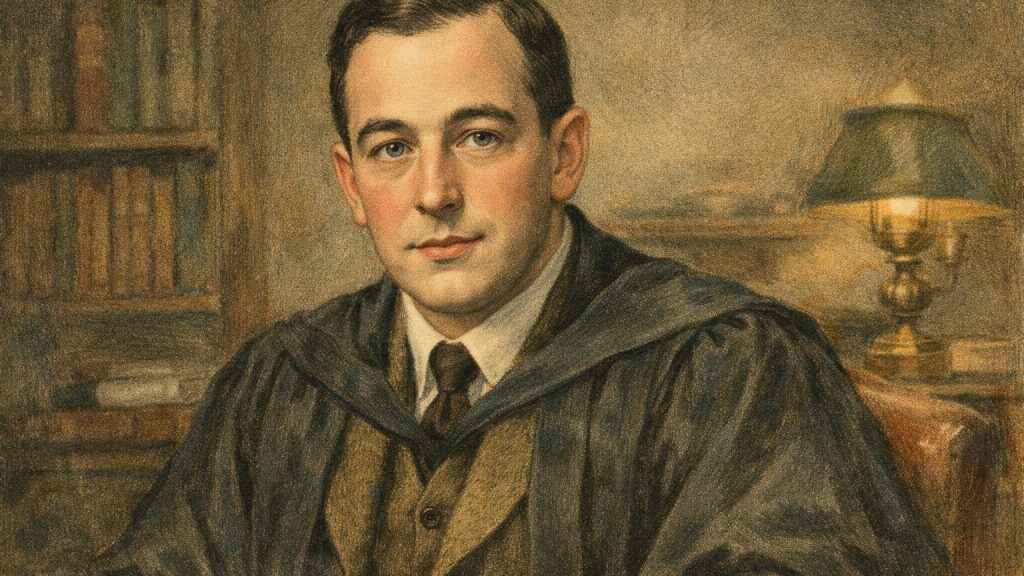
Clive Staples Lewis was born on 29 November 1898 in Dundela Villas, Belfast. His elder brother was Warren Hamilton Lewis, known as Warnie. Lewis was baptised on 29 January 1899 by his maternal grandfather in St Mark’s Church, Dundela. He later accepted Jack as the name used by friends and family. When he was seven, his family moved into Little Lea in East Belfast. He was schooled by private tutors until the age of nine, and after his mother died of cancer on 23 August 1908, his father sent him to Wynyard School in Watford.
Dateline
Clive Staples Lewis was born on 29 November 1898 in Dundela Villas, Belfast. His elder brother was Warren Hamilton Lewis, known as Warnie. Lewis was baptised on 29 January 1899 by his maternal grandfather in St Mark’s Church, Dundela.
Early Years
He later accepted Jack as the name used by friends and family. When he was seven, his family moved into Little Lea in East Belfast. He was schooled by private tutors until the age of nine, and after his mother died of cancer on 23 August 1908, his father sent him to Wynyard School in Watford.
Schooling Path
Lewis later attended Campbell College in Belfast, but left after a few months because of respiratory problems. He then studied at Cherbourg House in Malvern, where he abandoned the Christianity he had been taught as a child and became an atheist. In September 1913, he enrolled at Malvern College. After leaving Malvern, he studied privately with William T. Kirkpatrick.
Oxford Training
Boyhood Imagination
Lewis and his brother created a medieval Animal-Land with mice in armour, and later joined it with Warren’s imaginary version of India to form Boxen. He also wrote and illustrated his own animal tales from an early age, and his childhood reading and inventiveness shaped these early worlds.
Source References
Hover over a number to see the source. Select it to open the source.