Archived: 17 November 2026
Abstract
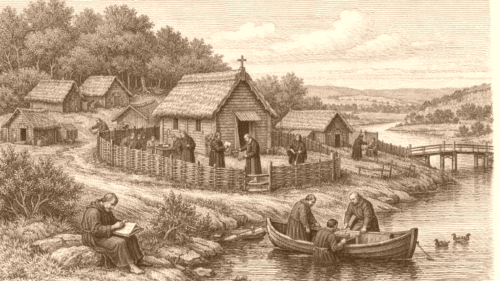
Year noticesIn the annalistic material for the mid-sixth century, the notices are brief and formulaic. In the Annals of Ulster, the year heading identified as AD 545 is followed by the notice that Daire Coluim Cille was founded. Chronicon Scotorum records Tigernach, Bishop of Cluain-eois, as having died under its AD 545 notice. The Annals of Tigernach place the death of Tighernach son of Cairpre, bishop of Cluain Eois, under T544. These are concise year entries rather than narrative accounts.Matching entriesThe Annals of Inisfallen preserve a foundation notice for Cluain Moccu Nóis under the identifier AI547. It names Nóis, described
Read Article
Archived: 17 November 2026
Abstract
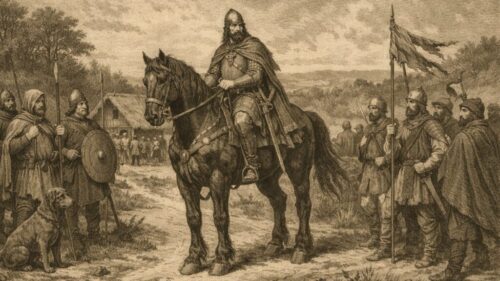
Art MacMurrough, also called Art Mac Murrogh Kavanagh, was king of Leinster in the later fourteenth and early fifteenth centuries. One biography states that he was born in 1357, was knighted when he was seven, and succeeded to the government of Leinster when he was twenty after his father died.Leinster PowerFrom his sixteenth year, he is said to have resisted encroachments and to have levied exactions upon the colonists in return for leaving the roads open between the northern and southern parts of the Pale. Many Leinster septs, claiming descent from Cahir Mor, obeyed him as their chief. Later tradition
Read Article
Archived: 17 November 2026
Abstract
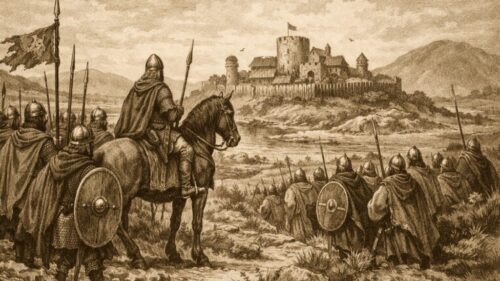
North CampaignBrian O'Neill appears in the Irish annals in connection with warfare in the north of Ireland in the early 1260s. One account says that Aed O Conchobair went to join him in the north, bringing many of the chief men of Connacht. It also says that Brian O'Neill and the chief men of Cenel Eogain went, together with Aed O Conchobair, to Downpatrick to attack the Galls. The same entry names him as king of the Gaels of Ireland and states that the Galls of that place defeated them both.The Annals of Ulster describe the same fighting as the
Read Article
Archived: 17 November 2026
Abstract
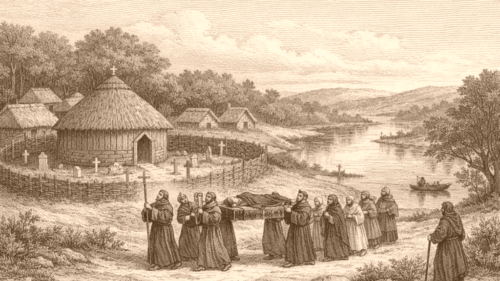
Year EvidenceThe Annals of Ulster record the death of Cathub son of Fergus, bishop of Achad Cinn, under AD 554. The Annals of the Four Masters place the death of St. Cathub, son of Fearghus, abbot of Achadh Cinn, on 6 April in the sixteenth year of Diarmaid, in the entry marked the Age of Christ, 554.The Annals of Ulster record the foundation of the church of Bennchor in their material headed AD 554. The Annals of the Four Masters place the foundation of Bennchar by Comhgall in 552. These are different year placements; the Four Masters notice cannot be
Read Article

Archived: 17 November 2026
Abstract
Cogitosus is known as an Irish author and monk of Kildare. The surviving evidence attaches his name to a single work, the Latin Life of Saint Brigid. The date and place of his birth and death are unknown, and it is uncertain even in what century he lived. Some later writers placed him in the sixth century, while other evidence points to a much later period. The probability, therefore, is that he lived and wrote the Life of St. Brigid about the beginning of the ninth century.Monastic SettingHe wrote the Life of St. Brigid in fairly good Latin, much better
Read Article
Archived: 17 November 2026
Abstract
Year EvidenceThe strongest securely dated notice for 550 CE in the retrieved annals is the death of Dáuíd of Farannán, named as bishop of Armagh and legate of all Ireland. The Annals of Ulster and the Annals of the Four Masters agree on the substance of the notice, though they differ slightly in wording and name form.This is the only clearly event-level evidence in the retrieved material that is directly tied to 550 CE in Ireland. The surviving excerpts do not add a securely dated battle, foundation, or political change for that year.Nearby ContextChronicon Scotorum’s CS550 records the battle of
Read Article
Archived: 17 November 2026
Abstract
Date FrameThe Annals of Ulster place the notice at U589.0, under the printed heading AD 588 in the extracted excerpt and AD 589 in the surrounding sequence. The entry records three items in close succession: the repose of bishop Aed son of Brec, the death of Aed son of Brénainn, king of Tethba, and a very hot and dry summer. The wording itself does not fix a day for any of the three notices, and it does not explain whether they were remembered from the same moment or simply gathered under the same year.A parallel tradition in the Annals of
Read Article
Archived: 17 November 2026
Abstract
Secure EventsThe strongest notice for 558 is the death of Diarmait son of Fergus Cerball. The Four Masters place it under 558, saying that after twenty years in sovereignty over Ireland he was slain by Aedh Dubh, son of Suibhne, king of Dál Araide, at Rath Beag in Mag Line; they also note that his head was brought to Cluain Mic Nois and his body was interred at Connor. Chronicon Scotorum preserves the same event in a shorter form, identifying the killing of Diarmait by Aedh Dubh at Rath Beag in Mag Line. Taken together, these notices securely show a
Read Article
Archived: 17 November 2026
Abstract
Year noticesThe annal notices for this period are brief and not all explicitly dated in the same way. In the Annals of Ulster, U556.0 has the printed AD heading 555, while U557.0 has no explicit AD heading. In the Annals of Inisfallen, AI556 and AI557 are likewise brief notices without explicit AD headings.Battle noticesWithin that sparse record, two battle notices are securely attached to 556 in the retrieved texts. The Annals of Tigernach record the battle of Druim Cleithe, where Ferdia, grandson of Fidbad and king of Ulaid, fell to Deman son of Cairell and the Uí Echach of Ard.
Read Article
Archived: 17 November 2026
Abstract
Dated NoticesThe most explicit Irish notice associated with 555 CE is a mortality entry in the Ulster annals: under the year headed AD 555, they record a great mortality in Ireland, identified more specifically as occurring in Chonall. The same annal year also names Pope Pelagius in the wider entry, but the mortality notice is the part that directly concerns Ireland.Chronicon Scotorum and the Annals of Inisfallen give a compatible ecclesiastical death notice for the same year. Both place the death or repose of Cathub or Cathbad, bishop of Achad Cinn or Achad Chinn, in the 555 entry, showing agreement
Read Article
