Archived: 17 November 2026
Abstract
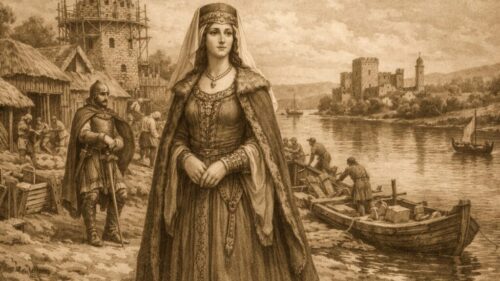
Early Life Wikidata gives her birth year as 1172 and her death year as 1220, and it lists Ireland as her place of birth. It names her father as Richard de Clare, 2nd Earl of Pembroke, and her mother as Aoife MacMurrough.MarriageIn August 1189, she married William Marshal, 1st Earl of Pembroke. The same source identifies several of their children, including Isabel Marshal and William Marshal, 2nd Earl of Pembroke.New RossLater accounts linked Isabella with New Ross on the River Barrow. One local history account says that William Marshal and Isabella de Clare arrived there in the early thirteenth century,
Read Article
Archived: 17 November 2026
Abstract
Donnchad mac Briain is named in the title of the Cambridge Core article “S. Stefano al Monte Celio, Donnchad mac Briain and papal legates in Ireland, 1064–1203.” The supplied evidence supports that article title and journal context, but it does not by itself supply a fuller biography.Source NotesThe bibliography below is limited to the supplied URLs and titles used in the evidence set. It preserves the identifiable published works and reference pages that mention Donnchad mac Briain, while avoiding unsupported additions.S. Stefano al Monte Celio, Donnchad mac Briain and papal legates in Ireland, 1064–1203 — Irish Historical Studies, Cambridge Core.
Read Article
Archived: 17 November 2026
Abstract
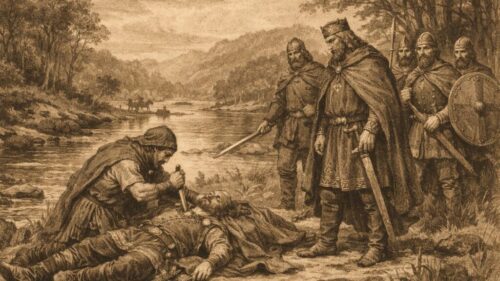
Áed Sláine is named in regnal material among the rulers of Ireland, alongside Colmán Rímid. In the annals, his slaying is recorded at Loch Semdile at the hands of Conall mac Suibne.Royal PlaceIn the regnal material preserved in the chronicles, Áed Sláine is counted among the kings of Ireland. The same tradition places him alongside Colmán Rímid, and in one chronicle poem the pair are named together among rulers of the island. The chronicle evidence records his death in the same year as the deaths of Aed Rón and Aed Buide. One annal records the slaying of Áed Sláine by
Read Article
Archived: 17 November 2026
Abstract
Niall Garbh O'Donnell was born in County Donegal and belonged to the O'Donnell line of Tyrconnell. He opposed the election of Red Hugh O'Donnell as chief, and a later account described him as the grandson of the elder brother of Sir Hugh O'Donnell. That same account said he believed he had been deprived of his birthright when the chieftainship passed to his cousin.Clan RivalryAccording to a later historical account, Niall Garbh took Lifford and Donegal from Red Hugh O'Donnell, and he was himself inaugurated at Kilmacrenan. A Cambridge study of the rebellion involving Sir Cahir O'Doherty shows that historians have
Read Article
Archived: 17 November 2026
Abstract
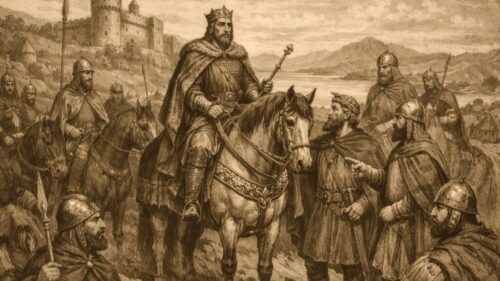
Cathal Crobhdearg Ua Conchobair is named in the Irish annals as king of Connachta. The surviving notices place him in military and political conflict in the later twelfth and early thirteenth centuries. In 1195, Cathal Crobderg, king of Connachta, came to Mumu and demolished many castles. The annal also says that the castles were renovated again, and that people expected him to destroy the foreigners on that expedition, though he did not return as planned. In 1201, the Annals of Ulster record the expulsion of Cathal Croibhderg Ua Conchobuir and say that Cathal Carrach was made king in his place.
Read Article
Archived: 17 November 2026
Abstract
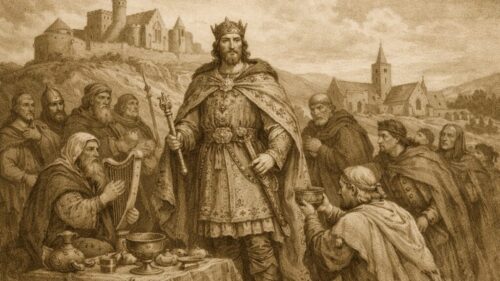
Royal StatusDomnall Mór Ua Briain was King of Thomond in Ireland from 1168 to 1194. He was also a claimant to the title King of Munster, and he was styled King of Limerick. These forms of kingship place him within the ruling O’Brien dynasty in the later twelfth century.Family LinksThe available biography names his wife as Orlacan Ní Murchada. It also gives him three sons and one daughter: Muirchertach Dall, Conchobar Ruad, Donnchadh Cairbreach, and Mór Ní Briain. The same family list identifies him as the father of these children and places him among the ruling figures of Thomond in
Read Article
Archived: 17 November 2026
Abstract
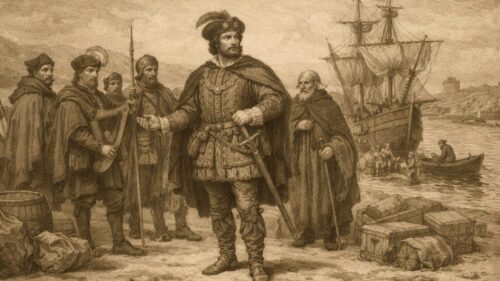
Rory O'Donnell was born in 1575 as the second son of Sir Hugh MacManus O'Donnell and Ineenduv MacDonnell of Cantire. He belonged to the O'Donnell clan of Tyrconnell and was the younger brother of Hugh Roe O'Donnell.War YearsHe accompanied Hugh Roe to Kinsale in 1601. After Hugh Roe fled to Spain, Rory became acting chief. He led the clan back to Connaught, joined O'Connor Sligo, and maintained guerrilla warfare until December 1602. In that month, he submitted to Mountjoy at Athlone.Earl TitleRory later surrendered to the Crown and was knighted in Dublin on 29 September 1603, when he was created
Read Article
Archived: 17 November 2026
Abstract
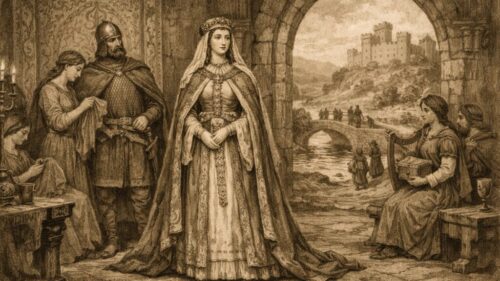
Aoife MacMurrough is identified in modern reference works as an Irish noblewoman and Irish royalty. The same sources also record her under several alternative names, including Eva MacMurrough, Eva of Leinster, Red Eva, and Countess of Pembroke. Those variants show that her name circulated in more than one form across later genealogical and biographical writing.Family BackgroundShe is described as the daughter of Diarmait Mac Murchada, King of Leinster, and Mor O'Toole. One biographical record classifies her as Irish royalty, and another gives her alternate names as Aoife MacMurrough, Eva MacMurrough, and Eva of Leinster. The records used here identify her
Read Article
Archived: 17 November 2026
Abstract
Early LifeFlorence MacCarthy Reagh was born in the early 1560s, probably at Kilbrittain Castle. His father was Sir Donagh MacCarthy Reagh, lord of Carbery, and his mother was a Geraldine and aunt of the last earl of Desmond. After his father died in 1576, Florence was made a ward of Sir William Drury. During the Desmond rebellion of 1579 to 1583, he served with the forces of Elizabeth I, and afterwards she rewarded him with gifts and an annual pension.Courtly PoliticsIn London, Florence MacCarthy adopted the customs of an English courtier, but he remained loyal to Catholicism and developed a
Read Article
Archived: 17 November 2026
Abstract
On 22 October 1641, Sir Phelim O'Neill surprised Charlemont, and Sir Con Magenis took the Newry and other places. Contemporary accounts place these actions against the wider alarm among Roman Catholics in Ulster after reports that a Puritan army might be sent into Ireland under General Leslie. In that climate, a convocation of leading gentlemen in the province discussed their safety and sought support from Irish officers abroad. O'Neill was then chosen commander in chief, described as the most considerable person of his name in Ulster.Ulster RisingAs commander, O'Neill moved from local seizure to wider campaigning. He went to besiege
Read Article
