Archived: 1 November 2026
Abstract
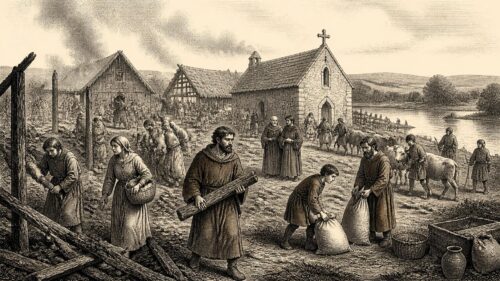
In 730, the Annals of Ulster securely records the burning of Cúl Raithin, probably later Coleraine, but supplies no perpetrators, cause or consequences. The destruction nevertheless highlights the vulnerability and importance of church settlements as religious, economic and political centres. A battle at Bealach Éle between Munster and Leinster, involving Osraige and Déisi leaders, belongs to the early 730s, although annals date it variously to 730 and 735. Heavy losses are reported, without proof of a decisive outcome. These events reveal decentralised authority, intertwined secular and ecclesiastical networks alike, and rural communities dependent upon farming, patronage and vulnerable material resources.
Read Article
Archived: 1 November 2026
Abstract
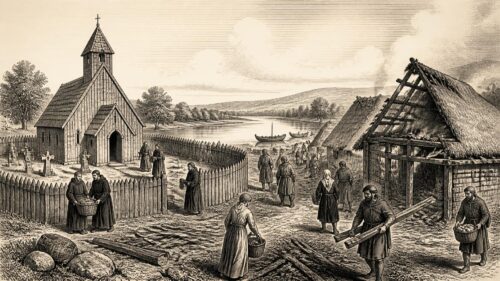
In 731, Irish annals record the burning of Cúl Raithin, generally identified with Coleraine, without naming attackers, motive or losses. As a church-centred settlement on the Bann, its destruction probably disrupted worship, learning, storage, production and lordship. Annalistic chronology supports the date but cautions against detailed reconstruction. Death notices commemorate religious figures including Colmán úa Littáin and Eochaid of Armagh, while revealing varied ecclesiastical centres and ties to dynasties. Reports of fighting in Dál Riata and Pictland, and Ceolwulf’s Northumbrian imprisonment, show a connected northern maritime world. The evidence remains selective, recording no unified Irish crisis but illuminating ordinary life.
Read Article
Archived: 1 November 2026
Abstract
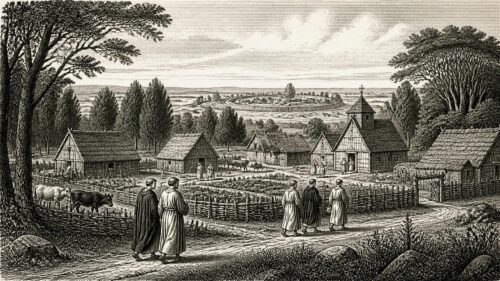
In 732, Áed Allán of Cenél nÉogain defeated Flaithbertach of Cenél Conaill, initiating a long decline in Cenél Conaill’s northern dominance, though warfare continued and Ireland remained politically fragmented. Other conflicts killed rulers in Airgíalla and Déisi, accompanied fighting between Leinster, Munster and Connacht. Ecclesiastical deaths included Flann Sinna of Clonmacnoise, Sebdann of Kildare and Gerald of Mayo, demonstrating churches’ political, cultural and cross-channel importance. Magnus, philosopher of Ireland, and Armagh scribe Ferdomnach also died. Annals preserve elite events, while most people lived rurally through farming, pastoralism and dependence, supporting kingdoms and monasteries whose resources sustained religious and secular authority.
Read Article
Archived: 1 November 2026
Abstract
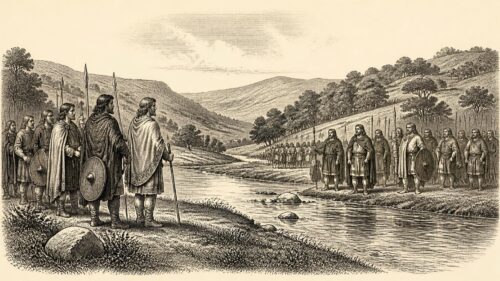
In 733, Áed Allán of Cenél nEógain again fought Cenél Conaill at Mag Itha in the Finn valley, killing Conaing of Fánad and many others, strengthening his northern position. The annals place this conflict within wider rivalry among Northern Uí Néill dynasties, without proving an immediate all-Ireland kingship. Elsewhere, Dúngal violated sanctuary on Tory Island, while succession and deaths exposed instability in Dál Riata. Killings, defeats and contested authority at Tailtiu and Tlachtga reflected regional insecurity. Obituaries from Clonmacnoise and Armagh, Donnchad Midi’s birth, and a remarkable cow recorded at Delg Inis reveal intertwined political, ecclesiastical, maritime and pastoral worlds.
Read Article
Archived: 1 November 2026
Abstract
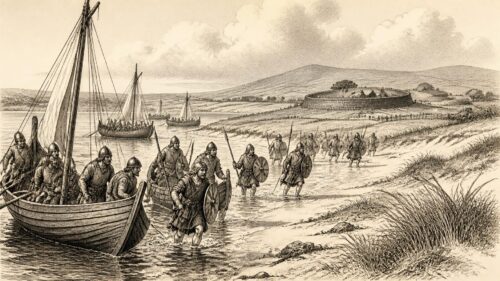
In 734, Áed Allán of Cenél nÉogain displaced Flaithbertach of Cenél Conaill as leading claimant to Tara after conflict at Mag nÍtha and a failed Dál Riata-supported naval effort near the Bann. Annals indicate slaughter on both sides but record Áed’s rule, while Flaithbertach retired into religion. The change strengthened Cenél nÉogain and curtailed Cenél Conaill’s wider influence, without creating a unified Irish monarchy. Regional rulers, including Munster’s Cathal, remained powerful. Churches supplied political and intellectual authority through relics, learning and patronage. Most people continued rural mixed farming, though warfare affected supplies, travel and local obligations across Ireland in practice.
Read Article
Archived: 1 November 2026
Abstract
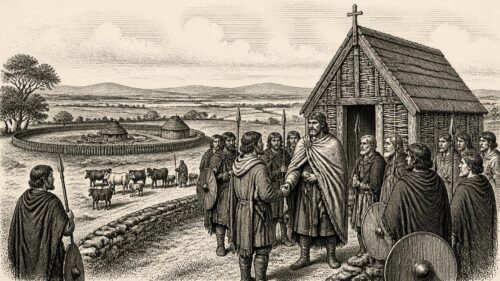
In 735, battles at Faughart in Muirthemne and Bélach Éile reshaped Irish political relationships. Áed Allán of the northern Uí Néill defeated the Ulaid, killing King Áed Róin and demonstrating influence along strategically important northern routes. At Bélach Éile, Munster and Leinster suffered severe losses, including Cellach of Osraige and Déisi princes; conflicting annals leave Cathal mac Finguine’s victory or defeat unresolved. Connacht lost its king and another leading ruler, while an abbot was slain and Nendrum’s bishop died. Agrarian communities and churches underpinned power. Irish annalists also recorded Bede’s death and an ominous celestial prodigy reported at autumn’s end.
Read Article
Archived: 1 November 2026
Abstract
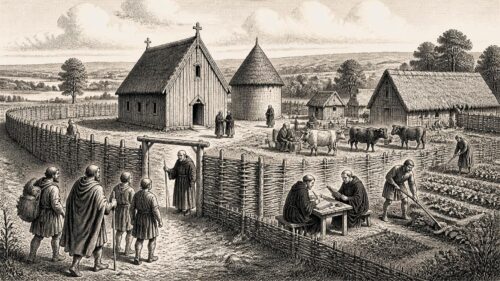
In 736, Irish annals recorded deaths of abbots at Clonard, Lusk, Ardbraccan and Mag Bile, alongside the passing of the scholar-anchorite Duiblitir on Inis Bó Finne. Máel Fothartaig was killed by fellow Leinstermen, while Bodbthach, king of Cairpre, died, illustrating localised political authority and conflict. These terse notices reveal churches as influential economic, social and political centres, though succession details remain unknown. Across the North Channel, Pictish king Óengus devastated Dál Riata, capturing Dúnadd and imprisoning Selbach's sons. The evidence indicates transition rather than collapse, highlighting Ireland's ecclesiastical networks, regional rivalries and maritime connections. Dating uncertain; precise dates remain unrecorded.
Read Article
Archived: 1 November 2026
Abstract
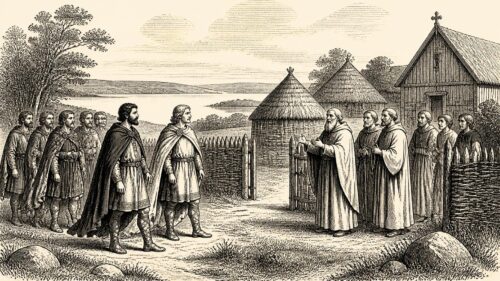
In 737, Áed Allán, northern Uí Néill overking, met Cathal mac Finguine of Munster at the monastery of Tír dá Glas, probably to limit conflict, although terms remain unknown. Annals then declared Patrick’s law effective in Ireland, projecting ecclesiastical legitimacy and wider order rather than recording a uniform national code. The year nevertheless saw dynastic violence in Brega, where Conaing defeated Cernach and Cathal son of Áed died, alongside deaths of regional rulers and abbots. Failbe of Applecross drowned with twenty-two sailors, illustrating Gaelic maritime links. These records reveal negotiation, church influence, instability, and aspirations to unity amid fragmented kingship.
Read Article
Archived: 1 November 2026
Abstract
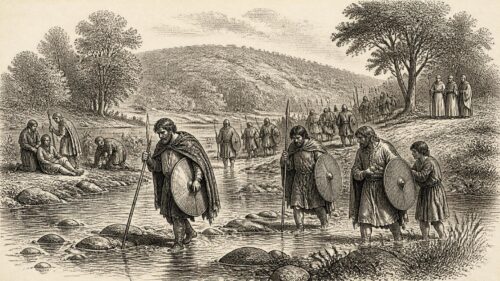
In 738, Áed Allán, king of Tara, defeated Leinster at Áth Senaig, probably near modern Kilcullen, killing Áed mac Colggen, Bran Bec and numerous provincial leaders. Annals date the battle to 19 August, although claims of near-total destruction and 9,000 deaths are rhetorical. The defeat intensified Leinster’s succession crisis, weakened Uí Chennselaig, and preceded long Uí Dúnlainge dominance, without conquering the province. Munster’s Cathal mac Finguine also exacted hostages and treasure from Leinster, though chronology is uncertain. Tólae, bishop of Clonard, died, while Cernach of Brega was murdered, illustrating ecclesiastical influence and continuing dynastic instability across Ireland during the year.
Read Article
Archived: 1 November 2026
Abstract
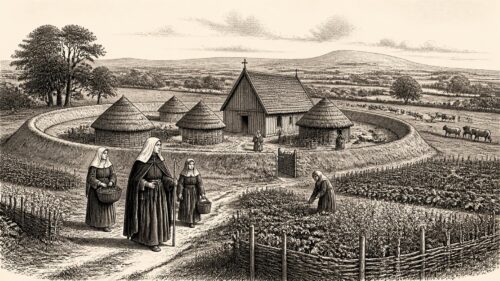
In 739, Irish annals record the death of Samthann, abbess of Cluain Brónaig near Granard, alongside deaths of the scribe Cúán of Treóit, Bishop Flann of Rechru, another bishop, and Ailill, king of Uí Chremthainn. They also describe the burning at Bodbráith of followers belonging to a Domnall, in which Ailill of Brí Léith died in a banqueting hall. The event’s cause and Domnall’s identity remain uncertain. These sparse notices, set after warfare in Leinster, reveal interconnected religious communities, regional dynasties and dependants. Churches were centres of landholding, learning and authority, while rural farming sustained ecclesiastical institutions and political households.
Read Article

