Archived: 9 October 2026
Abstract
In 1913, the Third Home Rule Bill intensified conflict between constitutional nationalism and Ulster unionism, whose Volunteer Force prepared to resist self-government. Dublin’s Lockout pitted James Larkin’s ITGWU against employers led by William Martin Murphy, bringing exclusion, Bloody Sunday violence, hunger and disputes over relief for children. The collapse of Church Street tenements, killing seven, highlighted urban housing failures. Labour activists formed the Irish Citizen Army, while nationalists founded the Irish Volunteers at the Rotunda in response to unionist militarisation. Cultural debates involving Yeats and the Gaelic League reflected public identities, leaving Ireland divided, mobilised and distrustful of parliamentary solutions.
Read Article
Archived: 9 October 2026
Abstract
In 1906, Liberal victory left John Redmond’s Irish Parliamentary Party hopeful but unable to secure Home Rule, while James Bryce pursued administrative reform. The Labourers (Ireland) Act empowered local authorities to build cottages and plots, laying foundations for rural security. Dublin’s Iveagh Trust Baths expanded washing and recreation facilities, and licensing legislation restricted drinking hours. University education remained divided after Catholic bishops rejected a mixed Trinity arrangement. Cultural nationalism gained visibility through Douglas Hyde and Peter O’Connor’s Athens protest. Michael Davitt’s death recalled the Land War generation. The year exposed constitutional, social, religious and national tensions while creating welfare institutions.
Read Article
Archived: 9 October 2026
Abstract
In 1905, Irish politics exposed divisions over government and national identity. George Wyndham resigned after devolution proposals alienated both unionists and nationalists, while the Ulster Unionist Council strengthened northern organisation. On 28 November, the National Council adopted Arthur Griffith’s Sinn Féin policy, advocating Irish institutions, economic self-reliance and withdrawal from Westminster, though not yet republicanism. Land purchase continued, but emigration remained. Disputes over Irish teaching and postal usage demonstrated cultural revival’s political reach. Abbey Theatre productions, scholarly recovery and Belfast’s Presbyterian Assembly Buildings reflected institutional confidence. The A5 submarine disaster at Haulbowline killed six crewmen, bringing naval modernity’s dangers locally.
Read Article
Archived: 9 October 2026
Abstract
In 1904, Ireland remained under Westminster rule, yet political, economic and cultural initiatives widened debate over its future. Dunraven’s Irish Reform Association advocated limited administrative devolution, while the Irish Parliamentary Party pursued Home Rule and Arthur Griffith promoted Hungarian-inspired national self-reliance. The 1903 Land Act began transferring estates to tenants, alongside co-operative schemes and continuing hardship in congested districts. Gaelic League activities, the first official public camogie match, and the Oireachtas advanced cultural revival. On 27 December the Abbey Theatre opened in Dublin, establishing a permanent national stage. Industrial Belfast contrasted sharply with the mainly agricultural south and west regions.
Read Article

Archived: 9 October 2026
Abstract
In 1902, Ireland remained under United Kingdom rule, but the land question prompted an important shift towards conciliation. Following failed proposals and public initiatives by Lindsay Talbot Crosbie and Captain John Shawe-Taylor, landlord and tenant representatives met at Dublin’s Mansion House on 20 December. Chaired by Lord Dunraven, the conference explored voluntary land transfer, without resolving matters before year’s end. Agriculture, co-operation and official improvement shaped rural change, while regional economic differences persisted. Cultural nationalism also flourished through Cathleen ni Houlihan, Gaelic League events and Arthur Griffith’s abstentionist ideas. James Joyce’s departure for Paris suggested emerging cosmopolitan new literary ambitions.
Read Article
Archived: 9 October 2026
Abstract
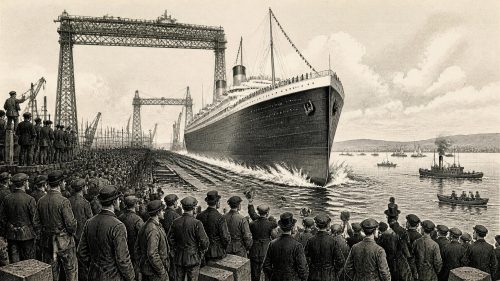
In 1901, Ireland remained within the United Kingdom, governed from Dublin Castle, while Edward VII’s accession exposed divided responses to imperial authority. Land reform continued through a limited Purchase of Land Act, amid unresolved congestion, rents and tenant demands. The census recorded 4,458,775 people, documenting demographic decline, regional contrasts, religion, literacy, occupations and 641,142 Irish speakers. Cultural nationalism expanded through Thomas O’Donnell’s parliamentary protest, the Gaelic League, GAA and Irish-language theatre. Belfast’s launch of the White Star liner Celtic demonstrated industrial and Atlantic connections. The year revealed enduring structures alongside political, social and cultural transformation at the century’s active opening.
Read Article
Archived: 9 October 2026
Abstract
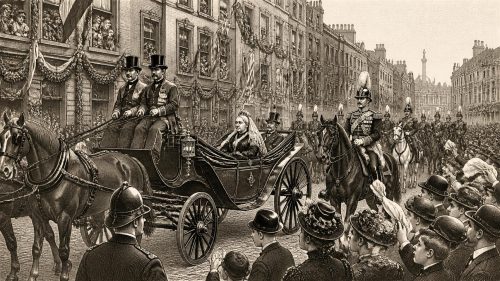
In 1900, Ireland remained under the Union, but competing imperial, nationalist, economic and cultural forces markedly intensified. Queen Victoria’s final Dublin visit and creation of the Irish Guards highlighted Irish participation in the Boer War, while nationalists opposed British rule and sympathised with the Boers. John Redmond reunited the Irish Parliamentary Party, which won most Irish seats, though restricted voting, uncontested constituencies and unionist government limited its effect. Horace Plunkett’s new agricultural department promoted rural improvement and co-operation. Nationalist women, Gaelic League activists and theatre practitioners expanded cultural organisation. Oscar Wilde died in Paris, a Dublin-born writer of global stature.
Read Article
Archived: 9 October 2026
Abstract
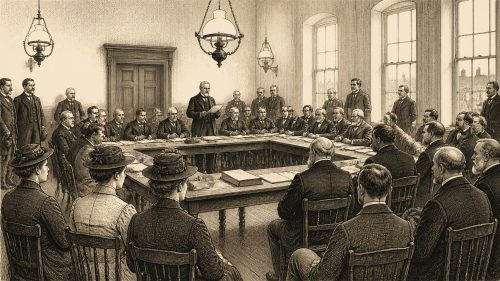
In 1899, Ireland saw institutional, cultural and political developments without resolving its constitutional future. Elections under the Local Government Act replaced grand-jury administration with elected county, rural and urban councils, widening participation though property restrictions remained. The Agriculture and Technical Instruction Act created a department to promote farming, fisheries, industry and education, associated with Horace Plunkett’s cooperative ideas. Dublin’s Irish Literary Theatre inaugurated productions amid controversy, while the Gaelic League’s Oireachtas demonstrated language-revival organisation. The Second Boer War exposed divided loyalties: Irish people served Britain, whereas nationalists supported the Boers. Together, these changes expanded Irish public life, debate and organisation.
Read Article
Archived: 9 October 2026
Abstract
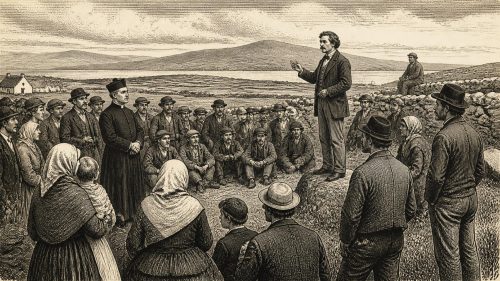
In 1898, Ireland saw agrarian, political and cultural change. William O’Brien founded the United Irish League at Westport, seeking land redistribution and linking western congestion to self-government. The Local Government (Ireland) Act replaced landlord-dominated grand juries with elected councils, although implementation followed in 1899 and franchise limits remained. Centenary commemorations of 1798 elevated Wolfe Tone while exposing competing nationalist, unionist and regional interpretations. Cultural revival advanced through Fáinne an Lae, the Gaelic League’s Oireachtas, Pearse’s Aran visit and Irish literature. Mary Immaculate College, Belfast City Hall and Killybegs carpet manufacture reflected educational, municipal and industrial development. They reshaped public life.
Read Article
Archived: 9 October 2026
Abstract
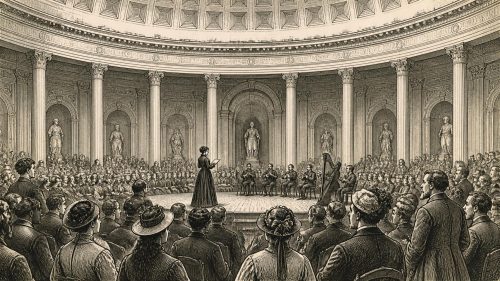
In 1897, Ireland remained under the Union, with Home Rule stalled and nationalist parliamentary strength weakened after Parnell. Debate increasingly focused on prospective local-government reform, while Victoria’s Diamond Jubilee exposed competing loyalist, nationalist, republican and socialist allegiances. Cultural nationalism gained durable institutions: Gaelic League held first Oireachtas at Dublin’s Rotunda, and first Feis Ceoil promoted musical cultivation. Yeats, Lady Gregory and Edward Martyn planned an Irish Literary Theatre, while Bram Stoker published Dracula. Rural life depended on land and British markets; Horace Plunkett advanced agricultural co-operation. Anti-jubilee protests, cultural initiatives and practical reform reflected an increasingly organised, diverse national life.
Read Article
Archived: 9 October 2026
Abstract
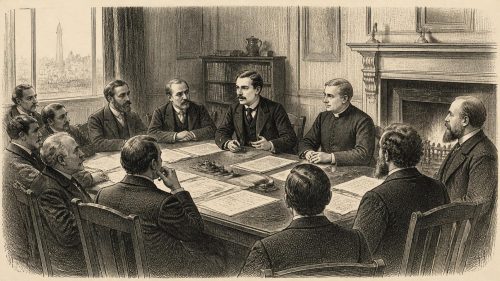
In 1895, the fall of Lord Rosebery’s Liberal government ended immediate hopes of Home Rule, while the general election confirmed nationalist strength but exposed continuing division after the Parnell split. Gerald Balfour became chief secretary amid unresolved land grievances, limited purchase reform and persistent rural inequality. Horace Plunkett launched negotiations for the cross-party Recess Committee, promoting agricultural cooperation, technical education, credit and industry; its later achievements were not yet assured. The Irish Homestead and early Gaelic League records reflected growing economic and cultural organisation. John Daly’s election highlighted political imprisonment, while Oscar Wilde’s conviction and imprisonment marked devastating cultural loss.
Read Article

Archived: 9 October 2026
Abstract
In 1893, Gladstone’s second Home Rule Bill proposed an Irish legislature within the Union, retaining Westminster supremacy, imperial responsibilities and Irish representation. Despite Commons approval, it was overwhelmingly rejected by the Lords, exposing constitutional limits and intensifying unionist fears. On 31 July, Douglas Hyde, Eoin MacNeill and others founded the non-sectarian Gaelic League in Dublin to revive spoken Irish through classes, publications and branches, amid language decline. The year also reflected religious and social organisation: Archbishop Michael Logue became cardinal, St Mel’s Cathedral was consecrated, Margaret Lyttle began a girls’ club, and the National Labour League highlighted rural workers’ grievances.
Read Article




