303rd Century Ireland BCE
Archived: 6 October 2026
Abstract
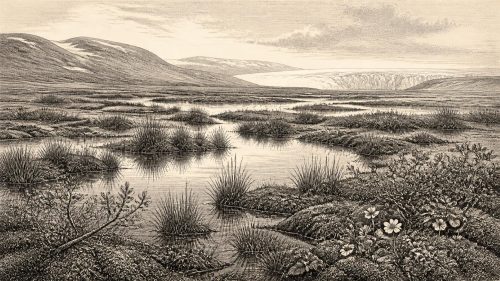
Around 30,201 BCE, Ireland’s history is recoverable only through broad environmental evidence, not an exact annual record. At Derryvree, County Fermanagh, BIRM-166 dates an interglacial wetland deposit between glacial tills, indicating cold, treeless freshwater habitats with sedges, mosses, aquatic plants and insects. The sequence demonstrates episodic ice advance and retreat, although conditions across Ireland remain uncertain. Cave finds at Castlepook show that mammoth, reindeer, giant deer and other animals occurred in wider Ice Age ecosystems, but their local dates are insecure. No settled human community is attested. Ireland was a volatile periglacial landscape, intermittently supporting wetlands and fauna between glaciations.
Read Article

Archived: 6 October 2026
Abstract
Thirty thousand two hundred and two BCE is a modern label for roughly 32,100 years before AD 1950, not a datable Irish event. Ireland then experienced cold conditions preceding expansion of the British–Irish Ice Sheet, whose extent remains uncertain. Treeless environments, meltwater and permafrost characterised exposed ground, while glaciation later destroyed sites. Castlepook Cave in County Cork preserves remains of mammoth, giant deer, reindeer, bears, wolves, Arctic foxes and hyenas, although deposits span episodes. A marked reindeer femur may indicate butchery by humans around 33,000 years ago, but no settlement evidence exists. The period reveals environmental change, not documented society.
Read Article
Archived: 6 October 2026
Abstract
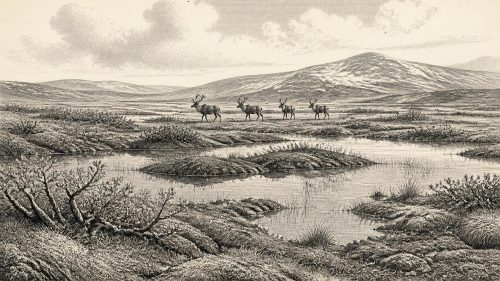
Around 30,203 BCE, a modern chronological label within a broad calibrated range, Ireland lay in the climatically unstable Late Pleistocene. At Derryvree, County Fermanagh, organic freshwater sediments between glacial tills preserve evidence of a treeless, periglacial wetland with sedges, mosses, grasses and aquatic plants, later overridden by ice. Crag Cave indicates episodic liquid-water conditions in Kerry. Castlepook Cave preserves cold-stage fauna, including mammoth, reindeer and predators, plus a reindeer bone possibly cut by humans, though it proves neither settlement nor sustained occupation. Dynamic ice, sea and climate shaped access and habitats as Ireland moved towards the later Last Glacial Maximum.
Read Article

Archived: 6 October 2026
Abstract
Around 30,204 BCE, Ireland experienced increasing cold during Marine Isotope Stage 3, before Last Glacial Maximum. Advancing ice, periglacial activity, low sea levels and coastlines created unstable landscapes including open ground and freshwater refuges. Fragmentary evidence from tills, sediments and caves, particularly Castlepook in County Cork, records mammoth, reindeer, giant deer, lemmings, bears, wolves and hyaenas, indicating cold-adapted ecosystems. Derryvree preserves evidence of interstadial wetlands. Cave deposits are disturbed and cannot reconstruct a single moment. No evidence establishes human settlement or activity at this date; disputed modified bone may indicate only a brief visit. Environmental change restricted habitats and fauna.
Read Article

Archived: 6 October 2026
Abstract
About 30,205 BCE, Ireland lay within the fluctuating cold conditions of Marine Isotope Stage 3, not a precisely datable historical year. At Derryvree, County Fermanagh, freshwater silts between glacial tills preserve an ice-free interval, broadly in the early thirty thousands of years before present. Pollen, plants and insects reveal treeless tundra wetlands of sedges, mosses, herbs and pools amid severe periglacial conditions. Castlepook Cave fauna indicates cold, open habitats and continental connections. A possibly cut-marked reindeer bone suggests, but cannot prove, human visitation. No secure evidence establishes settlement, society or continuous occupation; environmental archives provide the principal record for Ireland.
Read Article

Archived: 6 October 2026
Abstract
30,206 BCE is not a documented Irish date but falls within a broad Late Pleistocene evidential range. At Derryvree, County Fermanagh, freshwater sediments between glacial tills preserve tundra wetland plants, demonstrating a local ice-free interval before renewed glaciation. The cold, periglacial landscape formed amid uneven expansion of the British–Irish Ice Sheet and changing coastlines. Castlepook Cave, County Cork, records diverse Ice Age fauna, while a possibly tool-marked reindeer bone raises unconfirmed early human presence. No evidence supports settlement or society. Glacial erosion, rising seas and poor preservation limit knowledge, leaving a cautious reconstruction of dynamic environments, animals and profound uncertainty.
Read Article
Archived: 6 October 2026
Abstract
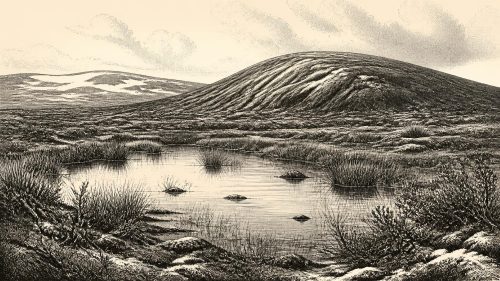
Around 30,207 BCE, Ireland lay within a fluctuating Late Pleistocene environment, not a datable historical year. Roadworks at Derryvree, County Fermanagh, exposed freshwater silts between glacial tills, proving a local ice-free interval with open, wet tundra vegetation before renewed glaciation. Radiocarbon evidence provides only a broad chronological range. Castlepook Cave, County Cork, preserves Ice Age animal remains, including a reindeer bone possibly cut by a stone tool, suggesting but not proving human presence. No settlement, institutions or continuous population can be demonstrated. Glacial erosion, changing coastlines and poor preservation severely limit evidence, making uncertainty central to understanding Ireland’s earliest past.
Read Article
Archived: 6 October 2026
Abstract
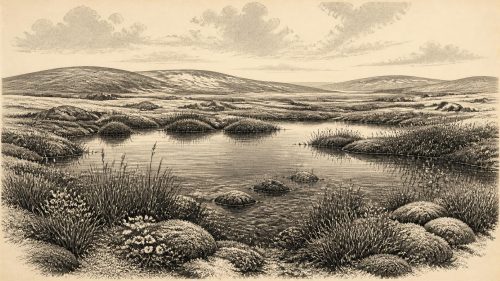
Around 30,208 BCE, Ireland lay within the climatically unstable Late Pleistocene. Derryvree, near Maguiresbridge, preserves organic freshwater sediments between glacial tills, dated broadly to 36,900–31,700 calibrated years before present. Their plants, pollen and insects indicate treeless, periglacial tundra with sedges, mosses, arctic-alpine flora and shallow water. The site confirms ice-free ground in north-central Ireland before later glaciation. Castlepook Cave documents a broader cold-stage fauna, including mammoth, reindeer and predators, but not a single contemporaneous community. A possibly butchered reindeer bone suggests human visits, though permanent settlement remains unproven. Evidence supports environmental change, not political, cultural or economic history at all.
Read Article

Archived: 6 October 2026
Abstract
Thirty thousand two hundred and nine BCE falls within Marine Isotope Stage 3, as Ireland entered an increasingly severe glacial phase before the Last Glacial Maximum. Lower sea levels connected Ireland ecologically with north-west Europe, though ice, water and shifting terrain restricted movement. Ice cover remained variable and uncertain. Derryvree sediments in Fermanagh preserve evidence of treeless wetlands, mosses and sedges during an intervening cold phase. Castlepook Cave, Cork, yielded remains of mammoth, reindeer, giant deer, predators and other cold-adapted fauna accumulated over millennia. A possibly butchered reindeer bone suggests fleeting human visits, but habitation, society and culture remain unproven.
Read Article

Archived: 6 October 2026
Abstract
About 30,210 BCE, Ireland lay within the Late Pleistocene Midlandian cold stage, but no exact historical year or human society can be recovered. At Derryvree, County Fermanagh, freshwater silts, mosses, sedges and cold-climate insects occur between glacial tills, indicating local non-glacial wetlands during an interval broadly dated to 36,900–31,700 calibrated years before present. Other sites confirm episodic, regional environmental change. Castlepook Cave, County Cork, preserves diverse Ice Age fauna, though its mixed bones cannot define a contemporary scene. A possibly butchered reindeer bone suggests human presence but not settlement. Renewed ice growth approached, eroding evidence and preserving deposits beneath till.
Read Article
Loading more articles…




