Start Exploring
Choose a route into Ireland’s past: follow the newest additions, find a particular year or subject, or browse every available period.

WELCOME TO EMERALD ARCHIVES
Welcome to Emerald Archives, where Ireland’s fascinating past comes to life. Explore remarkable people, historic places, pivotal events and forgotten traditions through our growing collection of articles, updated day by day.
Enjoy exclusive documentaries and podcasts, available to all visitors, and discover our collection of free e-books.
Have a question about Irish history? Enter it in the Deep Research box above. Within a few moments, we’ll prepare a detailed, illustrated article supported by historical sources and citations. Your question helps shape our collection, and your article becomes a permanent part of Emerald Archives for everyone to explore, enjoy and share.
Day By Day
Welcome to Emerald Archives, where Ireland’s past awaits discovery. Our homepage brings you the latest additions to our growing collection, from remarkable people and historic places to pivotal events and forgotten traditions. Browse our newest discoveries and follow the archive’s progress day by day.
Deep Research
When you ask, we listen and respond. Enter a question about any aspect of Irish history in our search box (above) to initiate Deep Research. Give us a few moments, and we’ll prepare a detailed, illustrated article with sources and citations to answer your question. Your article becomes a permanent part of Emerald Archives.
Leinster Notices
Archived: 18 November 2026
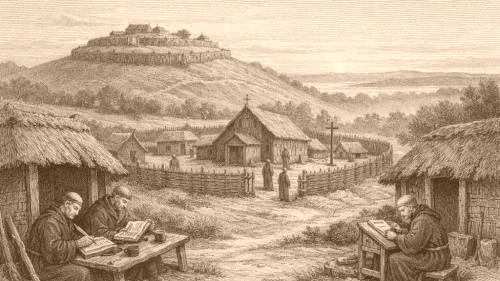
The surviving annals do not preserve one uniform account for 525 CE. Some place Irish deaths and Leinster notices under that year, while others shift the same material by a year or present only external notices. The result is a sparse and uneven chronological record rather than a single securely dated event.
Henry Joy
Archived: 18 November 2026
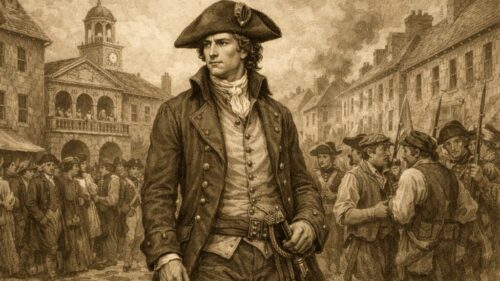
Henry Joy McCracken was born in Belfast on 31 August 1767. He was brought up to the linen business, and at the age of twenty-two he was placed at the head of a cotton factory. He belonged to two important Belfast Presbyterian families and was said to have always used his full name. His father, John McCracken, was an entrepreneur associated with many of Belfast’s leading philanthropic ventures. His maternal grandfather, Francis Joy, owned important paper mills and founded The Belfast News-Letter. In 1791 he joined Thomas Russell in forming the first Society of United Irishmen in Belfast.
Muirchertach Annals
Archived: 18 November 2026
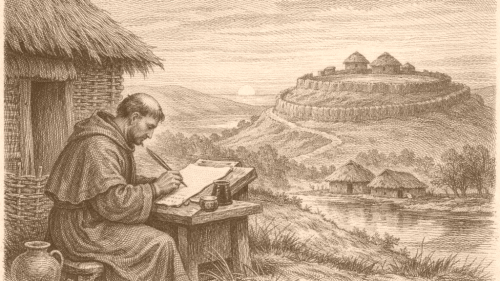
The surviving annal entries associated with 526 CE are uneven and sometimes indirectly dated. Some texts preserve Irish notices for births, deaths, and battles, while others include external material such as the succession of Justinian. The year survives as a patchwork of brief entries rather than a single coordinated narrative.
Cenn Eich — Ath Sige
Archived: 18 November 2026
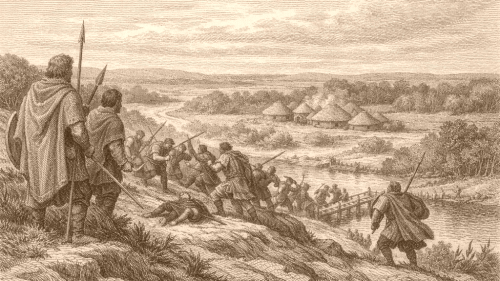
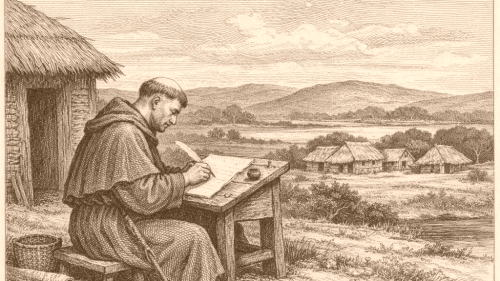
The surviving annals do not give a single rich narrative for Ireland in 528 CE. Chronicon Scotorum dates the battle of Cenn-eich and the battle of Ath-Sighe to A.D. 528 and credits Muircertach Mac Earca with victory. The Annals of Ulster preserve the same battle notice in a section whose printed heading is dated one year earlier, while the Annals of the Four Masters instead give a different 528 entry: the first year of Tuathal Maelgarbh and the battle of Luachair Mor. Taken together, the entries show both sparse coverage and some chronological instability.
Cenn Eich
Archived: 18 November 2026
The annals do not offer a single unified account for 529 CE. One text gives only brief notices, another places a pair of battle entries in 529, and a third preserves a notice for a different year that it links to related material elsewhere. The result is a sparse and uneven evidential record, with dating differences visible within the annal tradition itself.
Wolfe Tone
Archived: 18 November 2026
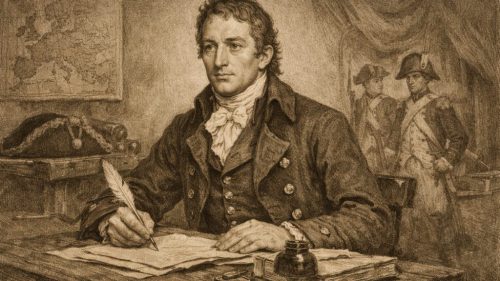
Theobald Wolfe Tone was born on 20 June 1763 in 27 St Bride’s Street, just behind Dublin Castle. His family soon moved to 44 Stafford Street, now Wolfe Tone Street, where he spent his childhood. He came from a modest, middle-class Protestant family and was the eldest of sixteen children. Tone studied law at Trinity College, Dublin, and after graduating in 1786 he turned his attention to politics. In October 1791 he helped found the Society of the United Irishmen with Thomas Russell, Napper Tandy and others, and he helped pen its declaration calling for equal representation of all the people in Parliament.
Anthony Finding
Archived: 18 November 2026
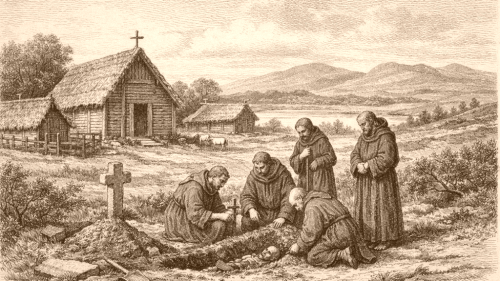
The surviving annal entries for this period do not give a single, firmly synchronized Irish event for 530 CE. In the Ulster annals, the year heading for 530 precedes the entry on the finding and burial of Anthony the monk, while the battle notices associated with Muirchertach Mac Erca are distributed differently across Ulster, Tigernach, Chronicon Scotorum, and Inisfallen. The result is a sparse record marked by cross-dating and explicit uncertainty.
Henry Flood
Archived: 18 November 2026
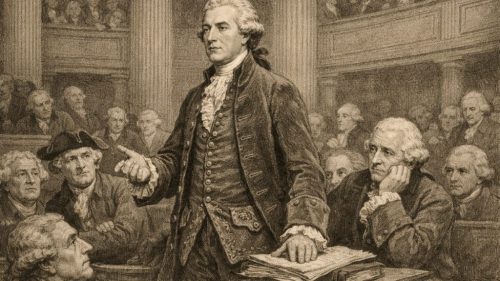
Henry Flood was born in 1732. He was the son of Warden Flood of Flood Hall in County Kilkenny, where his father served as Lord Chief Justice of the King's Bench. Flood first studied at Trinity College Dublin and later went to Christ Church College, Oxford, where he was placed under the tuition of Dr. Markham. He obtained the degree of A.M. at Oxford in 1752. Flood took his first seat in the Irish House of Commons in 1759 as member for County Kilkenny. He later represented the boroughs of Callan and Enniskillen.
Muirchertach Mac Erca
Archived: 18 November 2026
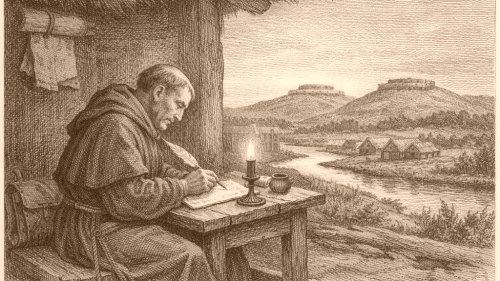
The surviving annalistic notices around 531 CE are sparse and uneven. One set of Irish chronicles places Muirchertach Mac Erca’s death in 531, while others place different battles or surrounding notices under the same year or nearby years. The Ulster chronicle also preserves non-Irish notices whose printed dates do not align perfectly with the 531 heading, showing explicit chronological variation rather than a single uniform record.
Edmund Burke
Archived: 18 November 2026
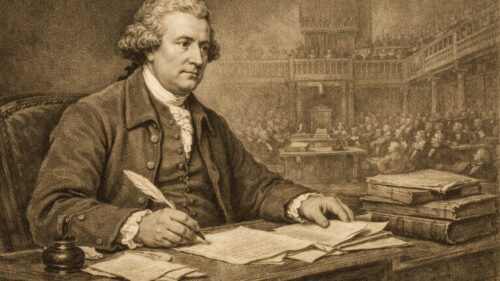
Edmund Burke was born in Dublin, Ireland, then part of the British Empire. He was the son of a prosperous attorney, and after an early education at home he became a boarder at the school run by Abraham Shackleton, a Quaker from Yorkshire, at Ballitore. Burke received his university education at Trinity College, Dublin. He then went to the Middle Temple in London in order to qualify for the Bar. His earliest writings included A Vindication of Natural Society and A Philosophical Enquiry into the Origin of our Ideas of the Sublime and Beautiful.
Tuathal Maelgarb
Archived: 18 November 2026
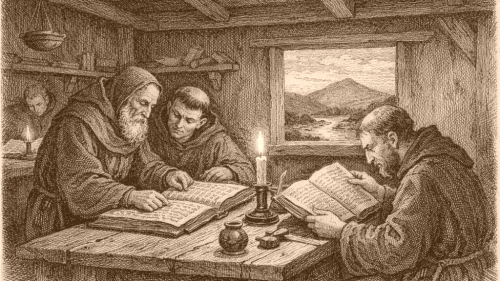
The surviving annal excerpts for 532 CE are brief and uneven. Chronicon Scotorum assigns Tuathal Maelgarb an eleven-year reign and records the dormition of Mochta. The Annals of Ulster preserve a battle cluster under their 532 heading, while the Annals of Tigernach place related notices in adjacent years and also record Mochta. Taken together, the excerpts show a sparse record and visible uncertainty in year placement.
George Berkeley
Archived: 18 November 2026
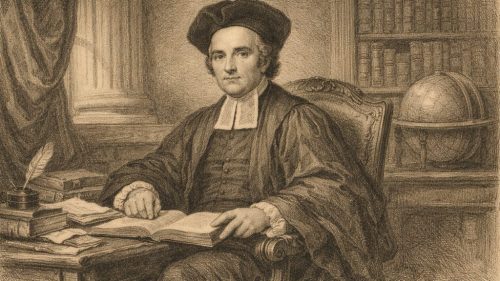
George Berkeley was born near Kilkenny, Ireland, in 1685. He attended Kilkenny College and entered Trinity College, Dublin, at the age of 15. Berkeley’s first important published work was An Essay Towards a New Theory of Vision, which appeared in 1709. He followed it with A Treatise concerning the Principles of Human Knowledge in 1710, then Passive Obedience in 1712, a work that discusses the foundations of morality. In 1713 he published Three Dialogues between Hylas and Philonous. While remaining connected with Trinity College until 1724, Berkeley also spent time abroad and composed De Motu in 1720 during a European tour as a tutor.
Luachair Battle
Archived: 18 November 2026
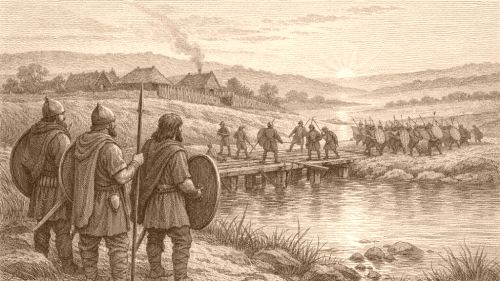
The surviving annalistic evidence for Ireland in 533 CE is sparse but not empty. Tigernach and Chronicon Scotorum both record a battle of Luachair Mór/edir-da-Inbher won by Tuathal Maelgarb over the Ciannachta, while the Annals of Inisfallen preserve only a brief cross-reference to a battle of Luachair. The excerpted Annals of Ulster material shows that nearby notices are not always aligned cleanly by year, so the chronology must be handled cautiously.
Jonathan Swift
Archived: 18 November 2026
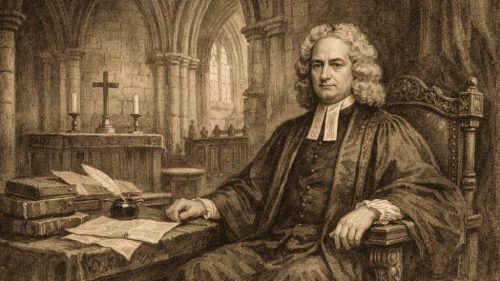
Jonathan Swift was born in Dublin in 1667. His father, a lawyer, died before Swift’s birth, and his childhood was partly spent in the care of a nurse. He boarded at Kilkenny College between the ages of six and fourteen. In 1682, Swift entered Trinity College Dublin, then Ireland’s only university. There he studied Latin and Greek, added Hebrew, and deepened his knowledge of Aristotelian philosophy. After four years, he graduated with the degree of B.A. ex speciali gratia. He left Trinity College in 1686. Swift’s first known composition was a Pindaric ode published in 1691.
Muirchertach Drowning
Archived: 18 November 2026
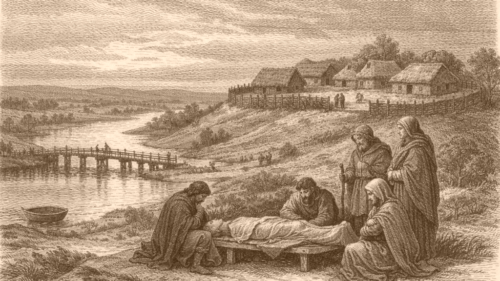
The surviving annal entries for 534 CE are sparse and uneven. The Annals of Ulster securely place the drowning of Muirchertach Mac Erca in that year, while also adding brief notices for Ailbe and Pope Boniface. Other annals preserve related or parallel entries, but their year placement is not always identical, and some notices are only securely visible as entries within the wider 534 sequence rather than as firmly dated local events.
William Petty
Archived: 18 November 2026
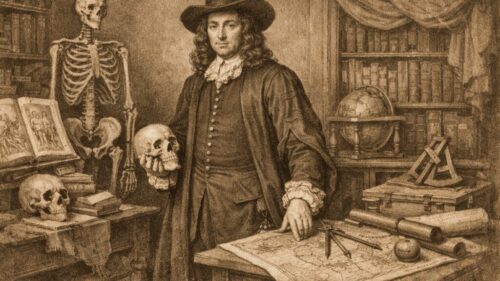
William Petty was born in Romsey, Hampshire, on 16 May 1623, the son of Anthony Petty, a clothier of the town. He was educated at the grammar school of his native place, and at the age of fifteen was sent to the university of Caen in Normandy. He later returned to England and entered the navy, though the capacity in which he served is not stated in the surviving account. Petty then turned to medicine and studied successively at Leyden, Utrecht, Amsterdam, and Paris. He went to Oxford in 1648 and became deputy or assistant to Dr Thomas Clayton, the professor of anatomy.
Luachair Mór
Archived: 18 November 2026
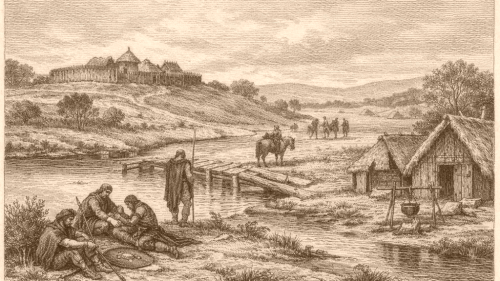
The annals for 535 CE preserve only a small and uneven record. One Irish battle, the birth of Baeithin, and an ecclesiastical death are entered in some annalistic traditions, while the Annals of Ulster also place a bread failure and a note on a Roman pope in the same year. Other works either repeat only part of this material or leave the year nearly blank, so the evidence is stronger for what the manuscripts record than for any single Ireland-wide event.
Patrick Sarsfield
Archived: 18 November 2026
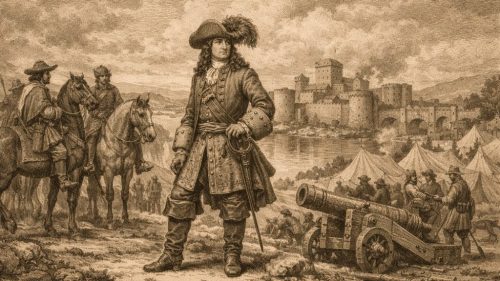
Patrick Sarsfield was born at Lucan about the middle of the seventeenth century. He bore a commission in the English Life Guards, fought under Monmouth on the Continent, and was severely wounded at Sedgemoor. After that he retired with James II to France, then accompanied him to Ireland in March 1689, where he ranked as a brigadier-general. After the death of his elder brother William, he succeeded to the family estates. He also married Honora Burke, daughter of the 7th Earl of Clanricard. He sat in James II’s Irish Parliament for the County of Dublin.
Bread Failure — Parallel Accounts
Archived: 18 November 2026
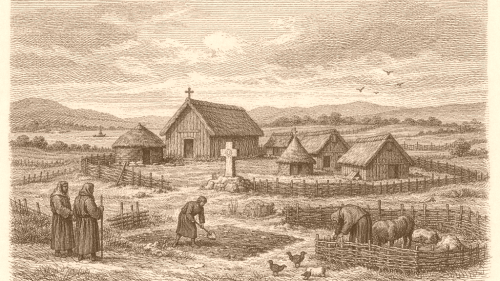
The surviving annals give very little securely dated Irish material for 536 CE. One text records a failure of bread, while others either leave the year bare, place nearby notices under adjacent years, or preserve only broader chronological markers. The year can be described mainly through sparse annalistic coverage and the uncertainty of placement rather than through a single major event.
Royalist Service
Archived: 18 November 2026
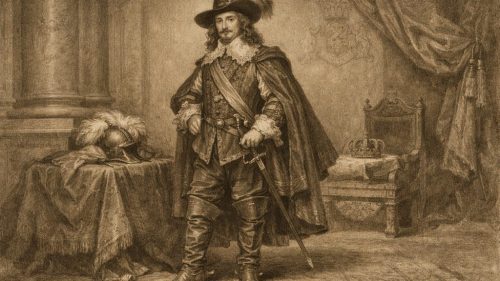
Ulick Burke was an Irish nobleman involved in the Wars of the Three Kingdoms. He was born in London in 1604, the son of the 4th Earl of Clanricarde and Frances Walsingham. In 1622, he married Anne Compton. They had one child, Margaret. Burke was summoned to the House of Lords as Lord Burgh in 1628, and he succeeded his father as 5th Earl of Clanricarde in 1635. He was appointed Governor of Galway from 1636. From 1644 he served as Lieutenant-General and Commander in Connaught, and in 1645 he was appointed to the Privy Council of Ireland.
Sligeach Battle
Archived: 18 November 2026
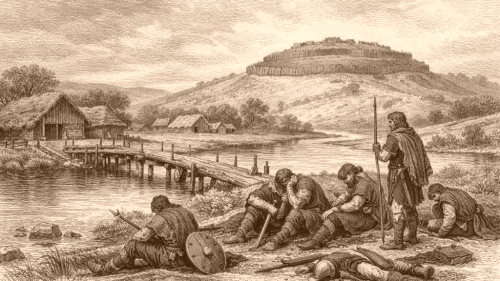
The surviving annals do not preserve a single agreed Irish event for 537 CE. One major compilation places the battle of Sligeach in that year, while other annals attach nearby Irish battles and a famine notice to adjacent or differently numbered years. The result is a sparse and uneven record, with dating differences that must be read cautiously.
