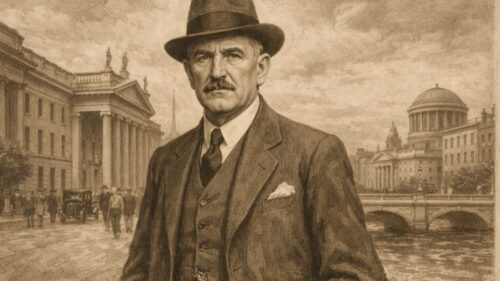
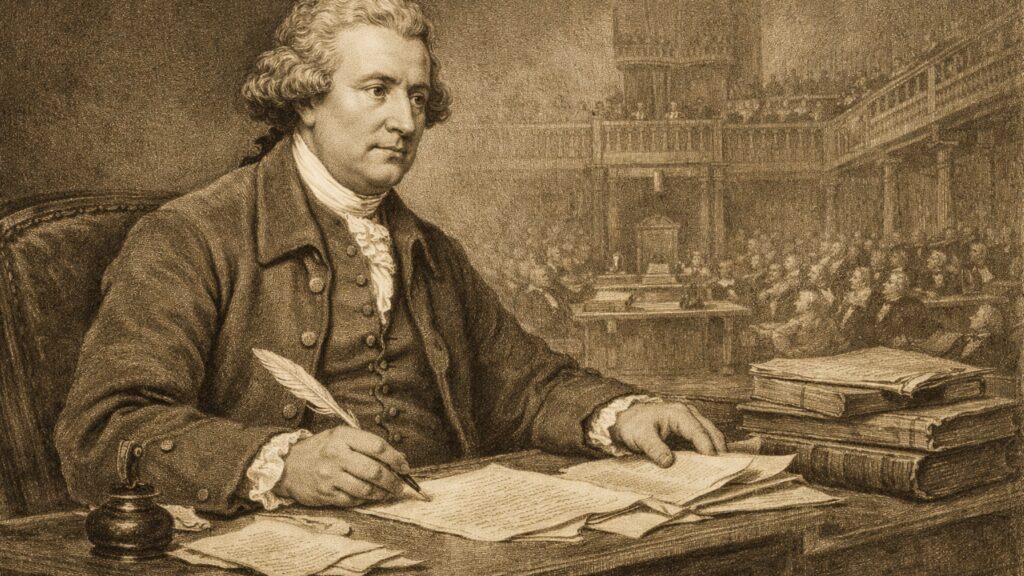
Edmund Burke
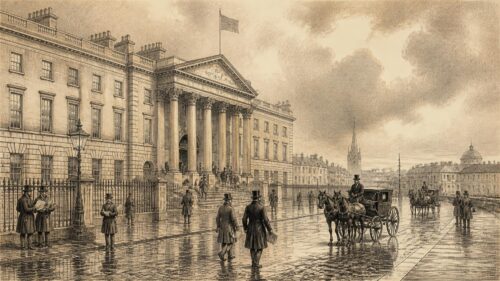
Edmund Burke was born in Dublin, Ireland, then part of the British Empire. He was the son of a prosperous attorney, and after an early education at home he became a boarder at the school run by Abraham Shackleton, a Quaker from Yorkshire, at Ballitore. Burke received his university education at Trinity College, Dublin. He then went to the Middle Temple in London in order to qualify for the Bar. His earliest writings included A Vindication of Natural Society and A Philosophical Enquiry into the Origin of our Ideas of the Sublime and Beautiful.
Dateline
Edmund Burke was born in Dublin, Ireland, then part of the British Empire. He was the son of a prosperous attorney, and after an early education at home he became a boarder at the school run by Abraham Shackleton, a Quaker from Yorkshire, at Ballitore.
Early Formation
Burke received his university education at Trinity College, Dublin. He then went to the Middle Temple in London in order to qualify for the Bar. His earliest writings included A Vindication of Natural Society and A Philosophical Enquiry into the Origin of our Ideas of the Sublime and Beautiful. From 1758, at least until 1765, he was the principal conductor of the Annual Register.
Parliamentary Life
In 1765, Burke became private secretary to the Marquis of Rockingham and was elected to the British House of Commons in the same year. He remained there, with a brief intermission in the autumn of 1780, for nearly twenty-nine years, retiring in the summer of 1794.
Later Years
His political life was punctuated in May 1791 by a break from certain of his party colleagues over the significance of the Revolution. From 1792, Burke also turned his attention to his native Ireland. He married in 1756 and had a son by 1758.
Source References
Hover over a number to see the source. Select it to open the source.