
Archived: 11 October 2026
Abstract
In 1829, Catholic Emancipation transformed Irish constitutional politics after Daniel O’Connell’s 1828 Clare election and the Catholic Association’s mass mobilisation forced Wellington’s government to act. The Roman Catholic Relief Act, assented to on 13 April, enabled Catholics taking a new oath to enter Parliament and many public offices, though it preserved the Protestant state settlement and excluded them from certain positions. Simultaneously, the Irish election law raised the county freehold qualification from forty shillings to £10, disfranchising many poor Catholic voters. O’Connell’s pre-Act election required a Clare by-election, which he won unopposed. Protestant opposition persisted; Gerald Griffin’s novel reflected society.
Read Article
Archived: 11 October 2026
Abstract
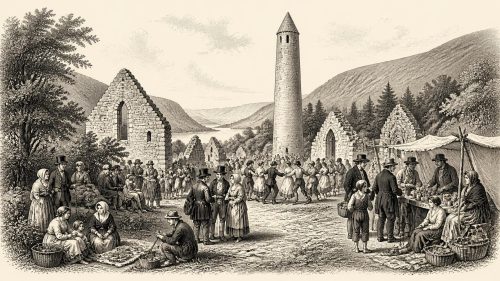
In 1813, Catholic emancipation dominated Irish politics as Henry Grattan’s relief bill advanced at Westminster before collapsing over parliamentary admission and proposed state influence on episcopal appointments, opposed by bishops and Daniel O’Connell. Sectarian tension erupted at Garvagh, County Londonderry, where armed Protestants and Orangemen repelled Ribbonmen during a fair. An unsuccessful census initiative reflected administrative uncertainty, while observations of poverty, fever and education highlighted social pressures. Cultural life included Hugh Porter’s poetry and Glendalough’s patron festival. In September, the Limerick meteorite fell near Adare, becoming Ireland’s largest recorded meteorite fall and was preserved for scientific study as material evidence.
Read Article
Archived: 12 October 2026
Abstract
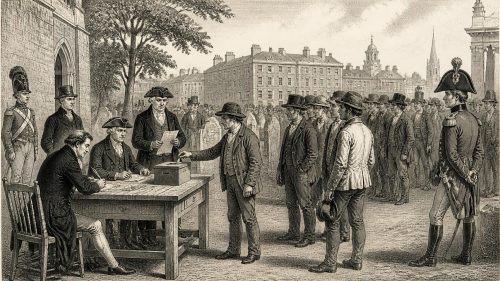
In 1793, Ireland combined Catholic relief with intensified state control amid war with revolutionary France. Following John Keogh’s Catholic Convention petition, the Roman Catholic Relief Act enfranchised qualified Catholic forty-shilling freeholders and opened certain employment and educational opportunities, while retaining exclusion from parliament, senior offices and Trinity fellowships. The Gunpowder Act regulated weapons, while the Irish Militia Act introduced parish enrolment and ballots, incorporating Catholics and Presbyterians into government service. The Convention Act restricted representative political assemblies, constraining reformers and United Irishmen. Economic pressures, militia obligations and print culture shaped daily life. The year broadened participation whilst strengthening coercive administration.
Read Article
Archived: 12 October 2026
Abstract
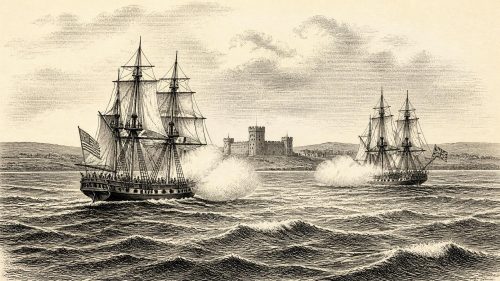
In 1778, Captain John Paul Jones’s Ranger captured HMS Drake off Carrickfergus, exposing Ireland’s weak coastal defences amid imperial war. Fear of attack encouraged Belfast’s first Volunteer company and similar locally organised Protestant corps, which later strengthened demands for political and commercial influence. Wartime disruption prompted limited trade concessions, though these fell far short of free trade and intensified Patriot dissatisfaction. Gardiner’s Catholic Relief Act improved property rights for qualifying Catholics but preserved political exclusion and most penal restrictions. Road building, cultivation, mapping and Dublin’s changing streetscape also reflected gradual improvement. Together, these developments revealed mounting pressures for Irish change.
Read Article




