Edwardian Ireland
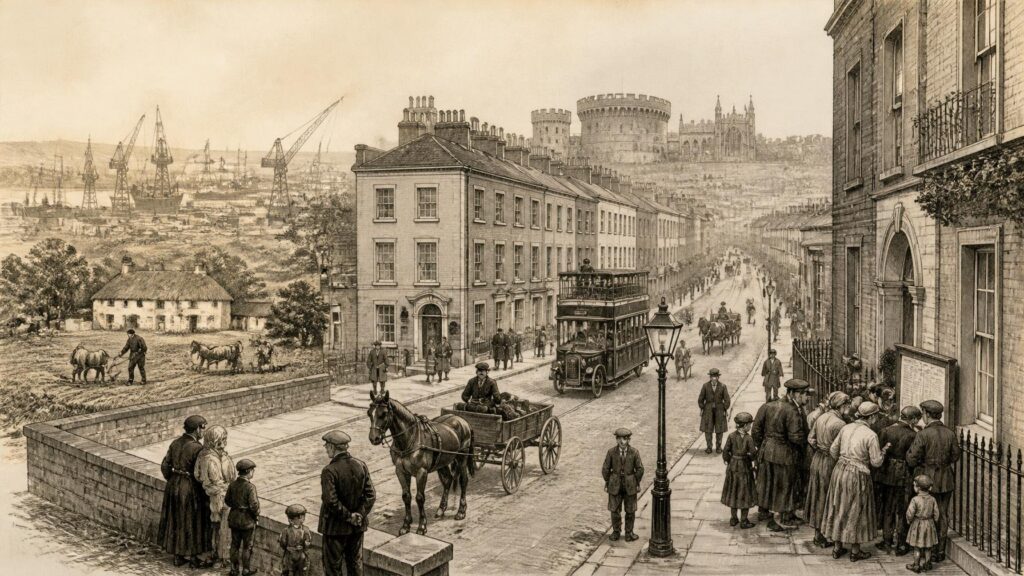
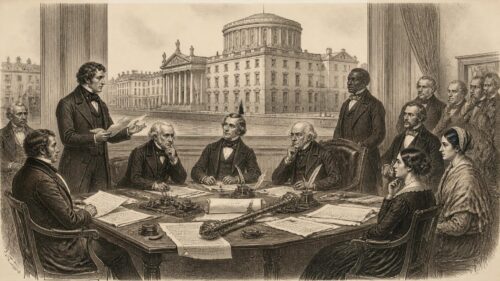
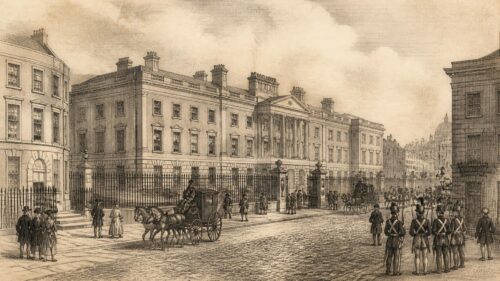
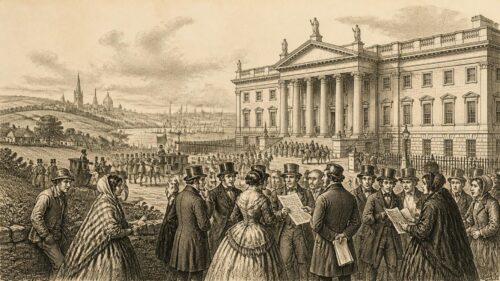
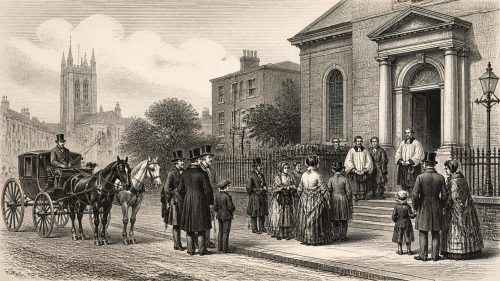
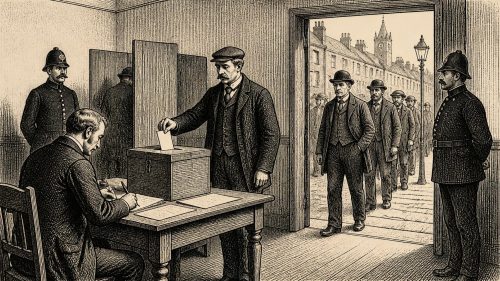
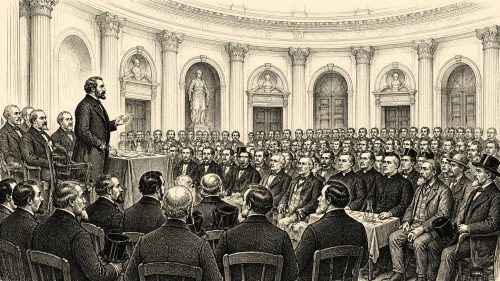
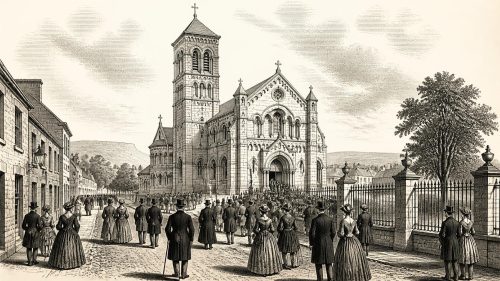
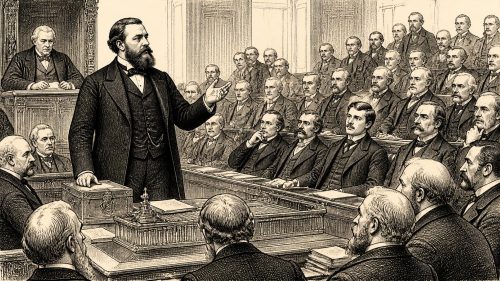
AI generated historical illustration, not a contemporary photograph.
At a Glance
Edwardian Ireland was neither a tranquil prelude to revolution nor merely a provincial extension of Britain’s Edwardian age. Between the accession of Edward VII in 1901 and his death in 1910, Ireland remained governed from Westminster and administered through Dublin Castle, yet its social order, political vocabulary and public culture were changing rapidly. Tenant purchase weakened the old landlord system; emigration continued to drain communities while remittances sustained many households; Belfast’s factories and shipyards displayed industrial confidence beside sharp inequality; and cultural, feminist, labour and constitutional movements each proposed competing futures. The decade did not make the upheavals after 1912 inevitable, but it supplied many of their institutions, arguments and protagonists.
Period Boundaries
“Edwardian” is a useful but imperfect label in Irish history. In the strict constitutional sense, the Edwardian reign ran from Queen Victoria’s death on 22 January 1901 to Edward VII’s death on 6 May 1910. Many historians, however, use the word more loosely for the years immediately before the First World War. That wider usage can obscure as much as it reveals. The political atmosphere of 1901, when constitutional nationalism was still organised principally through John Redmond’s Irish Parliamentary Party, differed greatly from that of 1913–14, when unionist and nationalist volunteers were drilling and the prospect of Home Rule seemed to have brought the island close to armed conflict.
For clarity, this article concentrates on 1901–10, while following developments to 1914 where they explain the importance of the earlier decade. This was an Ireland within the United Kingdom of Great Britain and Ireland, with a distinct administrative system, an Irish executive at Dublin Castle, elected local bodies, an established Church of Ireland, and representation at Westminster. It was also an island divided by religion, class, region, occupation and constitutional allegiance. The later partition of Ireland should not be projected backwards as if it were foreordained. Contemporaries did not know the sequence that would lead through war, the 1916 Rising, revolution, partition and civil war.
The surviving evidence is unusually rich. The full Irish censuses of 1901 and 1911 survive for all thirty-two counties, unlike most earlier nineteenth-century returns. They record households, occupations, literacy, religion, language and housing conditions; their original household forms preserve the handwriting of people who completed them. The National Archives of Ireland rightly describes them as a major part of the national heritage, but they must be read carefully: census categories were official categories, while respondents could misunderstand, manipulate or resist them. The 1911 return, for example, was boycotted by some women’s suffrage campaigners.
Island Society
The census demonstrates that Ireland was not socially uniform. The population had fallen for generations after the Great Famine, chiefly because emigration remained a structural feature of life. Yet population decline did not mean simple stagnation. It reflected the interaction of late marriage, smaller families in some places, movement to towns, seasonal labour, migration within the United Kingdom and permanent departure across the Atlantic. Families often treated emigration as a collective strategy. A son or daughter in Glasgow, Liverpool, Boston, New York or elsewhere could send money home; letters, newspapers and visits made migration a continuing relationship rather than a clean break.
In rural districts, farming remained central, but farmers, labourers, fishermen, shopkeepers, clergy, teachers, servants and small tradespeople experienced the economy differently. The contrast between substantial grazier or dairy farmer and cottier household could be profound. The western seaboard contained districts where small, congested holdings and insecure livelihoods continued to shape daily life. In other areas, particularly parts of the east and south, commercial agriculture connected households to British markets through railways, ports and livestock trade. Such regional variety cautions against describing the countryside as either universally impoverished or uniformly prosperous.
Religion remained socially and politically important, although it did not mechanically determine conduct. Roman Catholics constituted the great majority across the island; Presbyterians, Anglicans and other Protestant denominations were particularly significant in Ulster and in particular urban, professional and landed circles elsewhere. Census religion figures are valuable evidence of affiliation, but they do not disclose private belief, political preference or the practical intensity of observance. Neither should later sectarian divisions be presumed to have been equally powerful in every locality during every year of the Edwardian period.
Literacy was far more widespread than stereotypes of a backward Ireland imply. Education had expanded substantially before 1901, although access, attendance, language and opportunity still varied. Irish-language ability was also recorded by the census. The figures show that Irish survived most strongly in western districts but was not confined to an isolated cultural remnant: the language had political, educational and symbolic importance far beyond the Gaeltacht. Nevertheless, a declaration of Irish-speaking ability did not necessarily indicate fluent daily use. Census evidence is strongest when combined with school records, newspapers, correspondence and the archives of cultural organisations.
Rural Change
The most consequential Edwardian reform in rural Ireland was the Irish Land Act of 1903, commonly known as the Wyndham Act after the Chief Secretary for Ireland, George Wyndham. It emerged from a negotiated Land Conference involving representatives of landlords and tenants. Its central purpose was to accelerate voluntary sale by enabling tenants to purchase their holdings, while giving landlords financial inducements to sell. The legislation did not create tenant purchase from nothing; earlier land legislation had already established routes to ownership. But the scale of the 1903 settlement made it a defining moment in the long decline of landlordism. The statute itself is available through the parliamentary record as the Irish Land Act 1903.
Its significance was material and psychological. For generations, land had been the source of rents, eviction fears, political mobilisation and conflicting claims of ownership. Purchase did not end every agrarian grievance: congestion, untenanted grazing land, inadequate holdings, debt and local inequality endured. Nor should the measure be romanticised as an uncomplicated liberation. Tenant purchasers acquired obligations as well as security, and the benefits varied by estate and location. Yet the transfer of land from landlords to occupiers altered the social basis of rural authority. By 1914, the older structure in which landlords dominated much of rural society had been severely weakened. A UCD historical survey notes that the series of Acts between 1881 and 1909 effectively ended landlord control and that tenant farmers were largely becoming owner farmers by the eve of war.
The policy also reveals the limits of the word “settlement”. British governments hoped that land reform would remove a principal source of Irish discontent and make constitutional conflict more manageable. Many nationalists accepted land purchase because it addressed a genuine and longstanding grievance. But resolving one grievance did not dissolve demands for self-government. Indeed, an increasingly proprietary farmer class could be politically assertive, locally influential and receptive to nationalist arguments that Ireland should direct its own affairs.
The Congested Districts Board, established before the Edwardian period and strengthened through legislation, sought to address the particular difficulties of the west by improving holdings, fisheries, migration schemes and local economic conditions. Its work was uneven and its resources finite. It could not easily overcome poor soils, limited land, remoteness or the economic pull of overseas migration. Still, its existence is important: it shows that public policy recognised that land transfer alone could not remedy structural rural poverty.
Folklore has often made the Edwardian Irish countryside appear timeless: whitewashed cottages, turf smoke, donkey carts and a supposedly unchanging peasantry. Such images preserve details of material culture but are not sufficient historical explanations. They can conceal the commercial connections, migrant networks and legal transformations of rural life. The documentary record instead shows a countryside undergoing slow but substantial change, in which ownership, inheritance, household composition and access to capital were being renegotiated.
Urban Worlds
Dublin was the administrative capital of British rule in Ireland, with Dublin Castle at its centre, but it was also a city of extraordinary contrasts. Georgian squares, professional households, theatres, universities, barracks, department stores and tramways stood alongside severe overcrowding and poverty. The city’s poor were not a single undifferentiated class: skilled workers, casual labourers, domestic servants, widows, hawkers, dockers, small traders and the unemployed faced different risks. Housing conditions nevertheless formed a central social question. The 1911 census and municipal inquiries exposed the persistence of multi-family tenement dwellings in the old city.
Dublin’s limited industrial base distinguished it from Britain’s larger manufacturing cities and from Belfast. The National Archives notes the presence of innovation, including the Grubb telescope works, but stresses that industrial activity was not on the scale of comparable British cities. This relative weakness affected employment, wage levels and the shape of labour politics. It also helps explain why commerce, administration, education, transport and domestic service mattered so much to the city’s economy.
Urban improvement was real but incomplete. Electrification, tramways, public health initiatives and municipal works changed the experience of city life. At the same time, families in overcrowded rooms encountered tuberculosis, infant mortality, insecure work and high rents. The language of “progress” could therefore sound hollow. Edwardian visitors and later memoirists sometimes contrasted refined streetscapes with slum conditions as if this contradiction were peculiarly Irish. In fact, it belonged to wider industrial and imperial urban history; Dublin’s distinction lay in the severity and visibility of its tenement problem and in the weakness of municipal remedies before 1914.
Cork, Limerick, Waterford and numerous smaller towns had their own commercial and industrial profiles. They were linked to hinterlands, railways and ports, and they also became settings for cultural and political association. Town life facilitated the formation of branches, committees, reading rooms, sporting clubs, trade unions and political organisations. The importance of these voluntary networks cannot be overstated. National movements were not sustained solely by famous leaders but by people who convened meetings, collected subscriptions, organised classes, distributed papers and maintained local connections.
Belfast Industry
Belfast presented a markedly different urban world. By 1901 it was Ireland’s most important industrial city, its growth bound to linen, engineering, shipbuilding, rope-making, tobacco, commerce and imperial trade. The city’s population had expanded dramatically during the nineteenth century, drawing migrants from rural Ulster and farther afield. Industrial employment brought wages and specialised skills, but it also produced hazardous workplaces, crowded districts, labour conflict and marked gender divisions.
Women’s paid employment was particularly important in textile production. Research assembled by the Conflict Archive on the Internet records that, in 1901, 43 per cent of Belfast women and girls were in work, compared with 32 per cent in England and Wales. The figure should not be treated as a complete measure of women’s economic contribution, since unpaid domestic work and informal labour are difficult to quantify. It does, however, underline the scale of female industrial participation and the dependence of linen production on low-paid women workers.
Harland and Wolff’s shipyard symbolised Belfast’s industrial ambition. The launch of RMS Titanic on 31 May 1911 falls just after the strict Edwardian reign but belongs to the same pre-war industrial world. It was a spectacular statement of technical capacity, corporate power and imperial commerce, later overshadowed by the ship’s loss in April 1912. The shipyard should not be reduced to a tourist emblem. It was a vast workplace shaped by hierarchy, skill, accident, casualisation and communal networks. Workers’ experience depended heavily on trade, gender, religion and access to employment.
Belfast’s industrial success did not neutralise religious and political division. Residential patterns, workplace culture and unionist mobilisation were already mutually reinforcing in parts of the city. It is historically sound to say that Catholics faced restricted opportunities in some sectors and that labour markets could be shaped by sectarian networks; it is less sound to claim that every Protestant employer or worker acted according to a single exclusionary rule. The evidence indicates complex, unequal and changing patterns rather than a universal explanation for every individual career. Scholarly and archival assessments therefore require attention to both structural disadvantage and the particular local circumstances in which employment was secured or lost.
The Belfast dock strike of 1907 briefly revealed another possibility. Protestant and Catholic workers could co-operate around wages and conditions, and British labour leaders took a close interest. That solidarity was real, but it did not erase political identities or the social pressures that later hardened division. It is best understood neither as proof that class had defeated sectarianism nor as a meaningless exception, but as evidence that shared material interests could create important, if fragile, alliances.
Cultural Nation
The cultural revival supplied one of the most visible languages of Edwardian Irish public life. The Gaelic League, founded in 1893 under Douglas Hyde’s presidency, aimed to revive the Irish language and preserve Irish literature, music and traditional culture. Its original programme was formally non-party and non-sectarian. That point matters because later nationalist association should not obscure the variety of people initially attracted to language and cultural work. The League’s papers, minute books, correspondence, accounts and branch records survive in the National Library of Ireland and testify to a dense organisational life.
By 1905, according to the National Library’s historical account, the Gaelic League had 550 branches. These organised classes, lectures, concerts, dances and festivals, while travelling teachers promoted instruction. Its weekly paper, An Claidheamh Soluis, circulated ideas and created a forum in which language, history, education and national identity could be discussed. The growth of branches does not demonstrate that the whole population became Irish-speaking or nationalist. It does demonstrate an extraordinary capacity for voluntary association and cultural mobilisation.
The revival was never culturally pure. Many participants enjoyed English-language popular culture, imperial spectacles and modern consumer life while also learning Irish, attending feiseanna or supporting national theatre. Surviving postcards from a young woman in Edwardian Dublin show precisely such mixtures: Gaelic League involvement could coexist with cosmopolitan tastes and British commercial culture. The evidence complicates a simplistic opposition between “Irish” and “British” identities. Individuals selected, combined and contested cultural forms in their ordinary lives.
Literary and theatrical movements likewise made culture political without always becoming party political. The Abbey Theatre, founded in 1904, brought plays by W. B. Yeats, Lady Gregory, J. M. Synge and others to public attention. The controversy surrounding Synge’s The Playboy of the Western World in 1907 demonstrated that audiences could be deeply divided over representations of rural Ireland, sexuality, morality and national dignity. Later folklore sometimes presents the cultural revival as a unanimous awakening. The documentary record instead reveals debate, embarrassment, humour, elitism, popular enthusiasm and internal disagreement.
Political Crisis
The central constitutional question remained Home Rule: whether Ireland should receive a devolved legislature while remaining within the United Kingdom. John Redmond’s Irish Parliamentary Party pursued this objective through Westminster parliamentary politics. In the early Edwardian years, the cause was constrained by Conservative and Unionist governments. The general elections of January and December 1910 changed the parliamentary arithmetic, leaving the Liberal government dependent upon Irish Parliamentary Party support. That dependence made a third Home Rule bill possible.
In 1911, the Parliament Act reduced the House of Lords’ power to block legislation permanently. Its importance for Ireland was immense: previous Home Rule bills had been defeated in the Lords, but a measure passed repeatedly by the Commons could now become law after delay. This did not settle the question. Rather, it moved the conflict from parliamentary obstruction towards arguments over implementation, territory, coercion and allegiance. The UK Parliament’s historical overview correctly situates Home Rule within a longer nineteenth-century movement, rather than treating it as an Edwardian invention.
Dublin in 1911 embodied competing political loyalties. King George V’s July visit drew large crowds and elaborate ceremonial. In the same year, Robert Erskine Childers published The Framework of Home Rule, advocating Irish self-government, while Edward Carson warned unionists that they must be ready to assume responsibility for Ulster if Home Rule passed. In October, the Parnell monument was unveiled in Sackville Street before a substantial crowd. These events are not evidence of a city divided into sealed camps; individuals and families could participate in overlapping civic, imperial, religious and national cultures. They are evidence, however, of deep disagreement about Ireland’s constitutional future.
The third Home Rule Bill was introduced in April 1912, beyond the strict Edwardian period but a direct consequence of Edwardian parliamentary change. Its appearance transformed political calculation. Supporters saw an overdue constitutional restoration. Opponents, especially in Ulster, saw a threat to their place in the United Kingdom, to Protestant interests and to industrial prosperity. Neither position can be responsibly reduced to propaganda alone. Home Rulers included constitutional nationalists with varied social priorities; unionists included landed elites, industrialists, clergy and working-class supporters, whose motives were not identical.
Women’s Claims
Women were active throughout Edwardian Ireland as workers, organisers, teachers, writers, philanthropists, cultural activists and political campaigners. Yet formal political power remained severely restricted. Women could participate in local government under the reforms of the late nineteenth century, but they lacked the parliamentary franchise. Suffrage organisations therefore challenged not simply a legal limitation but the assumption that national and imperial politics belonged to men.
The Irish Women’s Franchise League, founded in 1908 by Hanna Sheehy Skeffington and Margaret Cousins, represented a more militant strand of Irish suffragism. Its members used public meetings, demonstrations, civil disobedience and, in some cases, the tactics associated with British suffragette militancy. The 1911 census boycott was one such protest. It matters because it makes absence from the record historically meaningful: a missing woman or incomplete form may reflect political action rather than mere accident. The National Archives explicitly notes that many Irish feminists refused to co-operate with the census, while UCD’s historical material records a wider range of suffrage tactics in Ireland.
Women’s causes did not always align neatly with nationalist or unionist commitments. Some campaigners believed women’s enfranchisement must come before every other political objective; others placed national self-government first; still others worked across constitutional boundaries in public health, education or welfare. This diversity is important. It prevents the retrospective assumption that all politically active women belonged to a single national story.
Social reform also had a gendered dimension. Lady Aberdeen’s Women’s National Health Association, formed in 1907, promoted hygiene, nutrition and maternal and infant health, establishing initiatives in Dublin and Belfast. Maud Gonne’s Ladies School Dinner Committee began feeding poor Dublin schoolchildren in 1911. These efforts show both growing concern about public health and the inadequacy of official provision. They should not be idealised as charity alone: they were also campaigns that made poverty visible and demanded practical responses.
Northern Resistance
Ulster unionism did not begin with the Ulster Covenant of 1912, but the Edwardian decade supplied the context in which resistance to Home Rule intensified. Unionists feared a Dublin parliament dominated by Catholic nationalists. Their arguments included constitutional loyalty to the Union, defence of religious liberty, concern for Belfast’s industrial links with Britain, distrust of nationalist majorities and, for some, a conviction that Ulster represented a distinct political community. These claims had different emphases among employers, clergy, professionals and workers.
Edward Carson, a Dublin-born barrister and Trinity College MP, became the leading public figure of unionist resistance. James Craig developed organisational and political influence in Ulster. Orange institutions, churches, municipal networks and the press helped sustain unionist mobilisation. Yet it would be misleading to portray unionism as merely elite direction from above. Its working-class support was real, nourished by local identities and historical memory, even though elite and working-class interests could diverge on wages, housing or labour organisation.
The reciprocal growth of militant nationalism and militant unionism after 1912 lay in the future, but its roots were visible earlier. The National Archives notes Carson’s 1911 warning that unionists should be prepared to take responsibility for governing “the Protestant province of Ulster” once Home Rule passed. The phrasing itself indicates the territorial and religious imagination increasingly shaping resistance. It did not yet establish the future border, whose eventual form was determined through later crisis and negotiation.
Accounts of Edwardian Ulster often rely on hindsight, treating partition as unavoidable because of Belfast industry and Protestant identity. Such determinism is unsatisfactory. There were alternative schemes, competing definitions of Ulster, debates over exclusion and inclusion, and many people whose identities did not fit tidy constitutional categories. The historical task is to explain why partition became possible, not to suggest that it was always the only conceivable outcome.
Approaching War
By 1913, the Edwardian world had begun to fracture. In Dublin, the lockout exposed the bitterness of class conflict between employers and organised workers, while James Larkin and James Connolly gave labour a new public force. In Ulster, the formation of the Ulster Volunteer Force in 1913 and the establishment of the Irish Volunteers in 1913–14 brought armed organisation into constitutional politics. These events belong to the pre-war crisis rather than the reign of Edward VII, but they cannot be understood without the decade that preceded them.
Edwardian institutions and associations furnished much of the personnel and organisational experience. Gaelic League branches connected activists and provided spaces for debating language, history and nationality. Parliamentary Home Rule politics created both expectation and alarm. Land reform transformed rural power without satisfying every social need. Women’s campaigns challenged old exclusions. Belfast industry produced wealth, labour militancy and a distinctive unionist political culture. None of these developments mechanically caused revolution. Together, they made the old assumption that Ireland could be governed indefinitely through limited reform increasingly difficult to sustain.
The outbreak of the First World War in August 1914 interrupted the immediate Home Rule confrontation, though it did not resolve it. The Government of Ireland Act received royal assent in September 1914 but its operation was suspended for the duration of the war. Irish men enlisted in British forces for diverse reasons, while advanced nationalists prepared for a different confrontation. The subsequent transformation of public opinion after 1916 should not be read backwards into 1901–10. In the Edwardian decade, the Irish Parliamentary Party still commanded mass electoral support, and independence remained far from an obvious or universally desired outcome.
Historical Judgement
The strongest conclusion is that Edwardian Ireland was a period of uneven modernisation and increasingly contested legitimacy. Documentary evidence supports the claim that tenant purchase was reshaping landholding, that migration continued to structure households, that Belfast was a major industrial centre, that Dublin contained extreme inequalities, that cultural organisations expanded rapidly, and that Home Rule and suffrage increasingly animated public life. It does not support a claim that all Irish people were moving in one nationalist direction, or that every Protestant opposed reform, or that political violence was already inevitable.
Interpretation is necessary because evidence does not interpret itself. Census forms disclose household structure but not every domestic relationship; speeches reveal public argument but not private doubts; organisational records show activity but not necessarily popular consent. Folklore and memory add another layer. They preserve the textures of local life, but they may smooth conflict, exaggerate unity or import later meanings into earlier events. Responsible history distinguishes these kinds of evidence rather than dismissing any one of them.
Edwardian Ireland deserves attention precisely because it resists easy retrospective narratives. It was at once British-governed and increasingly self-conscious, agricultural and industrial, provincial and transnational, devout and argumentative, culturally inventive and socially unequal. By 1910, few could know that the next decade would bring world war, rebellion, partition and revolution. But many could already see that the political and social arrangements inherited from the nineteenth century were under strain. The Edwardian years were not an interval before history began; they were a formative chapter in which Ireland’s competing modern futures were publicly imagined, organised and contested.
State Capacity
Edwardian Ireland was governed not only through dramatic parliamentary arguments over Home Rule but through routines of administration that reached into work, movement, trade and local politics. Dublin Castle remained the centre of formal authority, but its power depended on a widening apparatus of clerks, inspectors, police, boards and local officials. The National Archives’ account of Dublin in 1911, a useful near-contemporary snapshot immediately after Edward VII’s reign, identifies the Lord Lieutenant as the formal head of the Irish administration and the Chief Secretary’s Office as the body responsible for conducting much of the country’s business. It also records 3,526 people employed in central and local government by that year, a tenfold increase since 1841. This was not an autonomous Irish civil service: it was part of the United Kingdom’s state. Yet it supplied careers, authority and practical services within Ireland itself.
The growth of administration complicates the image of Ireland as a place ruled only by landlords, priests or Westminster politicians. Recruitment to the civil service had been by open competitive examination since 1871, and the National Archives notes that an increasing number of civil servants were Catholic by 1911. That development did not make the administration socially representative in any modern sense, nor did it remove the political significance of Dublin Castle. It did, however, create a professional layer whose members navigated imperial institutions while living in a society where national self-government was increasingly debated. The Castle’s authority was therefore both highly visible and dependent on numerous ordinary workers whose employment, status and expertise tied them to the existing system.
Infrastructure made this state and economy more immediate in everyday life. Dublin’s importance rested less on heavy industry than on administration, commerce and its port. The city was connected to the agricultural hinterland and to Britain by regular shipping; the National Archives records at least seven daily cattle-boat departures and eighty weekly sailings to England in 1911. These routes carried far more than livestock. They sustained markets, seasonal movement, newspapers, letters and family contact across the Irish Sea. Trams, horses and bicycles still dominated urban transport, while the motor car was beginning to alter the city’s streets and social geography. Such changes were gradual rather than universally experienced, but they demonstrate that Edwardian Ireland was integrated into networks of trade and communication rather than sealed within a static rural past.
Communication also created a public sphere that was at once commercial, personal and political. A surviving collection of approximately 300 picture postcards assembled by Christina Jessop between 1903 and 1908 links Dublin to Irish towns and to places including London, Paris, Alaska, Switzerland and New York. The messages were often brief and domestic, concerned with weather, health, travel or requests to write back. Their historical value lies precisely in that ordinariness: they show how dispersed families and acquaintances maintained relationships through affordable, mass-produced media. The cards’ images could also carry national meanings. Irishness was marketed by both English and Irish publishers, while some users inverted the Edward VII stamp as a quiet political gesture. Everyday communication was therefore not separate from public culture; it was one of the settings in which loyalties could be expressed, softened or playfully contested.
Print and voluntary activity expanded these possibilities beyond official channels. The Gaelic League’s cultural programme illustrates how an organisation could build influence through regular, local work rather than electoral power. Founded in 1893 with Douglas Hyde as its first president, it was initially defined as non-political and non-sectarian, seeking participation across religious and political loyalties. By 1905 it had 550 branches, which organised Irish classes, lectures, concerts and dances; its weekly Irish-language newspaper, An Claidheamh Soluis, had appeared from 1899. The scale of this network should not be mistaken for unanimous support for a single nationalism, but it shows that cultural action depended on teachers, organisers, readers and audiences distributed throughout the country.
The significance of these connected institutions was political without being reducible to party politics. Public meetings, council chambers, offices, classrooms, ports and postal routes gave people places in which to encounter authority and to organise alternatives to it. The National Archives characterises Dublin’s political life in 1911 as vigorous and urgent, shaped by divisions of wealth, class and religion, while stressing that the major upheavals of the following decade had not yet occurred. That caution is essential. Edwardian networks did not predetermine revolution, partition or war. They did, however, furnish Ireland with a denser administrative and associational life, enabling competing constitutional, cultural and social claims to be argued with greater reach and regularity.