Private Relief
At a Glance
Winter Scarcity
The annalistic notice for 764 places weather, scarcity, famine, and disease close together in one sequence. It begins with a snowfall lasting almost three months, then records a great scarcity and famine, followed later by an abnormally great drought and a bloody flux throughout Ireland. Within the same passage, the year is also marked by deaths of abbots, kings, and other named men. The excerpt offers a compact record of hardship rather than explanation, and it does not connect those events to any wider economic system.
The same annalistic page also preserves three showers of silver, wheat, and honey in Crích Muiredaig in Inis Eogain. That material stands beside the plain notices of scarcity and famine, so the passage includes both marvel and distress in adjacent entries. The record does not say that the showers were intended to relieve want, and it does not explain how people responded to the earlier shortage. Its value lies in the proximity of strikingly different kinds of notice within one year entry.
Food Access
One history of Irish food supply argues that there is no evidence consumers in Ireland chronically went hungry to meet overseas demand. It adds that, as long as harvests did not fail or livestock did not succumb to disease, there was enough food for those with legal access to it. The same discussion says potatoes became important in diets from the mid-eighteenth century and helped push cultivation farther into the west. The passage therefore pairs abundance with a clear condition: access mattered.
The same account describes potatoes as abundant, nourishing, cheap, and convenient, and says they fed humans and pigs alike. It also notes that population grew more rapidly than elsewhere in western Europe while sustained by that crop. These statements are descriptive rather than argumentative: they connect one food source to diet, land use, and demographic growth without discussing prices or state policy. The excerpt does not mention energy supply, but it does show how ordinary consumption depended on a staple crop.
Private Relief
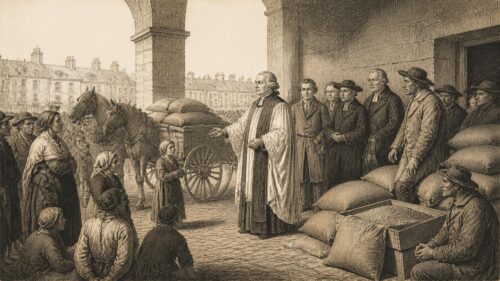
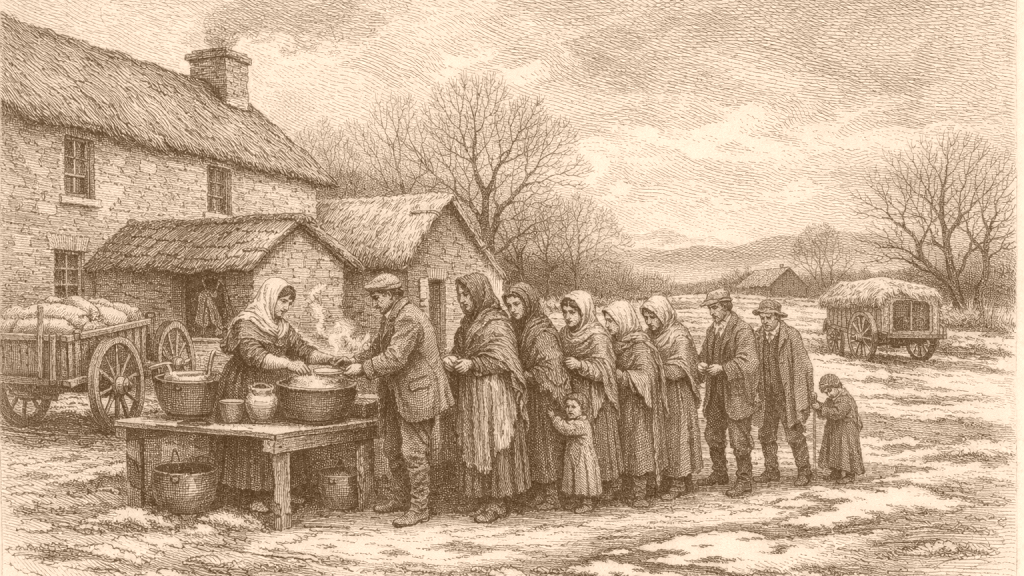
During the Great Famine, private relief took several forms. One account says that charitable bodies, first revived after earlier crop failure, received donations from around the world after 1846, including from poor people and heads of state. It also says extensive fund-raising was carried out in Ireland by all sections of society. The evidence is descriptive and broad, but it does not quantify total relief or compare private action with public administration in a systematic way.
Specific examples show how this relief operated on the ground. The marquis of Sligo helped open a private soup kitchen in Westport with an initial donation and weekly subscription; Lord Roden opened a soup shop on his estate; the earl of Shannon resold soup below cost; and a Belfast committee fed more than 12,000 people daily. Other landlords reduced rents or gave seed and employment, while some were criticised as indifferent or mean. The passage reports variety, not uniform practice.
Rental Pressure
The same relief account links hardship to rent. It states that some landlords lowered rents by ten per cent after the blight came a second time, and that these actions were often short term because landowners themselves faced financial problems as rates rose and rental income fell. In the examples given, Lord and Lady Waterford financed a soup kitchen, Maria Edgeworth provided free seed, and Daniel O’Connell reduced rents on his County Kerry property by half. The passage presents rent relief as one response among others.
The description of landlord relief also notes limits and criticism. The absentee landlord James Robinson gave only one pound to a soup kitchen, and Lord Londonderry and his wife were criticised for giving thirty pounds while spending far more on renovating their Irish home. These examples contrast with larger donations elsewhere in the same passage. The comparison is confined to the cited names and sums; it does not establish a general rule about all landlords or all districts.
Voluntary Action
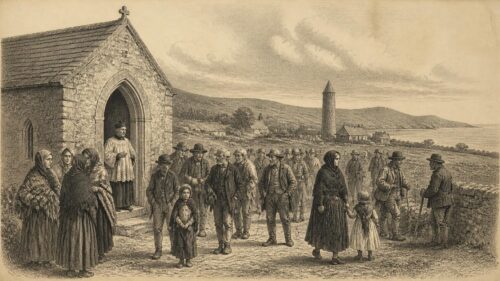
Beyond landlord action, the same account emphasizes voluntary and religious networks. It says assistance came from a wide variety of religions, from Hindus in India to Jews and Baptists in New York, while the main Protestant churches were actively involved in collecting and distributing relief. The Society of Friends is singled out for distinction, and the efforts of Jonathan Pim and James Hack Tuke are said to have been widely praised. The passage identifies cooperation, but not a single unified organization.
A second source on the Friends adds institutional detail. It says the Central Relief Committee of the Society of Friends was established in Dublin in November 1846 at Joseph Bewley’s suggestion, and names Jonathan Pim as joint secretary with William Harvey Pim. It also identifies the Bewleys as merchants. This passage supplements the broader relief narrative by showing a named committee and named individuals, but it does not describe their full activities or their total impact.
Archive Record
A separate account of the Strokestown Park House Archive shows how evidence of distress survives in estate records. It says the collection includes estate and family papers extending from the seventeenth century to 1981, and that the papers reveal important background information on local society in County Roscommon as well as the effects of the Famine on the estate. The archive is split between Strokestown House and the National Library of Ireland, with about 5,000 documents in the library and 18,000 still in situ.
The same archive notice explains how the holdings were divided. It says Sir John Ainsworth surveyed the papers in the late 1940s and early 1950s, described them as valuable, and persuaded Mrs Olive Hales Pakenham Mahon to transfer most of them to the library. It also says she retained Famine-period papers at Strokestown. These statements concern custody and arrangement of the archive, not the wider historical meaning of the documents themselves.