
Education Convention
At a Glance
National Origins
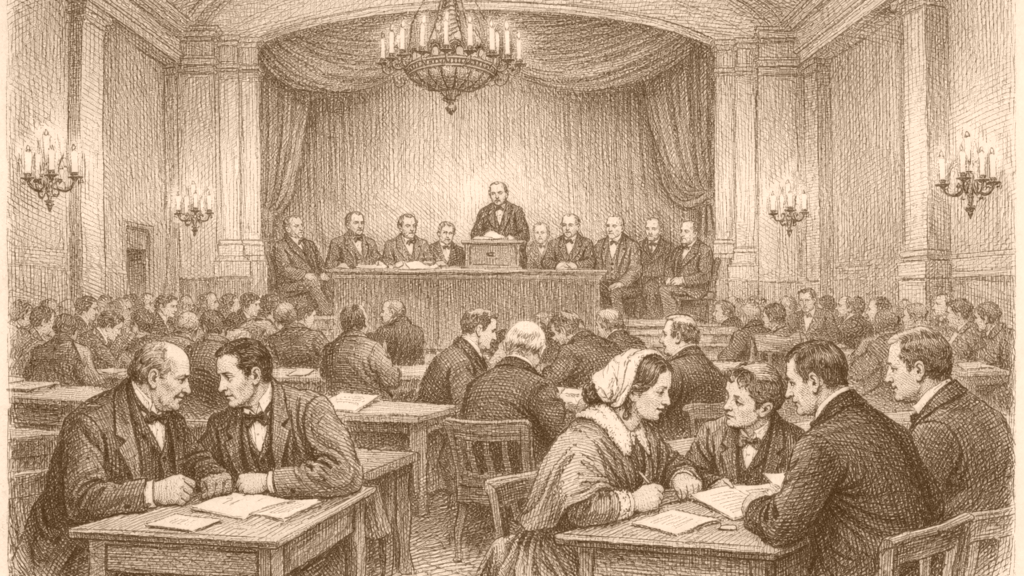
The record identifies a national education convention held in 1993 and describes it as an unprecedented public consultative process. One account says it convened over an extended period in October 1993, with participants drawn from the education sector and civil society. Another summary says the convention's outcomes were later synthesized into a report by the secretary general. These excerpts directly show a formal national process, a broad participant base, and a report that followed from the discussions.
A later summary places the first national education convention within a wider sequence of policy developments in the 1990s. It names an OECD report in 1991, a Green Paper in 1992, the convention in 1993, a White Paper in 1995, and the Education Act in 1998. The excerpt does not by itself show causation, but it does present the convention as one step in a visible chain of dated policy texts and enactments.
Current Return
The 2026 convention is described as the first sessions of a new national convention on education in Athlone. The report states that 150 people were chosen from 5,200 applicants, including 32 students between eight and twenty-four years of age. It also says the last convention of this kind was held in 1993. These details show a new convention framed as a return after more than three decades, with a specifically selected membership rather than an open meeting.
The same report records the minister's view that the convention was a historic moment and a once-in-a-generation opportunity to imagine the education system. It also notes that the convention will produce a report with recommendations for the minister and the Government, and that the Government has committed to a follow-up strategy. These are direct statements about the convention's expected output and the official response planned for it.
Participant Mix
The 1993 convention is described as bringing together participants from the education sector and civil society. One article also says the convention involved a broad range of participants drawn from the education sector and civil society, and that stakeholders were invited to make submissions. A separate account adds that the participants in 1993 were all people working within the school system or members of education organisations, and that there were no students. Taken together, these passages show a specialist and institutional profile.
By contrast, the current convention is explicitly described as including students and younger people. The report says there are 32 students, and the chairperson says the room includes children and young people with special needs, children of immigrants, and parents from different cultural and ethnic backgrounds. The text therefore contrasts a broader population mix with the earlier convention's specialist composition, while remaining within the limits of what the excerpt states.
Youth Inclusion
The current convention is repeatedly framed around younger voices. The minister says it is important to hear the voices of young people, and the convention chairperson says that the composition is very different from the last convention because there were no students then. The report also states that members of the convention represent the Ireland that we have and are looking to design the system that will match that Ireland into the future. The evidence is descriptive rather than analytical, but the contrast is clear.
A separate account of the 2018 symposium linked to the later convention says that young people were intentionally included and that their contributions were direct and insightful. It also says that the work after 2018 was intended to keep the voices of children and young people central. This source does not describe the 2026 convention itself in the same detail as the news report, but it does document the earlier process that the later convention is said to continue.
Policy Setting
The 1993 convention sits beside a set of policy texts named in later commentary. The Irish Times summary lists the OECD report, the Green Paper Education for a Changing World, the convention, the White Paper Charting Our Education Future, and the Education Act. Another piece says the convention gave wider society a significant part in policymaking and brought serious challenges in education into public attention. These are direct claims about the convention's place in policy discussion, not a full explanation of how change happened.
The present convention is described as part of an effort to look to the future needs of Irish education. One resource says the convention was accepted by government as a national conversation, replacing an earlier citizens' assembly idea after a change of government. Another says the convention is underway and is only a station on a journey of change. These passages show an ongoing and explicitly future-oriented framing, but they do not establish the later outcome yet.
Comparative Frame
Across the retrieved excerpts, the strongest comparison is structural. The 1993 convention is presented as a consultative process dominated by education-sector participants and civil society, while the 2026 convention is presented as a selected assembly with students and members of the general population. The earlier process is retrospectively linked to policy milestones in the 1990s; the later one is described as generating recommendations for government and a follow-up strategy. The evidence supports comparison, but not a fuller judgment about long-term effects.
The documentary trail also shows that the convention has been repeatedly described in expansive language. One source calls the current exercise the largest national conversation on education in the state's history, while another refers to a once-in-a-lifetime opportunity to reimagine education. Those phrases belong to the cited texts and should be read as framing language rather than as independent evidence of outcome. The records themselves chiefly show membership, timing, and stated purpose.
