Saint Gobnait
Saint Gobnait is a figure of significant devotion within the religious landscape of Ireland, particularly within the county of Cork. While her precise historical origins are shrouded in the passage of time, tradition suggests she may have lived during the seventh century. Because her life is documented primarily through hagiography and local lore rather than contemporary administrative records, the specific dates of her birth and death remain uncertain. She is traditionally remembered as a woman of spiritual strength and leadership, eventually establishing herself as a focal point of monastic life in the region of Ballyvourney.
Dateline
Early Life
Saint Gobnait is a figure of significant devotion within the religious landscape of Ireland, particularly within the county of Cork. While her precise historical origins are shrouded in the passage of time, tradition suggests she may have lived during the seventh century. Because her life is documented primarily through hagiography and local lore rather than contemporary administrative records, the specific dates of her birth and death remain uncertain. She is traditionally remembered as a woman of spiritual strength and leadership, eventually establishing herself as a focal point of monastic life in the region of Ballyvourney.
Monastic Foundation
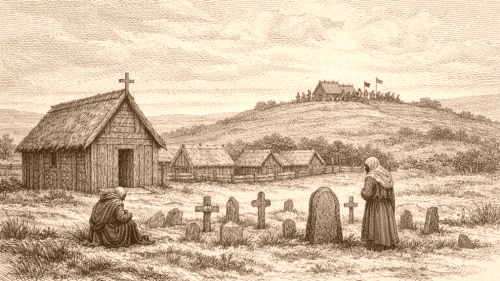
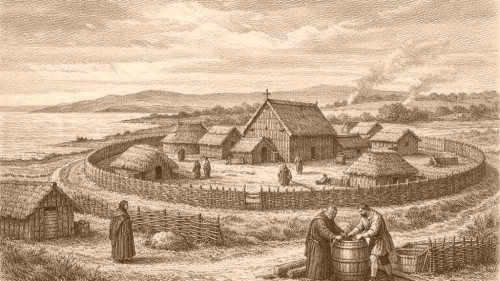
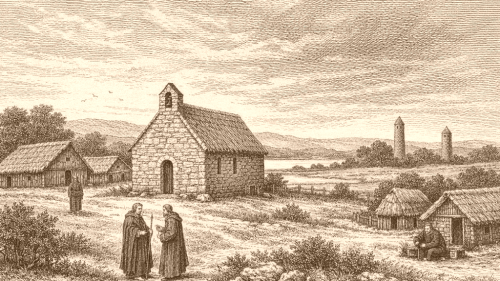
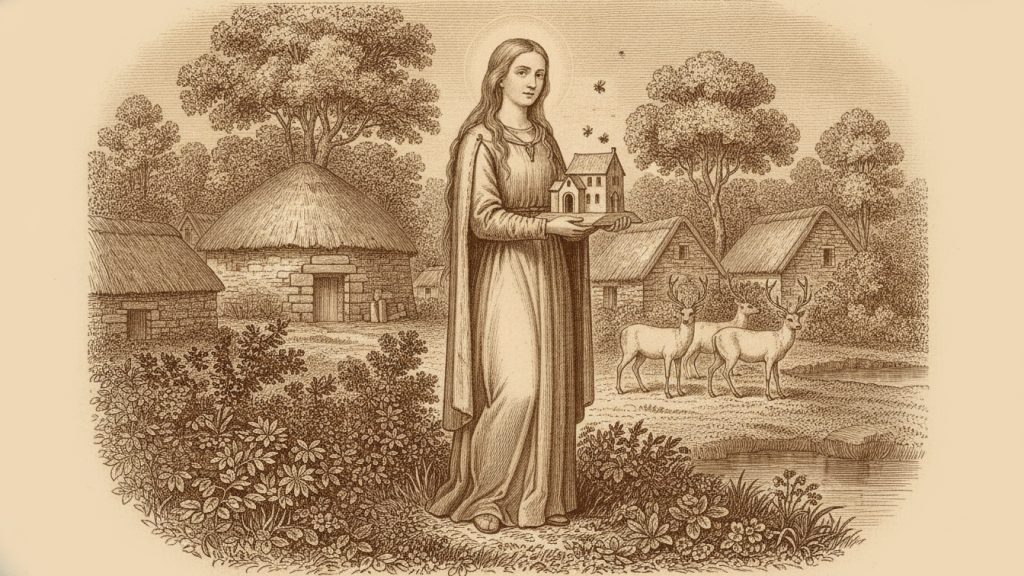
According to tradition, Saint Gobnait founded a nunnery in Ballyvourney, a location where she is said to have been guided by the sighting of nine white deer. This religious community became highly regarded for its commitment to social welfare, gaining a reputation for the dedicated care of the poor and the sick. The establishment of this nunnery reflects the broader pattern of early Irish monasticism, where spiritual devotion was intrinsically linked to communal service and the support of the marginalised. The site in Ballyvourney continues to be associated with her legacy, serving as a place of pilgrimage and remembrance for those following the historical and spiritual trail of the saint.
Iconographic Symbols
The visual representation of Saint Gobnait in art often incorporates specific symbols that reflect the legends associated with her life. In certain depictions, such as the stained glass work by Harry Clarke located in the Honan Chapel at Cork University College, she is portrayed as a woman of presence with auburn hair and a slender frame. She is frequently shown holding a model of her nunnery, signifying her role as a foundress. Another recurring element in her iconography is the presence of bees. These insects are traditionally linked to her life and are often depicted emerging from the vibrant colours of the artwork, symbolizing the industriousness and sweetness of her spiritual guidance.
Venerated Artifacts
In Ballyvourney, several unique physical representations of the saint survive, reflecting the long history of her cult. One such artifact is a medieval statue of Saint Gobnait, which is one of only five similar statues remaining. This figure is typically only displayed during specific times of the liturgical year, notably on her feast day, which is observed on 11 February, and during Whitsun. Additionally, there is a small, worn sculpture located above an external window of the medieval church. While some observers identify this figure as a Sile na Gig, others associate it with Saint Gobnait. It remains an integral part of the turas, or pilgrimage circuit, where devotees engage in prayer while interacting with the sculpture.
Modern Legacy
The influence of Saint Gobnait persists in the modern era, particularly within Baile Mhúirne. Her name is woven into the fabric of the community, appearing in the dedications of local schools and the parish church. This enduring connection is further evidenced by local businesses and cultural markers, such as the micro brewery named after the nine white deer of her legend. The transition from a seventh-century monastic leader to a modern symbol of local identity demonstrates the lasting impact of her traditional narrative on the cultural and spiritual heritage of Cork.
Source References
Hover over a number to see the source. Select it to open the source.