Sligeach Battle537 CE
The surviving annals do not preserve a single agreed Irish event for 537 CE. One major compilation places the battle of Sligeach in that year, while other annals attach nearby Irish battles and a famine notice to adjacent or differently numbered years. The result is a sparse and uneven record, with dating differences that must be read cautiously.
Dateline
Irish Notices
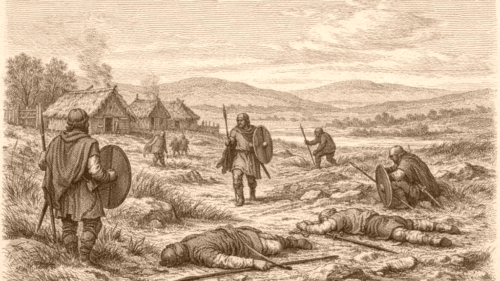
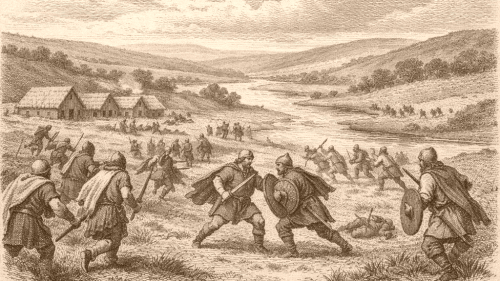
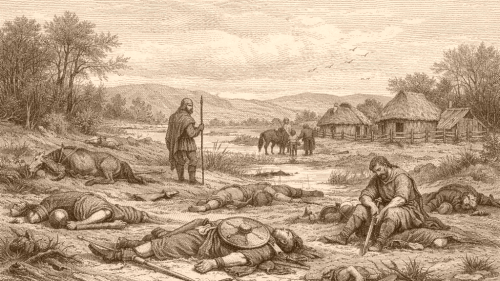
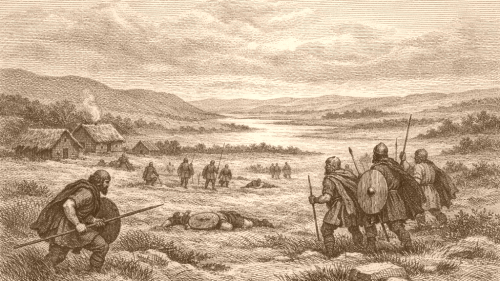
The Annals of the Four Masters place the battle of Sligeach under 537 and say that Eoghan Bel was slain there. Annals of Tigernach record the battle of Claenloch, in which Maine son of Cearbhall fell defending the hostages of Uí Maine of Connacht, and Goibnenn son of Conall king of Uí Fiachrach Aidhne was the victor. Chronicon Scotorum places the battle of Claenloch under printed AD 538. [3] [2] [4]
Dating Uncertainty
The year labels are not fully aligned across the sources. The Annals of Ulster assign the battle of Sliab Éiblinne to 536 rather than 537, and the Annals of Inisfallen give 537 a notice of failure of bread while also cross-referencing other annals for nearby entries. This shows that the surviving notices for the period must be compared by source and year label, not assumed to represent one common chronology. [1] [5]
External Notices
The same annual slots also preserve non-Irish material. In the Annals of Ulster, the heading for 537 includes a papal chronology notice and the battle of Claenloch, in which Maine son of Cerball fell. In the Annals of Tigernach, the internal label T536 contains a papal notice about Agapitus, and T537 records the battle of Claenloch. [1] [2]
Source References
Hover over a number to see the source. Select it to open the source.