Brigit Repose524 CE
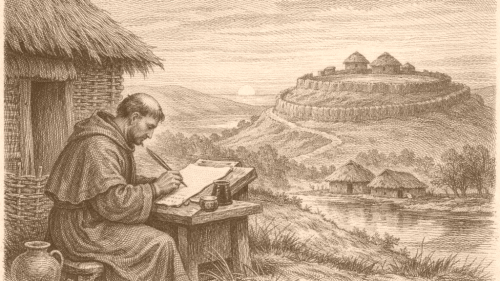
The surviving annal notices closest to 524 CE are brief and uneven. Several works record the death or repose of Saint Brigit, while others also add a bishop’s death, a battle, or a papal notice. The manuscripts do not agree on the year: some place these notices under 523, others under 524, and one source explicitly says 523 alias 524.
Dateline
Annal entries
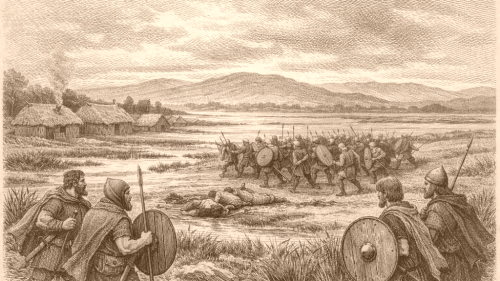
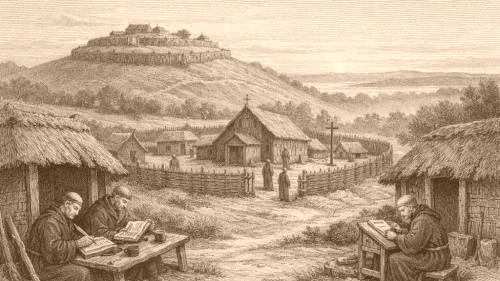
The annal material nearest 524 CE is sparse but not empty. The Annals of Ulster place the year as 523 alias 524 and record two notices: the battle of Cainri son of Niall, and the repose of Beo-aed, bishop of Ard Carna. In the same chronological run, they also note the repose of Saint Brigit. [1]
The Annals of Tigernach place Brigit’s falling asleep under T524. The Annals of the Four Masters place the Brighit notice under the printed AD heading 525, where they say she died on the first day of February and add Beoaidh, bishop of Ard Carna, as another death notice. Their printed AD heading 524 contains the battle of Ath Sighe. [2] [3]
Dating issues
The surviving notices do not align on a single year label. Annals of Ulster give AD 523 alias 524 and place Brigit’s repose there. Tigernach places her falling asleep under T524. Chronicon Scotorum gives A.D.523 and says Brigid died in the 87th year of her age, or 77th, as some assert. The Four Masters place Saint Brighit’s death under the printed AD heading 525 and say she died on the first day of February. [1] [2] [4] [3]
Annals of Inisfallen do not add an independent narrative for the year in the excerpted material; instead, they supply only a cross-reference to the repose of Saint Brigit, linked to other annal entries. That makes the year’s surviving Irish record especially dependent on short notices rather than full accounts. [5]
External notices
A non-Irish notice also appears in the same annal tradition: both Tigernach and Chronicon Scotorum record Pope John’s death or resting. In Tigernach, this follows the Brigit notice; in Chronicon Scotorum it stands alongside the date for 524 and the death of Illann, son of Dunlaing, in the next annal position. [2] [4]
Source References
Hover over a number to see the source. Select it to open the source.