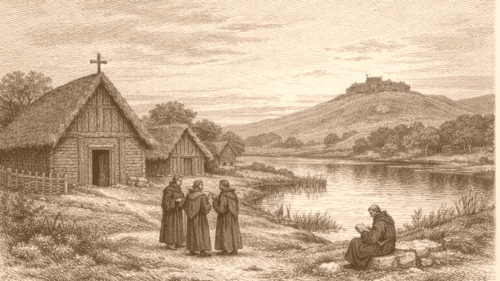
Manu Battle503 CE
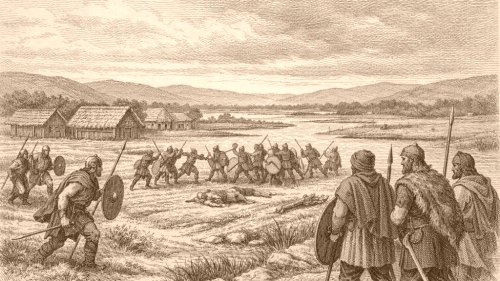
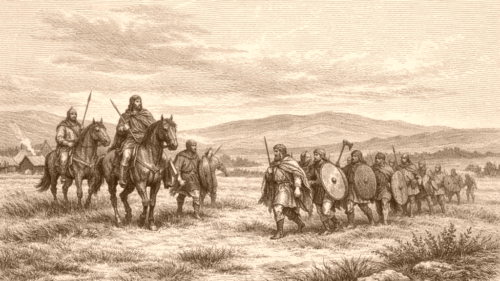
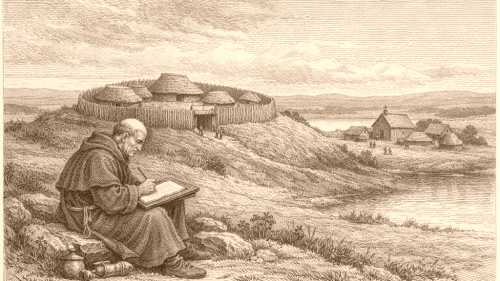
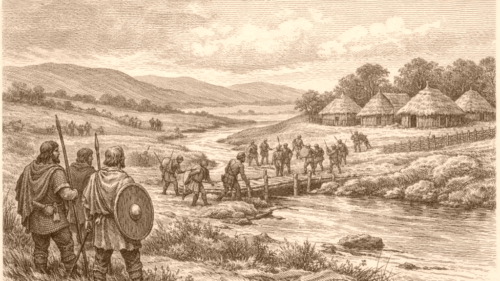
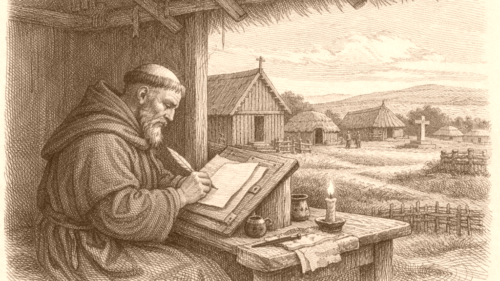
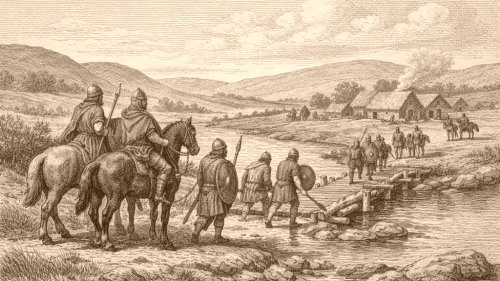
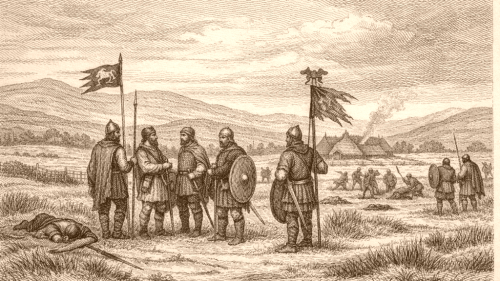
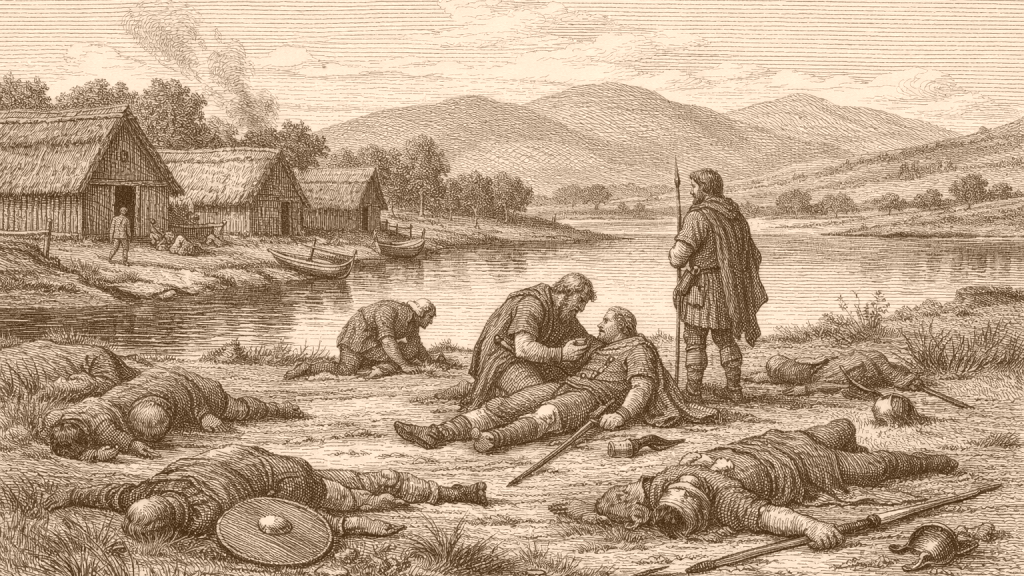
The surviving annal entries associated with 503 CE are sparse and uneven. One source places the battle of Manu in that year, another links a cluster of deaths and battle notices to its 503 heading, while a third surviving annal excerpt for the same year records only the repose of Domangart of Cenn Tíre. The evidence also shows explicit dating uncertainty in some manuscripts and a broader overlap of notices across adjacent years.
Dateline
Ulster Record
In the Annals of Ulster, AD 503 includes the death of Cerpan, described as a bishop from Ferta Cerpáin at Temair, the battle of Manu won by Aedán, and an alternative note saying that the death of bishop Ibar belongs here instead. The same source also places the battle of Cenn Ailbe under AD 500 and the battle of Druim Lochmaige under AD 502. [1]
Other Annals
The Annals of the Four Masters give AD 503 the death of Lughaidh at Achadh Farcha, the death of Eochaidh son of Muireadhach Muindearg, king of Uladh, and a statement that the first year of Muircheartach son of Muireadhach son of Eoghan son of Niall began as king over Ireland in the following year. The Annals of Inisfallen record under their 503 entry the repose of Domangart of Cenn Tíre. [2] [3]
Dating Limits
Across these surviving excerpts, 503 CE is not marked by one agreed event but by several short notices assigned differently by different annal traditions. The Ulster text explicitly offers an alternative placement for bishop Ibar’s death, while Inisfallen’s 503 entry is minimal and the Four Masters preserve a separate sequence of deaths and royal chronology; taken together, the excerpts show sparse coverage and visible uncertainty in the year’s placement. [1] [2] [3]
Source References
Hover over a number to see the source. Select it to open the source.