Archived: 6 November 2026
Abstract
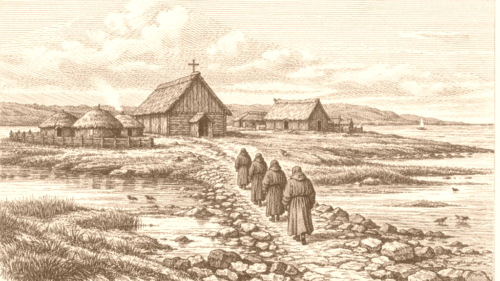
Irish ContextThe supplied evidence begins with an important distinction: Aidan was Irish, but the mission discussed here did not unfold in Ireland itself. One source describes him as an Irish monk who had studied under St. Senan and then became a monk at Iona about 630, while another identifies him as an Irish monk from the monastery founded by St. Columba on Iona. That matters because the evidence links Aidan’s identity to Irish monastic formation, but the actual setting of the 635 mission was elsewhere. The sources therefore support an Irish connection through person and training, not through the geography
Read Article
Archived: 6 November 2026
Abstract
Yearly FrameThe annalistic evidence for 633 CE in the retrieved material is extremely slight. In the Annals of the Four Masters, the year entry states only that Failbhe Flann, king of Munster, died. That is the secure core of the year’s record here. No second event is attached to the same year in this witness, and no explanatory detail follows the notice. A careful account must therefore begin from the fact of the death and from the limits of the record, not from any imagined fuller story.This brevity is not a defect in the historian’s work but a condition of
Read Article
Archived: 7 November 2026
Abstract
Year EvidenceFor 632 CE, the safest starting point is the annal entry itself. In the Annals of Tigernach, the year is marked by a compact cluster of notices: the battle of Fid Eoin, the death of Eochaidh Buidhe son of Aedán, the battle of Dún Cethirn, and another death notice. Because annalistic dating is terse and often compressed, these entries form the secure core for the year. Anything beyond them depends on comparison and caution rather than direct statement.The broader annalistic landscape shows why restraint is necessary. Nearby years in the same tradition continue to list battles, deaths, and rulership
Read Article
Archived: 7 November 2026
Abstract
Yearly RecordFor 631 CE, the surviving notices are short and uneven. The Annals of Tigernach preserves only the year heading for T631 in the excerpt here, with no event notice attached in the visible passage. By contrast, the Annals of the Four Masters and the Annals of Inisfallen both supply specific entries for the same year. This makes 631 visible chiefly as a moment of record, not as a year with many securely dated events.The same material also shows that the year was not recorded in only one way. The Four Masters assigns 631 to the eighth year of Domhnall
Read Article
Archived: 7 November 2026
Abstract
Year FrameFor 629 CE, the annalistic record opens only a narrow window. One Tigernach entry is placed under T629 and reports a battle at Ard Corann. A separate comparative notice says that the same event appears in the Annals of Ulster as 629, while Tigernach places it in 630. That is enough to discuss the year, but only by staying close to the wording of the texts and not by filling the gap with invented detail.The year can therefore be treated as a dated notice rather than a full narrative. The surviving wording names a battle, identifies a victor, and
Read Article
Archived: 8 November 2026
Abstract
Yearly FrameThe clearest evidence for 626 CE comes from the annal entries that explicitly mark the year in their own sequence. The Annals of Ulster place several notices under AD 626, including a battle at Ard Corann, a battle at Carn Feradaig in Cliu, and a vision seen by Fursa. The same textual frame also identifies the death of Fiachna son of Demán within that year, so the surviving record is not empty, only brief and selective.The year is also legible through adjacent annal traditions, though not every entry stands in the same place in every compilation. The Annals of
Read Article
Archived: 8 November 2026
Abstract
Year MarkersThe annalistic record for 625 CE is compact, and its most explicit year-marker comes from the Annals of Ulster, which opens the entry with the kalends of January and then describes the year as dark. That same notice places several deaths in the year: Áedán son of Cumuscach, Colmán son of Comgallán, Rónán son of Tuathal, and Mongán son of Fiachna of Lurga. The entry also preserves a poetic aside attached to those deaths.A parallel compilation, the Annals of Inisfallen, presents the same year with a different selection of notices. Its 625 entry records the repose of Colmán Stélláin,
Read Article
Archived: 8 November 2026
Abstract
Year MarkersThe year 624 CE is fixed most clearly in the Annals of Ulster, where the calendrical notice gives AD 624 and immediately characterizes the year as dark. That opening does not narrate events in itself, but it does frame the notices that follow as belonging to that year. The same compilation then lists several deaths under the same year heading, allowing the year to be identified without importing material from elsewhere.The Annals of the Four Masters also mark the year explicitly, giving the Age of Christ, 624, and then noting the first year of Domhnall, son of Aedh, son
Read Article
Archived: 9 November 2026
Abstract
Yearly FrameThe year 623 CE survives in the annals as a cluster of short notices rather than a continuous narrative. In the Annals of Ulster, the annual slot marked AD 622 includes the death of Fergna, abbot of Í, the repose of Mac Laisre, abbot of Ard Macha, and Finnia, abbot of Ner, before the storming of Ráth Guala by Fiachna son of Baetán. The sequence is compact and factual, with no explanatory link between the items.The Annals of Inisfallen and the Annals of the Four Masters place nearby notices under their own year labels rather than under a single
Read Article
Archived: 10 November 2026
Abstract
Year FrameThe annal compilers mark 618 CE as a distinct year inside their own chronological sequences. In the Annals of Ulster, the year opens with the Kalends of January and then gives notices under U618. Tigernach and Chronicon Scotorum also place their material under annual headings. That shared framing lets the year be identified securely, but it does not authorize adding events that the entries do not actually name.The year headings also show that 618 is part of a continuing sequence rather than a stand-alone story. Ulster’s notices are arranged after earlier annual items and then continue into later ones,
Read Article
Archived: 10 November 2026
Abstract
Year MarkersThe surviving record for 615 must begin with chronology, because the relevant annals do not present the year in exactly the same way. In the Annals of Ulster, the notices grouped here appear after a heading that reads AD 614, followed by the year marker and then the brief entries. In the Annals of Tigernach, the comparable material appears under T615. The difference is plain in the text and requires caution in any modern summary.That caution is strengthened by Inisfallen, which does not simply repeat the same wording but cross-references the battle of Sliab Tuath to AU 615. Its
Read Article
Archived: 10 November 2026
Abstract
Year BoundsThe evidence for 614 CE is narrow, and the surviving notices do not create a continuous narrative. In one annalistic sequence, the year marker for 614 is followed only by the burning of Bennchor. In another tradition, a 614 entry concerns a battle in Britain. A fragmentary sequence also places a star sighting under 614. These notices are separate, brief, and differently framed, so any account of the year has to stay close to each entry’s own wording.The immediate surrounding years help define the limits of the record, but they do not enlarge 614 itself. In the same Tigernach
Read Article
Archived: 12 November 2026
Abstract
Year EvidenceUnder the label CS610, Chronicon Scotorum records the death of Áed son of Colgu, king of Ind Airther, while on pilgrimage at Cluain moccu Nóis. The same entry records the death of Sillán moccu Minn, abbot of Bennchor, and of Aedán, described as the anchorite. It also names Mael Umai son of Baetán among the dead. The entry opens with the words “Kalends fifth feria” and includes a short verse in the notice concerning Áed. These are the named deaths and accompanying details presented within that chronicle entry.The same annalistic sequence also records a disturbance in Bairche. In Tigernach
Read Article
Archived: 12 November 2026
Abstract
Year NoticesTigernach places a compact group of notices under its internal heading T609. It names an army of the Ulaid in Bairche being struck, the death of Mael-dúin son of Aline, the repose of Colmán Ela, Aed Róin and Aed Laigen, and Neman, abbot of Lismore. These are notices printed under that particular heading. The wording must be distinguished from an independently reconciled date of 609 CE, because the other annals preserve different chronological labels for related material.In Tigernach, the notices gathered under T609 are brief and varied. The sequence begins with an army of the Ulaid in Bairche struck
Read Article
Archived: 12 November 2026
Abstract
Year RecordThe year 608 in the Annals of Tigernach survives as a compact cluster of notices rather than a continuous story. The entry records the death of Aodh son of Colgu, described as king of Airgiall and the Oriors, and places that death at Clonmacnois in pilgrimage. The same year also includes separate notices for the deaths of Sillán son of Cumaine, abbot of Bennchor, and Aedán the anchorite.Tigernach also lists the deaths of Mael-umai son of Baetán and Colgu son of Fiachne, though the surviving excerpt breaks off after Colgu's name. The preserved passage therefore shows a year framed
Read Article
Archived: 12 November 2026
Abstract
Year DatingThe evidence for 607 CE is not arranged identically across the annals. In the Annals of Tigernach, the entry numbered T607 records the slaying of Sechnusach son of Garbán by Domnall son of Aod and the death of Conall Redspear son of Daimine, with the rest of Lugaid following in the same entry. In Inisfallen, AI607 records the slaying of Aed Sláine, Aed Rón, and Aed Buide, then notes that Aed Allain held the kingship. The Ulster text places related material under a different year label.The notices around 607 are deaths and killings, but the year labels differ from
Read Article
Archived: 12 November 2026
Abstract
Year LabelsThe excerpts do not present 606 CE as a single, stable point across the annals. In Annals of Tigernach, the year labeled T606 includes the death of Fiachra the One-eyed son of Baetán and the repose of Eochaid. In the Annals of Ulster, the year labeled U606 includes the repose of Beóguin, the death of Aedán son of Gabrán, and a notice about Pope Gregory. The Annals of Inisfallen place a cluster of deaths under AI606, while the Annals of the Four Masters begin a separate entry under the Age of Christ 606.These headings also show that the same
Read Article
Archived: 12 November 2026
Abstract
Year NoticeThe annalistic record for 604 CE is brief and clustered around deaths and slayings. In one version, the year is marked by the repose of Gregory of Rome, the repose of Saint Sinech, the death of king Suibne son of Colmán Mór, and the repose of Senach abbot of Cluain Ferta Brénainn. Another version places a different set of notices under the same chronological span, showing that the year is preserved through short annal entries rather than a continuous account.The same year is also represented in the Annals of Ulster as AD 603, where several deaths and slayings are
Read Article
Archived: 12 November 2026
Abstract
Year RecordThe explicit year-entry for 603 in the Annals of Inisfallen is brief and unadorned. It records the repose of bishop Sillán and the repose of Cainnech moccu Dálann. The wording gives deaths, or the language of religious repose, rather than a battle, raid, eclipse, famine, or change of kingship. On this evidence alone, 603 is marked by two clerical obituary notices and nothing more specific.Nothing in that annal line adds a date beyond the year label itself, and nothing in it identifies a place, a ruler, or an immediate cause. The secure facts are limited to the two named
Read Article
Archived: 12 November 2026
Abstract
Dating FrameThe surviving year notices do not line up in the same way. In the Annals of Ulster, the heading marked AD 601 is followed by entries for the kalends of January and then by notices placed under U602, which is explicitly marked AD 601. In the Annals of the Four Masters, M601 is headed as the Age of Christ, 601. The comparison is direct: one witness labels the material one way, while the other places the year at 601 without that shift.The same comparison also shows that the Ulster chronicle preserves a short block of notices under AD 601
Read Article
Archived: 13 November 2026
Abstract
Yearly FrameThe notices attached to 598 CE are not identical from one annal to another. In the Annals of Tigernach and the Four Masters, the year is marked as 598; in the Annals of Ulster and Chronicon Scotorum, the same cluster appears within adjacent regnal and calendar sequences. The result is a compact record with overlapping but not perfectly identical year labels.Across these entries, the material for the year is limited and concrete. The most securely dated items are a saint’s death and a battle, while nearby notices include other deaths, a killing, and a brief conversion notice in the
Read Article
Archived: 14 November 2026
Abstract
Year FrameThe annalistic material does not present 597 CE as a continuous story. In the Four Masters, the year appears as a formal heading followed by brief notices; in Inisfallen, the same year is likewise reduced to short entries; and in Ulster and Tigernach the notices are arranged under year headings that sometimes disagree by a year or more. The secure point is that the surviving texts preserve a cluster of notices placed by their compilers under 597 or its immediate equivalents, not a coordinated narrative of one political season.The same cluster also shows that the annalists did not always
Read Article
Archived: 14 November 2026
Abstract
Annals DatingThe clearest year-marker in the Annals of Ulster is U596.0: “Kalends of January first feria, twenty-sixth of the moon. AD 595.” Under that annual heading, U596.1 records the battle of Ráith in Druad, U596.2 the battle of Ard Sendaim, U596.3 the slaying of Aedán's sons Bran and Domangart, and U596.4 the battle of Corann. The notices stand together within one annual unit. The Annals of Tigernach show a comparable method. T595.0 reads “K. uii.”, and T595.1 records the death of Cumascach son of Aodh by Brandub son of Eochaid in Dún Buchet.These entries show annalistic dating rather than continuous
Read Article
Archived: 17 November 2026
Abstract
Date FrameThe Annals of Ulster place the notice at U589.0, under the printed heading AD 588 in the extracted excerpt and AD 589 in the surrounding sequence. The entry records three items in close succession: the repose of bishop Aed son of Brec, the death of Aed son of Brénainn, king of Tethba, and a very hot and dry summer. The wording itself does not fix a day for any of the three notices, and it does not explain whether they were remembered from the same moment or simply gathered under the same year.A parallel tradition in the Annals of
Read Article
Archived: 15 November 2026
Abstract
Year NoticesIn the Annals of Ulster, the passage marked U588 begins with the heading “Kalends of January ... AD 587.” It records the repose of Cairlén, bishop of Ard Macha; the repose of Senach, bishop of Cluain Iraird; the death of the grandsons of Giun(?); the conversion of Constantine to the Lord; a great snowfall; and the slaying of Áed Dub son of Suibne. The sequence is compact, but it joins ecclesiastical death-notices, an imperial conversion, weather, and violence in a single annal unit.The Annals of Tigernach preserve a nearby sequence under the internal label T587. In that sequence, T587.1
Read Article
Archived: 14 November 2026
Abstract
Yearly RecordsThe Annals of Ulster keep the year heading distinct from the notices that follow it. U583.0 gives the heading, “Kalends of January sixth feria, second of the moon. AD 582,” and U583.1 then records the death of Feradach son of Daui, king of Osraige. The same annal entry continues with Pelagius, the battle of Manu won by Aedán, and the death of Fergna son of Caibléne. U583.5 adds, “Or this year, the repose of Brénainn of Cluain Ferta.” U584.0 then opens AD 583.The Annals of the Four Masters also attach a year heading to this cluster. Under M583.0 they
Read Article
Archived: 15 November 2026
Abstract
The annalistic notices assigned to 574 present a small set of entries rather than a single unified account. One record places the battle of Tola and Fertola in the territories of the Cruithin and adds a death notice for Conall son of Comgall. Another record assigns the same battle to plains between Éile and Osraige, names Fiachra son of Baetán as victor, and gives a fuller topographical gloss. Related annals place a different battle notice under 574 or nearby years, showing that the surviving entries do not align perfectly in year division. This article compares the notices strictly as written.
Read Article
Archived: 15 November 2026
Abstract
Annal DatingThe Ulster annals place the notices discussed here beside the heading printed as U572.0, which carries the year label AD 571, and then continue with notices numbered U572.1 to U572.6. In the same sequence, the next heading, U573.0, carries the year label AD 572. The Tigernach annals preserve a corresponding sequence under T572 and T573, so the records must be read as annal entries with their own printed headings rather than as modern calendar labels.The two recensions do not present the same ordering. In Ulster, the slaying of two descendants of Muiredach appears before notices of a bishop’s repose,
Read Article
Archived: 16 November 2026
Abstract
Ulster NoticesIn the Annals of Ulster, the notice headed U565.0 and printed with AD 564 introduces several items for that year. It records the kalends of January on a fifth feria, notes the year as AD 564, and then lists the battle of Gabair Liphi, the death of Daimíne Daim Airgit, and other entries that follow in the same annal sequence. The wording places these notices together under the printed AD year without adding explanation beyond the entries themselves.The same Ulster sequence also preserves an alternative note about the year. U564.3 states, "Or, in this year Bre9nainn founded the church
Read Article
Archived: 16 November 2026
Abstract
Year NoticeIn the Annals of Ulster, the notice appears under U563.0, with the dating line AD 562. U563.1 records the battle of Móin Daire Lothair as won over the Cruithin by the Uí Néirll of the North.The Annals of Tigernach preserve a parallel notice under Annal T562 with the annal marker T562.0 and the entry T562.2. Here the battle is Móin Daire Laothair, gained over the Picts by the Uí Néill of the north. The notice also states that seven Pictish kings fell, including Aodh Brecc. This is a different formulation from the Ulster text and belongs to the same
Read Article
