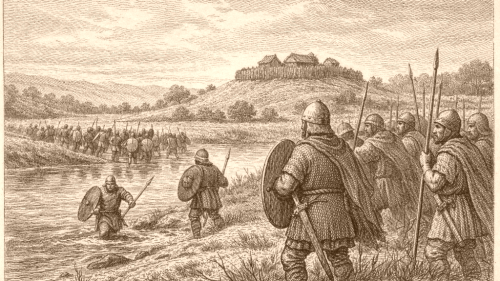
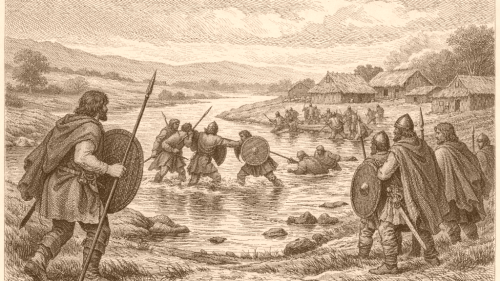
Inne Mór — Mo-Chóe of Naendruim — Death498 CE
The surviving annals do not present a single, securely shared Irish event for 498 CE. Annals of Ulster places the battle of Inne Mór in that year and says Muirchertach mac Erca was victor. Annals of Tigernach instead preserves external notices for Pontus and the pope Anastasius, while Annals of Inisfallen and the Four Masters show that some notices circulated with dating uncertainty or later correction.
Dateline
Irish Notices
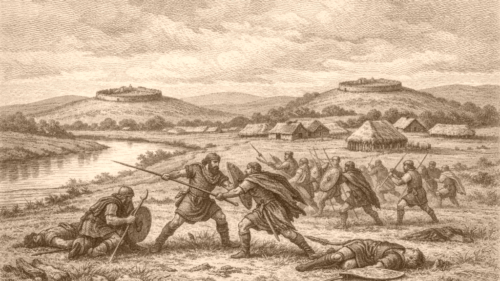
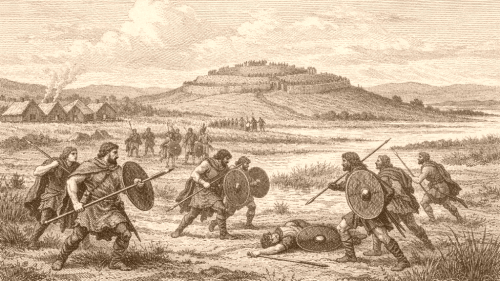
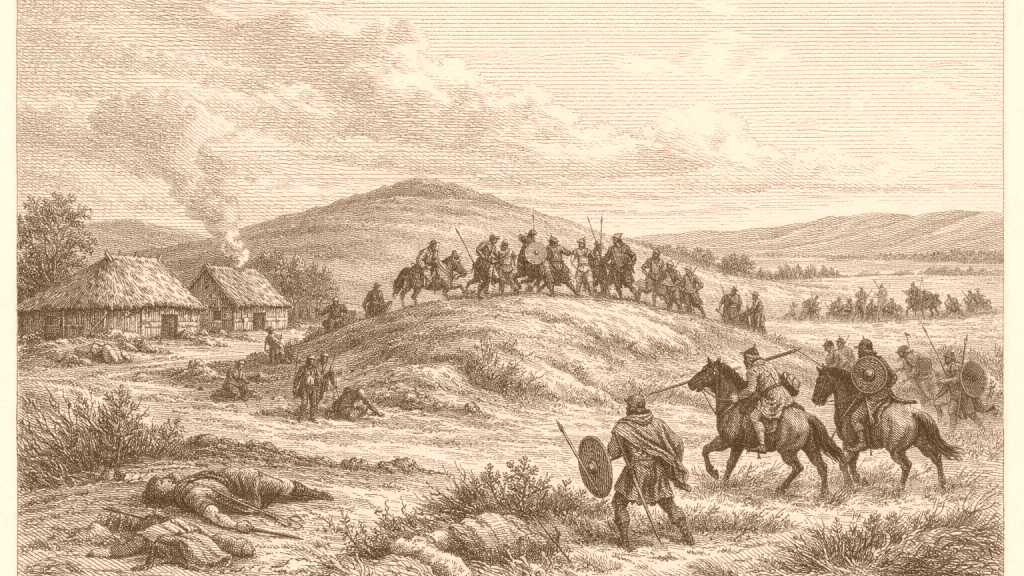
In the Annals of Ulster, the battle of Inne Mór is entered under printed AD heading 497, where it is recorded as a victory for Muirchertach Mac Erca. The same annal also includes the storming of Dún Lethglaise, an earthquake in Pontus, and a memorial notice for Mac Cuilinn of Lusk. [1]
Annals of Tigernach has no printed 498 heading in the retrieved text. It records a notice of a huge stir of the land in the Pontic province and the death of pope Anastasius. [2]
Dating Uncertainty
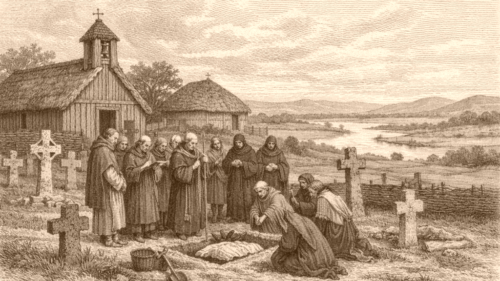
The annal tradition shows dating instability around this point. Annals of Inisfallen places the death of Mo-Chóe of Naendruim under 498, but its cross-reference notes place the notice elsewhere in the Ulster annals. The Four Masters also marks 498 with a correction, reading 498 recte 503, which shows that the year label itself was not stable in that compilation. [4] [3]
Broader Context
Annal identifiers are source labels, not converted CE dates. In the Annals of Inisfallen, Mo-Chóe of Naendruim is cross-referenced as [AU 497, 499], not 498. [1] [4]
Source References
Hover over a number to see the source. Select it to open the source.