Kathleen Clarke
Kathleen Clarke was born in Limerick on 11 April 1878, the third daughter in a family of nine girls and one boy. Her father, Edward Daly, had been involved in the Fenian uprising of 1867, and the family was later helped by his brother James. She was apprenticed to a seamstress and, by the age of eighteen, had started her own dressmaking business. She later refused to join the family bakery work, because her dressmaking enterprise was successful. After meeting Tom Clarke following his release from prison, she fell in love with him, and they married in New York in 1901.
Dateline
Kathleen Clarke was born in Limerick on 11 April 1878, the third daughter in a family of nine girls and one boy. Her father, Edward Daly, had been involved in the Fenian uprising of 1867, and the family was later helped by his brother James.
Dressmaking Career
She was apprenticed to a seamstress and, by the age of eighteen, had started her own dressmaking business. She later refused to join the family bakery work, because her dressmaking enterprise was successful. After meeting Tom Clarke following his release from prison, she fell in love with him, and they married in New York in 1901. Their first child, John Daly Clarke, was born on 13 June 1902.
Republican Activity
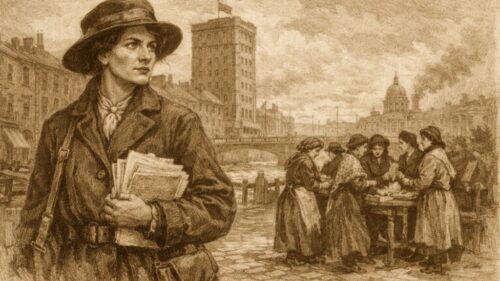
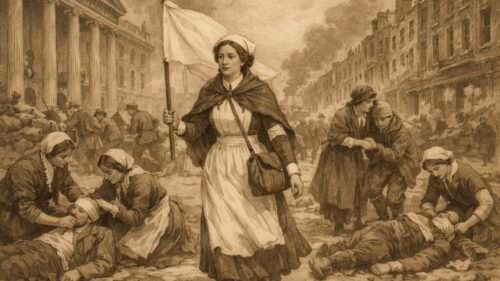
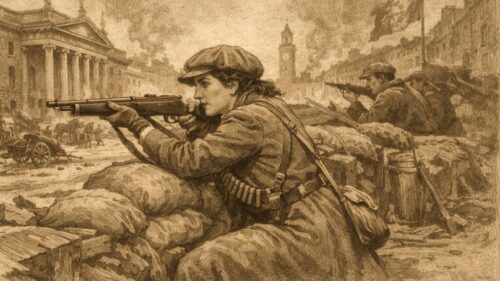
In 1907 Kathleen Clarke and Tom Clarke returned to Ireland and opened a tobacconist and newsagent business in Dublin. She was active as a founder member of Cumann na mBan and attended the first meeting of the organisation in April 1914. She took part in republican activity during the revolutionary period and was taken to visit her husband in Kilmainham Jail the night before his execution. Her brother Edward Daly was executed the following day.
Civic Leadership
In May 1918 she was arrested on an alleged German plot charge and spent nine months in Holloway Jail with Maud Gonne MacBride and Constance Markievicz. She was elected to Dublin Corporation for Sinn Féin and acted as a judge in the Republican Courts. By 1921 she was a TD and opposed the Anglo-Irish Treaty. In 1939 she became Dublin’s first woman Lord Mayor and served two terms. She died on 29 September 1972 and received a State funeral in Dublin.
Source References
Hover over a number to see the source. Select it to open the source.