Michael Mallin
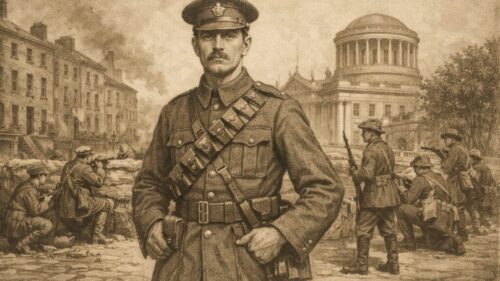
Michael Mallin was born in Dublin, the son of John Mallin, a carpenter. He was probably educated locally at a national school. He joined the army as a drummer boy, probably around the age of sixteen, and served for about fourteen years as a non-commissioned officer. Part of that service was in India, where he contracted malaria. After his discharge, he settled in Dublin and worked as a silk weaver. Mallin joined the Silk Weavers’ Union and became its secretary. He was also active in the Working Men’s Temperance Club.
Dateline
Michael Mallin was born in Dublin, the son of John Mallin, a carpenter. He was probably educated locally at a national school.
Military Service
He joined the army as a drummer boy, probably around the age of sixteen, and served for about fourteen years as a non-commissioned officer. Part of that service was in India, where he contracted malaria. After his discharge, he settled in Dublin and worked as a silk weaver.
Labour Activity
Mallin joined the Silk Weavers’ Union and became its secretary. He was also active in the Working Men’s Temperance Club. He joined the Irish Citizen Army when it was formed in November 1913, and James Connolly later promoted him to chief of staff. He then raised standards of discipline and professionalism and introduced training that included marches, field manoeuvres, and mock attacks on public buildings.
Rising Command
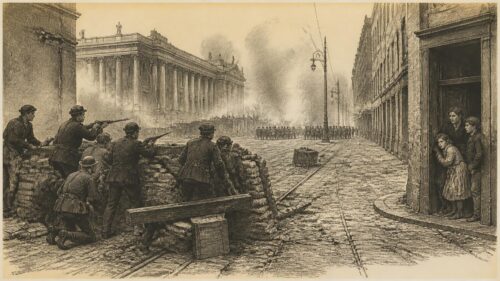
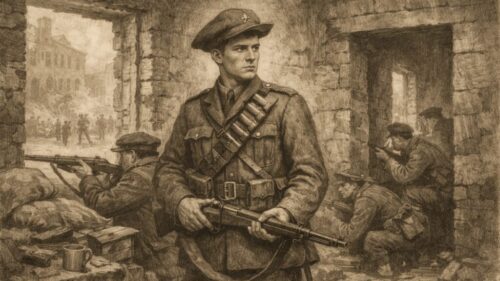
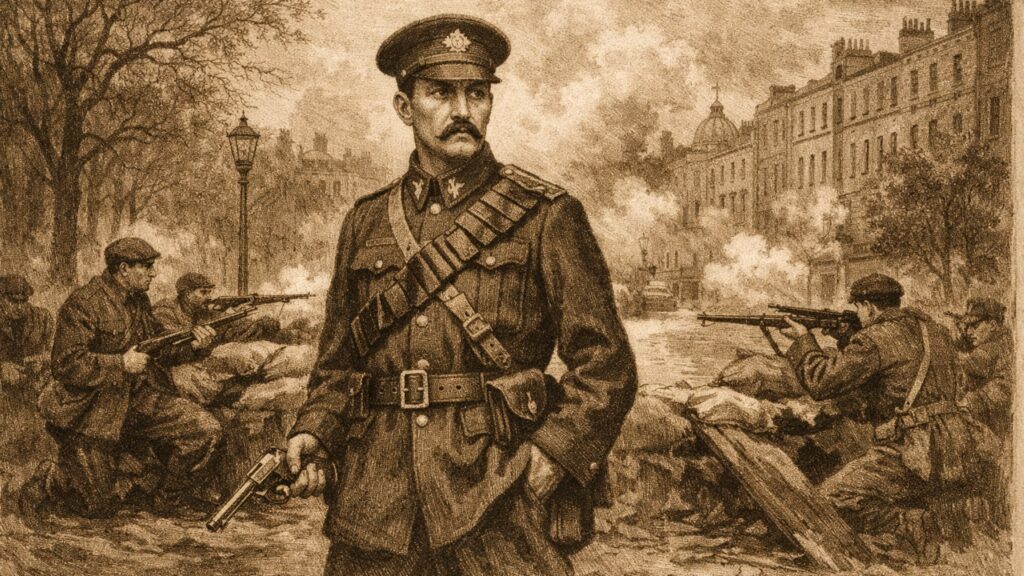
During the Easter Rising, command of the main Irish Citizen Army force devolved on Mallin and Countess Markievicz. Their post was St Stephen’s Green, but most positions there had to be abandoned within twenty-four hours. The majority of the men then occupied the College of Surgeons, where they held out until the order for surrender reached them on the Sunday.
Final Days
Mallin was tried by court-martial and sentenced to death. He was executed on 8 May. He was survived by his wife, Agnes Hickey, three sons, and two daughters. A last letter from Kilmainham Gaol to his wife and children survives in the museum collection, where it is described as a message in which he tells them of his hopes for their futures and says goodbye.
Source References
Hover over a number to see the source. Select it to open the source.