Archived: 26 September 2026
Abstract
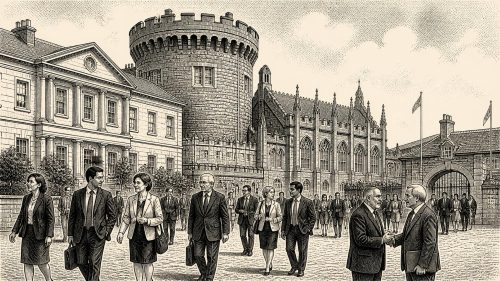
In 2008 Ireland moved from Celtic Tiger confidence to recession and banking crisis. Bertie Ahern resigned, succeeded by Brian Cowen, while Brian Lenihan became Finance Minister. Voters rejected the Lisbon Treaty, delaying European ratification, yet Dublin successfully concluded the Convention on Cluster Munitions. Northern Ireland's devolved institutions endured Paisley’s replacement by Peter Robinson, though policing and justice remained unresolved. Construction collapse, unemployment and falling revenues exposed economic fragility, prompting an austerity-focused budget. On 29–30 September, government guaranteed liabilities of six Irish banks, tying public finances to their losses. New trafficking, welfare and transport laws nevertheless reflected institutional activity amid uncertainty.
Read Article
Archived: 26 September 2026
Abstract
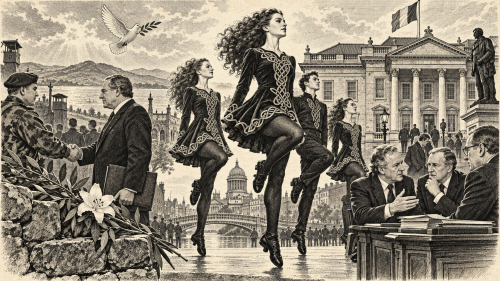
In 1994 Ireland underwent major political, cultural and economic change. Riverdance, premiered during Dublin’s Eurovision interval, transformed Irish dance into a globally successful expression of modern cultural confidence. The IRA’s August cessation of military operations, followed by an October loyalist ceasefire, reduced organised violence and created opportunities for negotiations, though disarmament, constitutional issues and political participation remained unresolved. Taoiseach Albert Reynolds, influential in advancing the peace process, resigned after the Fianna Fáil–Labour coalition collapsed amid controversy over Brendan Smyth and Harry Whelehan. John Bruton then led a Fine Gael–Labour–Democratic Left coalition. Meanwhile, falling unemployment, investment and exports signalled national recovery.
Read Article
Archived: 26 September 2026
Abstract
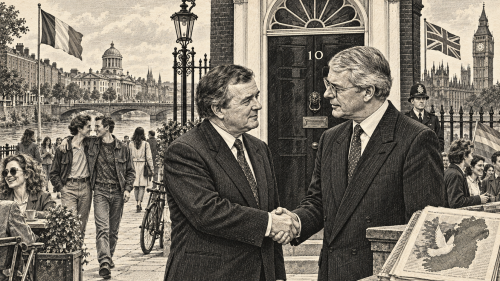
In 1993, Albert Reynolds led Ireland's first Fianna Fáil–Labour coalition, with Dick Spring as Tánaiste and Foreign Affairs Minister, reflecting changing electoral politics. The Criminal Law (Sexual Offences) Act decriminalised consensual sex between adult men, ending Victorian-era provisions after David Norris's campaign and European court ruling. European integration advanced through the single market and Maastricht Treaty's creation of the European Union. Reynolds and John Major's Downing Street Declaration provided a constitutional, peaceful framework for Northern Ireland, despite continuing violence. Unemployment remained 15.7 per cent, but investment, European funding and policy reforms foreshadowed growth, while social divisions and emigration persisted nationally.
Read Article
Archived: 12 October 2026
Abstract
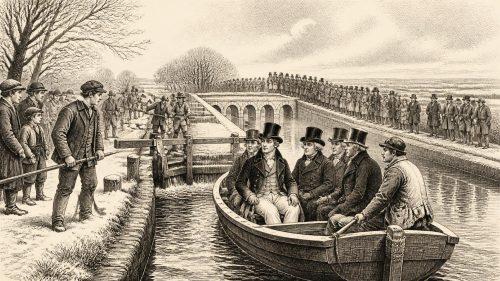
In 1794, Ireland combined commercial development with intensifying political repression. The Lagan Canal’s completion linked Belfast to Lough Neagh, improving Ulster’s transport connections, while a gunpowder enterprise at Ballincollig reflected wartime industrial demand. Dublin’s United Irishmen publicly advocated parliamentary reform, but official alarm over French links led to raids and suppression; William Drennan’s acquittal for seditious libel nevertheless encouraged reformers. Rural violence involving Defenders, militia and local grievances demonstrated wider insecurity, though Defenders remained distinct from United Irishmen. Fitzwilliam’s appointment as Lord Lieutenant raised hopes of Catholic concessions. Mary Leadbeater’s educational publication also testified to continuing cultural and moral debate.
Read Article
Archived: 12 October 2026
Abstract
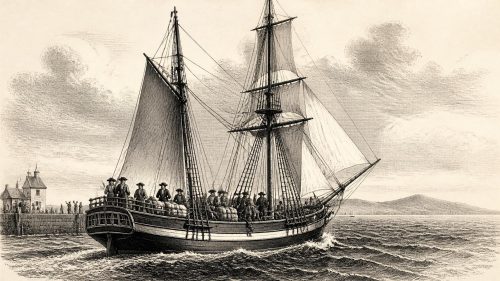
In 1758, Ireland’s administration relied on proclamations while parliament was repeatedly postponed, revealing tensions over property, livestock and authority. Dublin’s Wide Streets Commissioners became operational, and Grand Canal construction continued, signalling improvement schemes. War shaped fast days and maritime quarantine, while the Dublin Trader wreck killed the Earl of Drogheda, his son and actor Theophilus Cibber. Land reclamation at Ballyconneely and Lucan’s sulphurous spring reflected efforts to exploit landscape. Richard Pococke noted Killarney’s improving inns but Timoleague’s poverty. Mary Shackleton’s birth at Ballitore linked the year to a Quaker chronicler. Records show Ireland reshaped by movement, development, commerce and vulnerability.
Read Article

Archived: 12 October 2026
Abstract
In 1750, George II chartered the Dublin Society for Promoting Husbandry and Other Useful Arts, formalising an elite-led body that encouraged agricultural, industrial and artistic improvement through premiums, advice and practical education. Its drawing-school association, though imprecisely dated, reflected efforts to train craftsmen. In December, the Duke of Dorset returned as lord lieutenant, reshaping political expectations before later conflicts over revenue and executive authority. Charles Lucas, writing from London, advanced civic arguments in print. Beneath these institutional developments lay restricted representation, Anglican privilege, penal disabilities, unequal commerce and rural insecurity, despite population growth, agricultural adaptation, and Ulster’s expanding linen economy.
Read Article

Archived: 13 October 2026
Abstract
In 1743, Charles Lucas challenged Dublin aldermen's control over elections, accounts and patronage, arguing that the Corporation's wider body should choose aldermen. His April Remonstrance and demands to print accounts widened the dispute through print and legal argument, although recorder Eaton Stannard ruled for the aldermen in October. The conflict promoted civic accountability but remained confined to Protestant corporate citizens, excluding Catholics and Dissenters. Arthur Jones Nevill became Surveyor General, linking public works to Castle patronage. Proclamations addressed crime, ports and quarantine, while a linen bounty integrated Irish production into British Atlantic trade. Recovery from the Great Frost remained precarious.
Read Article
Archived: 13 October 2026
Abstract
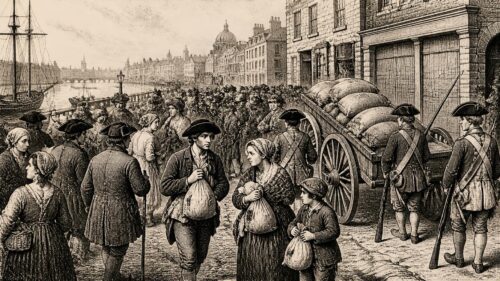
In 1740, severe frost followed by drought disrupted Ireland’s potatoes, grain, livestock and food distribution, initiating the famine 1741. Rising prices made provisions inaccessible to labourers and cottiers, while Dublin crowds rioted from 31 May to 2 June, seizing and redistributing bread, meal and beef at lower prices. Authorities banned food exports, pursued alleged market manipulators, imposed port restrictions and offered rewards, but parliament did not organise comprehensive relief. Archbishop Boulter and charities provided fragmented assistance. The crisis exposed inequalities in landholding, markets and welfare, while autumn brought no recovery before renewed winter, fever and dysentery worsened famine in 1741.
Read Article

Archived: 13 October 2026
Abstract
In 1726, Ireland’s constrained Protestant polity, governed within British authority, regulated religious and private life while excluding Catholics from power. Lord Lieutenant Carteret and Archbishop Boulter represented competing Dublin and London priorities. Jonathan Swift’s anonymously published Gulliver’s Travels, shaped by Irish political experience, achieved immediate success as wide-ranging satire. The previous day, Caleb Threlkeld published the first Irish flora, cataloguing Dublin-area plants in Latin, English and Irish and linking observation, medicine and vernacular knowledge. Linen exports demonstrated commercial integration, yet rural society remained vulnerable. A failed harvest and rising prices inaugurated late-1720s scarcity, revealing prosperity’s uneven distribution across the kingdom.
Read Article

Archived: 13 October 2026
Abstract
In 1709, wartime pressures, food regulation and fears of Jacobite loyalty shaped Irish government. Proclamations restricted grain exports, addressed market manipulation and crime, and linked public worship to British military fortunes, without proving a nationwide famine. Parliament reinforced the penal system through an abjuration oath, tighter controls on Catholic clergy, education, property and employment. Dublin received about 3,000 Protestant Palatine refugees, whose protection and settlement posed practical challenges. Samuel Molyneux’s Connacht journey recorded poor roads, domestic textiles, poverty, improvement and cultural division. By December, Hougher violence against cattle reflected resistance to pasture expansion and smallholders’ displacement, revealing sharper social contestation.
Read Article
Archived: 14 October 2026
Abstract
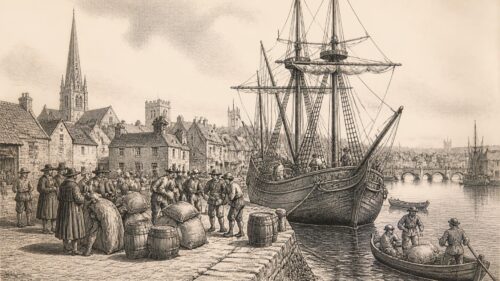
In 1676, under Lord Lieutenant Essex, Ireland’s administration addressed fragile revenue, quit rents, transplantees’ land claims in Connacht and Clare, and unlawful county charges, reflecting unresolved consequences of Cromwellian confiscation. Patronage shaped officeholding, while rewards for Patrick Fleming and Redmond O’Hanlon exposed limited control in Ulster. Dublin changed through Humphrey Jervis’s Essex Bridge, promoting north-side development and commerce. The ship Katherine carried Irish Protestant-organised relief to war-stricken New England, including allied Indigenous recipients. Meanwhile, Francis O’Molloy’s Irish-language Catholic catechism, printed in Rome, demonstrated continental religious networks. These events reveal Ireland as contested, rebuilt and connected across Atlantic and European worlds.
Read Article
Archived: 14 October 2026
Abstract
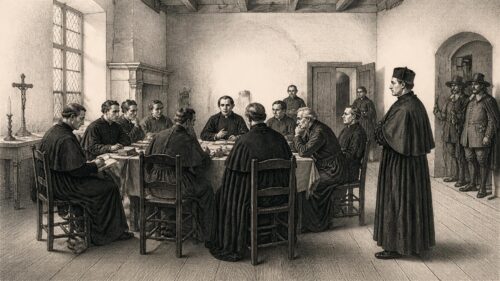
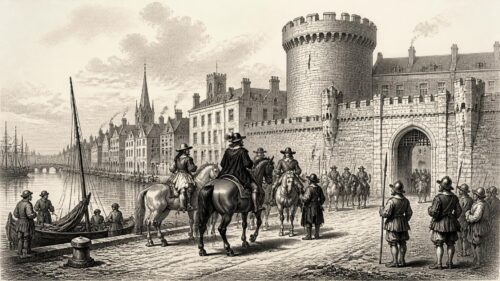
In 1666, Ormond’s Restoration administration sought to consolidate authority in Ireland through land settlement, military discipline, taxation and regulation. Proclamations advanced implementation of the Acts of Settlement and Explanation, while the dissolution of parliament ended legislative sessions until 1689. A pay mutiny at Carrickfergus was suppressed, with nine leaders executed. Dublin’s Catholic synod debated Peter Walsh’s loyalist Remonstrance but failed to secure agreement, exposing clerical organisation and state dependence. War, naval concerns and London’s fire prompted official fasts and thanksgiving. Hearth money, fisheries policy and impending English cattle restrictions affected livelihoods. Sir James Ware’s death marked a loss to scholarship.
Read Article
Archived: 14 October 2026
Abstract
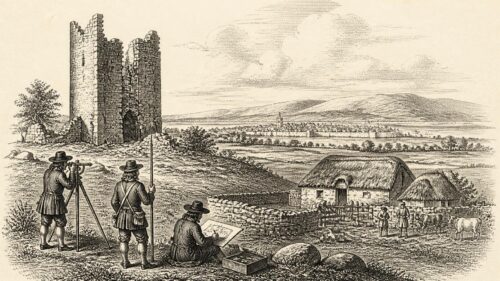
In 1659, the collapse of Richard Cromwell’s Protectorate transformed Irish government. Henry Cromwell resigned, and parliamentary commissioners assumed control in Dublin. Edmund Ludlow, a regicide and committed republican, reorganised the Irish army, tested officers’ loyalties and sent troops to England amid constitutional crisis. Meanwhile, completion of William Petty’s Down Survey provided maps and records enabling confiscated land to be redistributed among soldiers, adventurers and officials. The approximate 1659 census documented settlements and leading occupiers, though imperfectly. Political instability culminated in opponents seizing Dublin Castle in December. Despite changing regimes, the administrative framework for Protestant landholding and long-term social transformation endured.
Read Article
Archived: 16 October 2026
Abstract
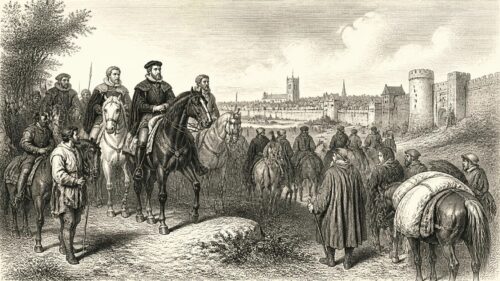
In 1633 Thomas Wentworth arrived as Charles I’s lord deputy, replacing interim rule by the lords justices and initiating a centralised Irish administration. Facing heavy debts and limited revenue, he prioritised customs, trade regulation, provincial accounts and a self-financing government, while cautiously managing Catholic and Protestant interests. He promoted allies, including Christopher Wandesford, John Bramhall and the earl of Ormond, and prepared for a future parliament. Church developments included St Columb’s Cathedral’s completion and inquiries into ecclesiastical resources. Meanwhile, the Four Masters continued preserving Gaelic history in Donegal. The year established stronger royal direction amid confessional, social and cultural divisions.
Read Article
Archived: 17 October 2026
Abstract
In 1585 Sir John Perrot sought to extend Tudor government through parliament, negotiated revenues and regional settlements. Dublin’s parliament drew Gaelic, Old English and crown interests together, recognising Hugh O’Neill as earl of Tyrone, yet resistance to cess and limited attendance exposed fragile consent. The Composition of Connacht and Thomond converted traditional exactions into recorded cash payments, though coercion, abuses and refusals persisted. In Ulster, Perrot temporarily accommodated rival O’Neill claims while creating new counties, but MacDonnell power remained resilient. Religious repression, local violence, damaged crops and noble succession further revealed a kingdom governed through negotiation, insecurity and competing loyalties.
Read Article
Archived: 18 October 2026
Abstract
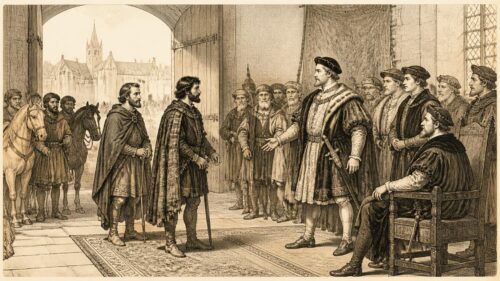
In 1525, Gerald FitzGerald, ninth earl of Kildare and lord deputy, convened a great Dublin council between Conn Bacach Ó Néill and Aodh Dubh Ó Domhnaill, but failed to resolve their Ulster rivalry over Inishowen. Ó Domhnaill subsequently raided Tír Eoghain, before autumn arbitration by Kildare and Manus Ó Domhnaill produced a temporary peace. Kildare also faced conflict with Piers Butler, while Waterford defended its privileges amid anticipated parliamentary action. The murder of Bishop Maurice Doran of Leighlin prompted brutal reprisals. Annals recorded deaths, hospitality, learning and religious observance, demonstrating that Dublin’s authority depended upon negotiation with powerful autonomous lordships.
Read Article

