
Rural Unrest
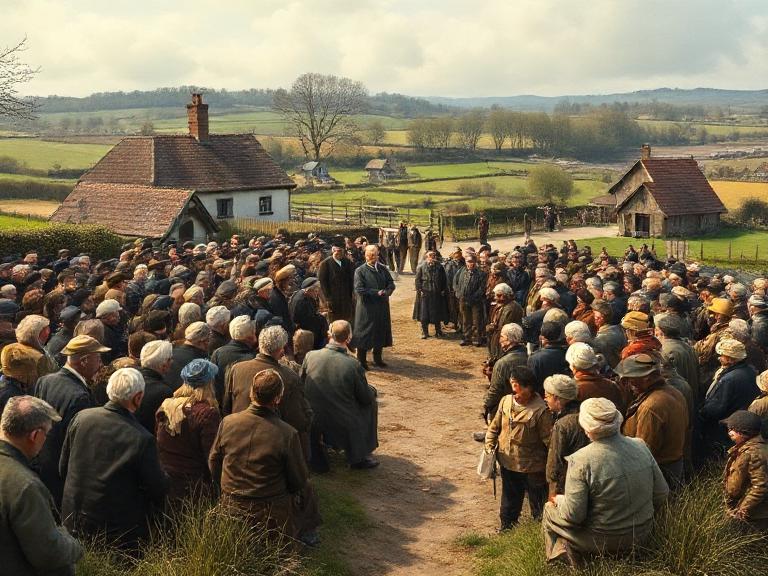
Agrarian agitation has become especially influential across Connacht and parts of Munster, where tenant farmers, smallholders and agricultural labourers continue to demand a fairer distribution of Irish land. County Limerick has not escaped the dispute. Rural families living on cramped or uneconomic holdings have watched substantial grazing farms occupy fertile ground while labourers struggle to secure cottages, gardens and dependable employment. Meetings connected with the United Irish League have provided an organised outlet for grievances concerning rents, evicted tenants, disputed…
Read Article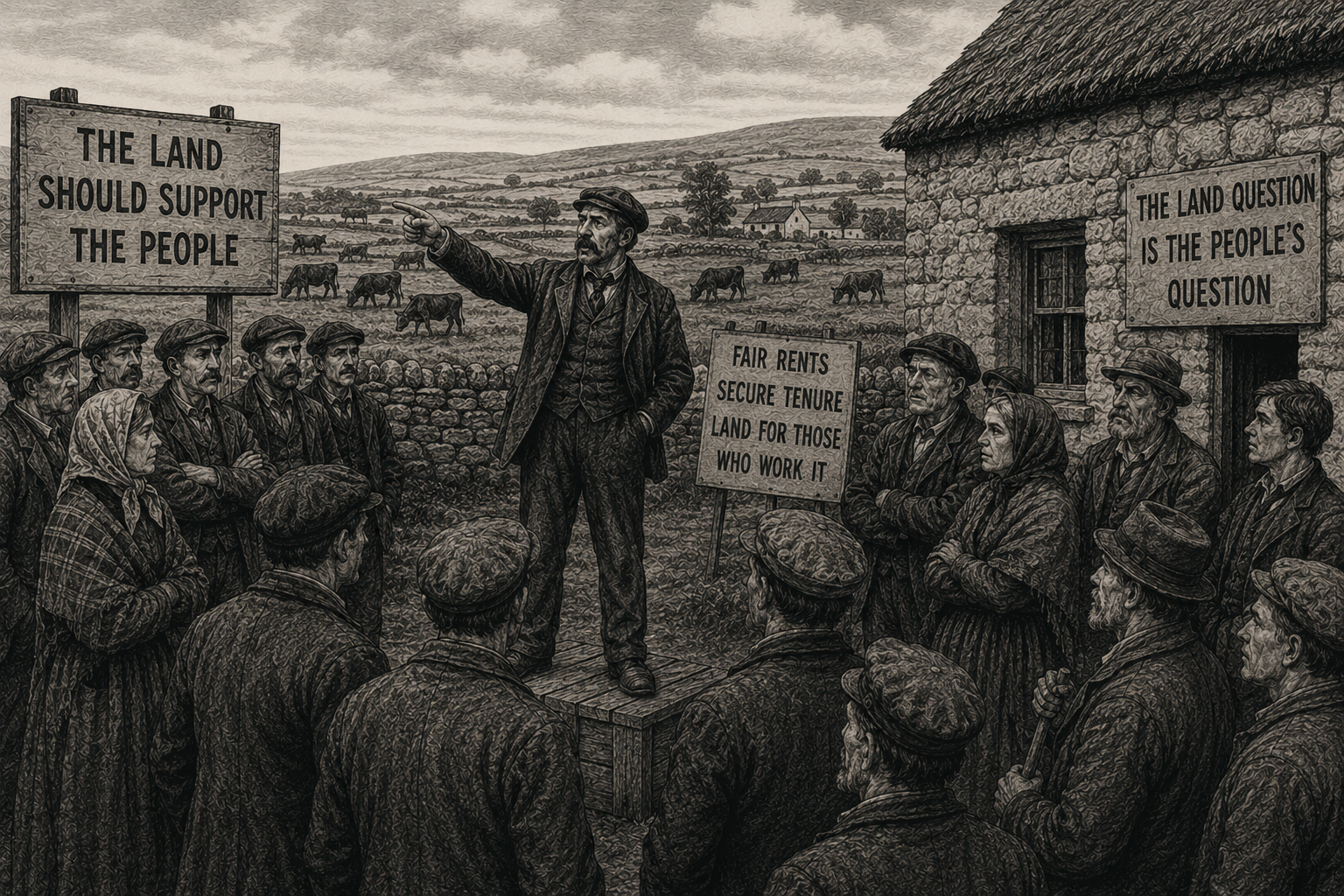
Land Dominates
The land question remains the dominant economic and social issue across rural Ireland, shaping political organisation, family security and relations between landlords and tenant farmers. In County Limerick, holdings vary greatly in quality and size, while rents, arrears, grazing land and the prospect of tenant purchase remain constant subjects of discussion. Earlier Land Acts granted greater protection and introduced limited purchase schemes, but they did not complete the transfer of ownership sought by many farmers. Rural households continue to measure political promises against the practical questions of who owns the soil, who works it and who benefits from its produce.
Read Article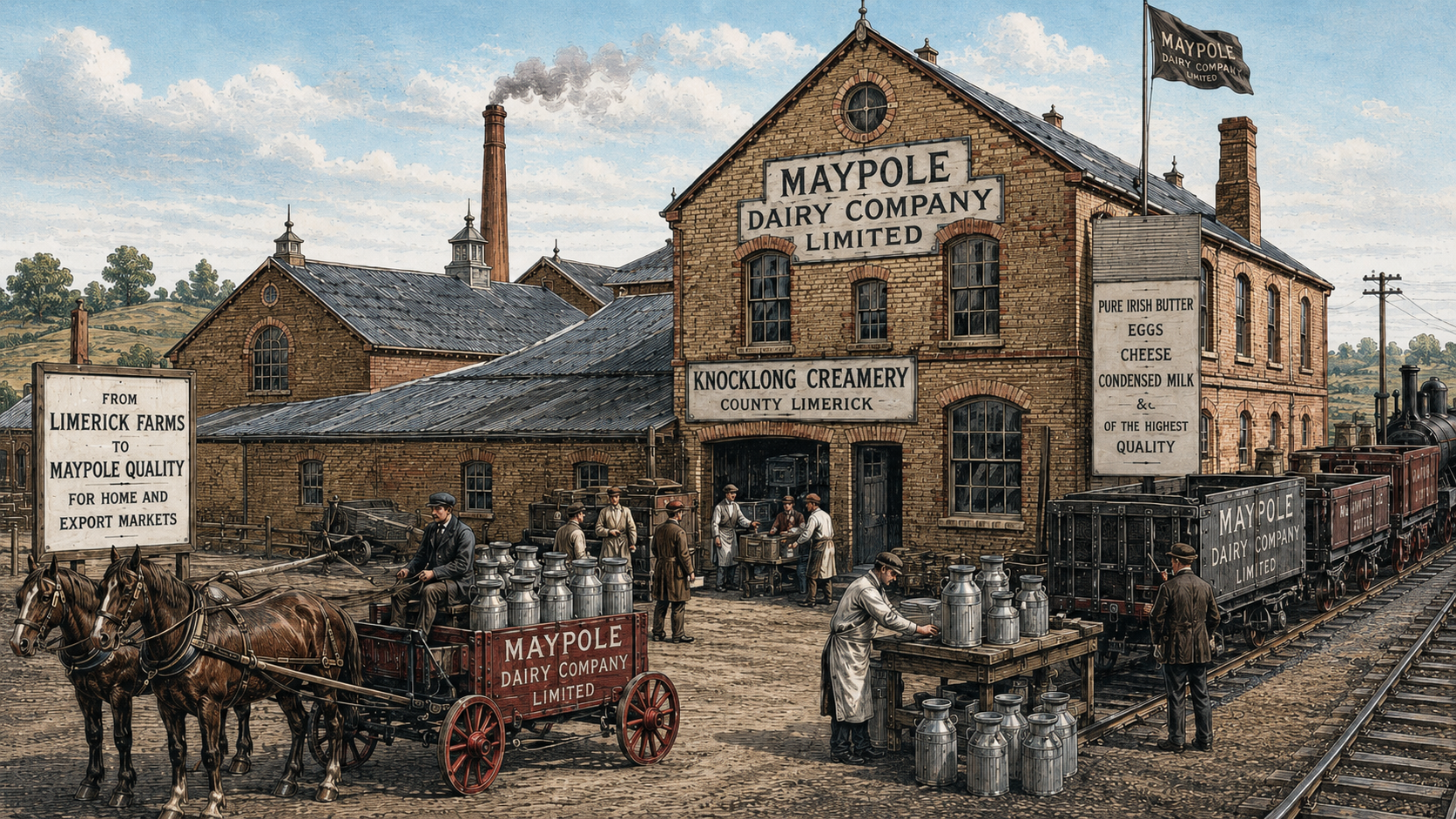
Dairy Expansion
County Limerick’s dairy economy was changing rapidly around 1900 as the Maypole Dairy Company strengthened the connection between rural milk production and large-scale commercial retailing. At Knocklong, where the company had built a creamery during the mid-1890s, farmers delivered milk for mechanical separation and butter-making rather than producing every finished article within their own homes. The operation linked surrounding farms with a business selling provisions across Britain. For local suppliers, the creamery offered regular access to a wider market, while the company gained a dependable source of Irish butter for an expanding network of urban shops.
Read Article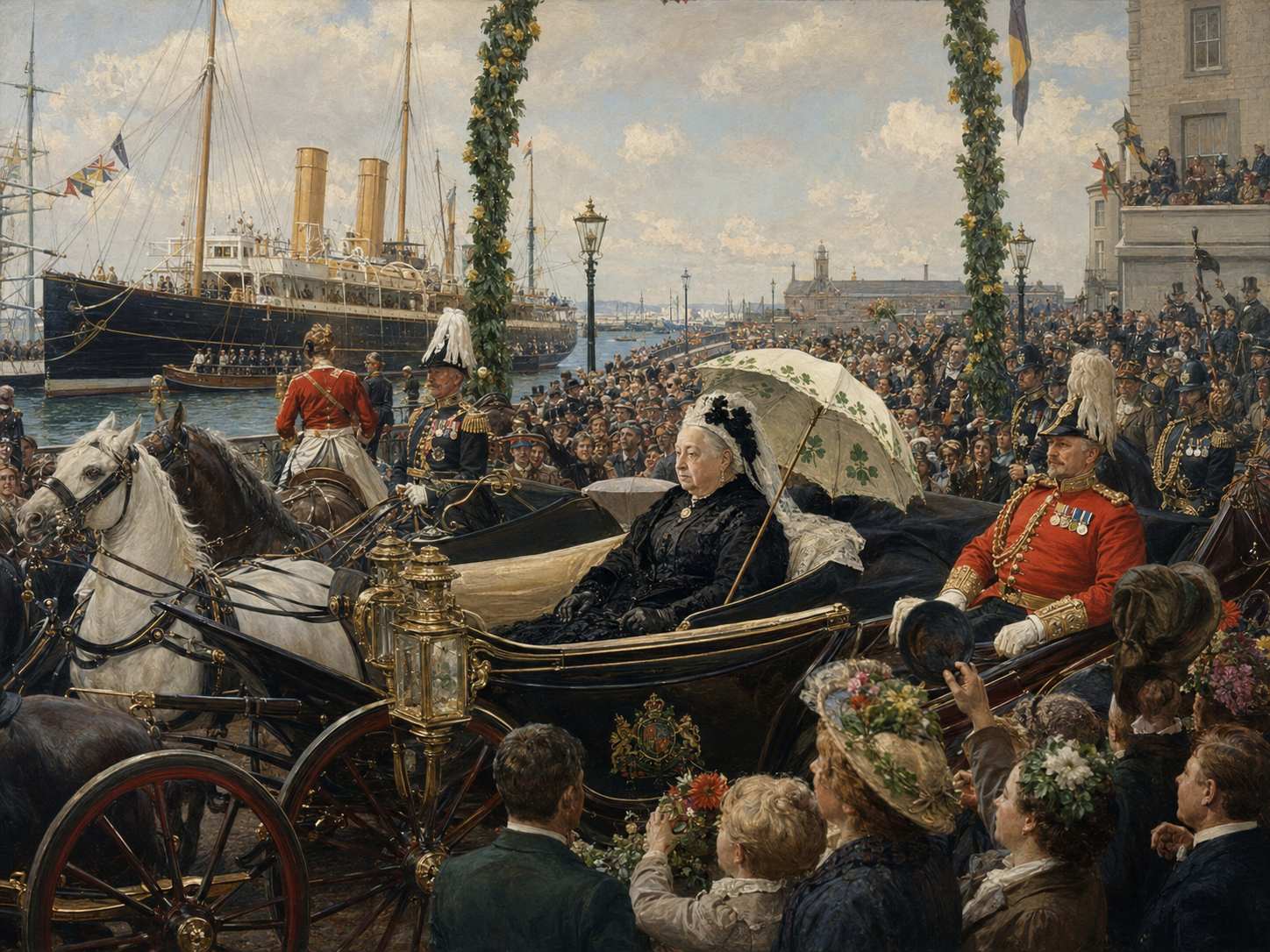
Divided Welcome
Queen Victoria’s final visit to Ireland in April 1900 became a matter of immediate political argument in Limerick before the royal party entered Dublin. Patrick Fidelis Kavanagh, a Franciscan friar and president of the Limerick Young Ireland Society, received a circular from the county’s High Sheriff inviting him to a meeting intended to organise an address of welcome. Kavanagh declined and sent a lengthy reply attacking both British rule and the South African War. His refusal provides direct evidence that the proposed civic greeting was not a simple expression of shared enthusiasm, but an occasion on which Limerick’s competing loyalties were sharply exposed.
Read Article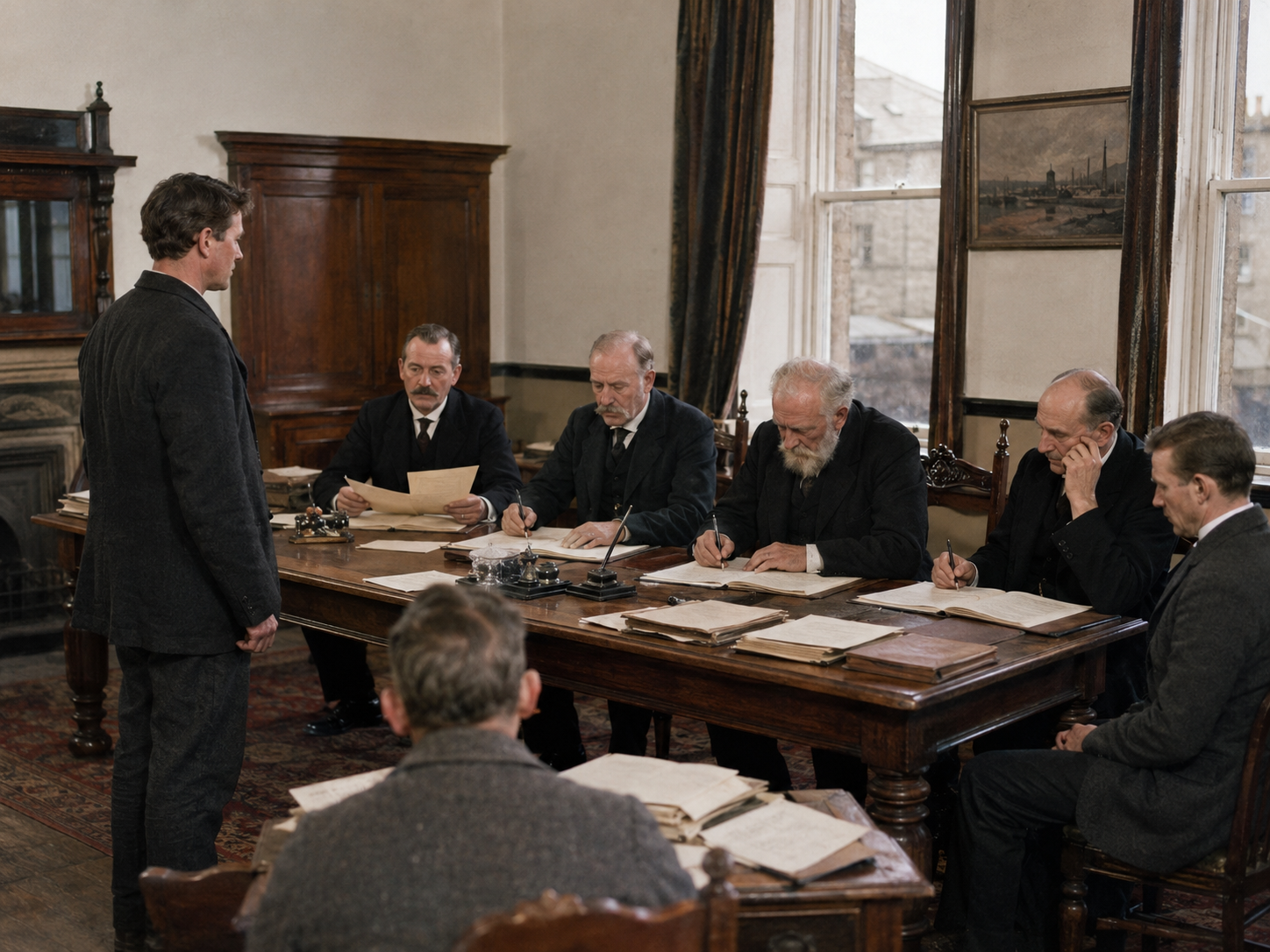
Reservist Released
The Limerick Board of Guardians granted six months’ leave without salary to James Ryan, an employee who had been summoned to rejoin the colours during the South African War. The decision, reported on 25 January 1900, allowed Ryan to answer his military obligation without immediately forfeiting his position under the Board. Guardians also agreed that a temporary worker should be appointed during his absence, ensuring that the institution’s daily duties continued without interruption. The arrangement balanced the demands of wartime mobilisation with the Board’s responsibility towards a member of staff called away from civilian employment.
Read Article