
Reservist Released(c.1900s)
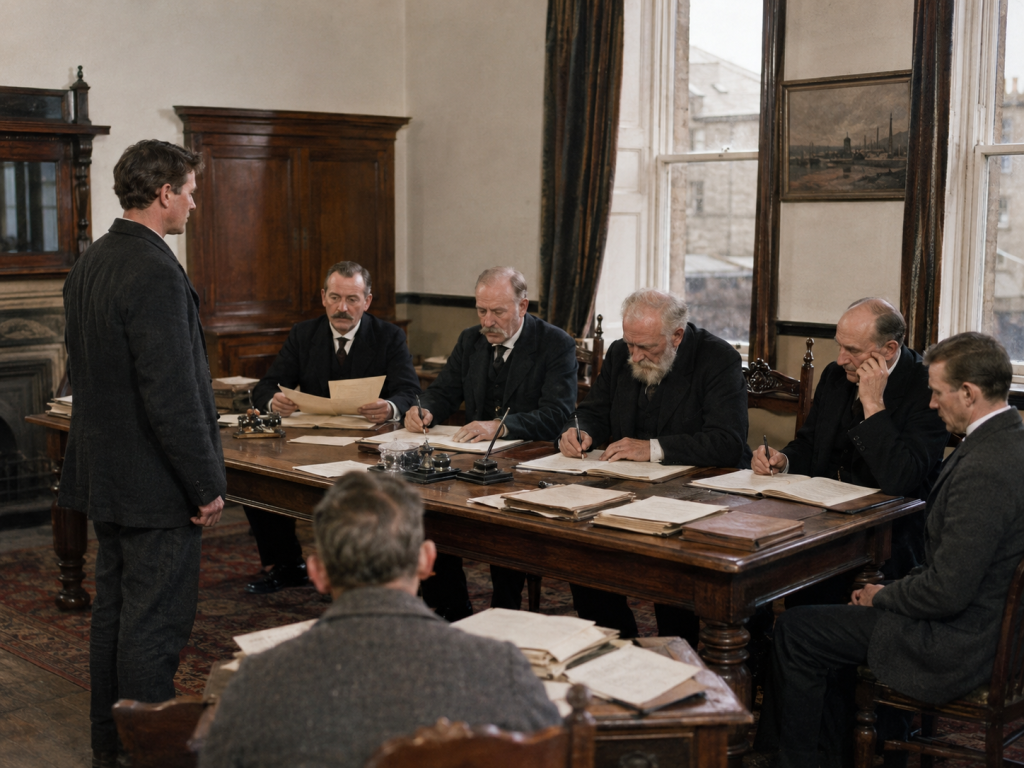
The Limerick Board of Guardians granted six months’ leave without salary to James Ryan, an employee who had been summoned to rejoin the colours during the South African War. The decision, reported on 25 January 1900, allowed Ryan to answer his military obligation without immediately forfeiting his position under the Board. Guardians also agreed that a temporary worker should be appointed during his absence, ensuring that the institution’s daily duties continued without interruption. The arrangement balanced the demands of wartime mobilisation with the Board’s responsibility towards a member of staff called away from civilian employment.
Ryan’s summons formed part of the wider mobilisation of army reservists after British forces encountered heavy demands in South Africa. Men who had completed regular service frequently returned to civilian occupations while remaining liable for recall during a national emergency. Once summoned, a reservist was expected to report and could not treat military service as a voluntary absence. Employers throughout Britain and Ireland therefore faced difficult decisions about wages, replacements and whether returning soldiers would recover their former posts. The Guardians’ resolution acknowledged Ryan’s obligation while avoiding a permanent dismissal before the duration and outcome of his service were known.
The six-month period offered practical protection but no continuing income from the Board. Ryan would depend upon military pay while serving, and the surviving report does not state whether he had dependants or what position he held. Unpaid leave nevertheless preserved a formal connection with his civilian employer and created the possibility of resuming work when released from duty. The appointment of a temporary replacement also prevented another worker from assuming that the vacancy was permanent. The arrangement recognised both the reservist’s claim to consideration and the institution’s need for reliable staffing during an uncertain period.
The decision carried particular significance within the Limerick Union, whose Guardians administered the workhouse, outdoor relief, dispensary services and other Poor Law responsibilities. Employees performed essential work for people affected by poverty, illness and unemployment, making prolonged vacancies difficult to absorb. Wartime mobilisation could remove trained men with little warning, forcing public bodies to reorganise duties and expenditure. By approving a temporary appointment, the Guardians ensured that Ryan’s recall would not weaken services within the Union. Their action shows how an overseas conflict entered local administration through the employment circumstances of an individual Limerick worker.
The resolution was modest compared with the military decisions being taken by the War Office, yet it illustrated the domestic consequences of the South African campaign. Reservists moved from workshops, institutions and public employment back into uniform, while families and employers adjusted to their absence. Limerick’s Board of Guardians chose neither to pay Ryan during his service nor to terminate his employment outright. Instead, it adopted a limited compromise suited to the uncertainty of mobilisation. Six months’ unpaid leave and a temporary substitute protected the institution’s work while leaving open a place for the reservist after his military duty ended.
- Irish Times, “Limerick Guardians and the Reservists,” 25 January 1900, p. 6.
- Limerick Union Board of Guardians Minute Books, January 1900, Limerick Archives, reference IE LA BG110; exact volume and folio for the resolution not confirmed.
- Reserve Forces Act 1882, 45 & 46 Vict., c. 48, statutory provisions governing the recall and service obligations of army reservists.
- War Office, Army Orders and mobilisation notices relating to the recall of reservists during the South African War, 1899–1900.
- Poor Relief (Ireland) Act 1838, 1 & 2 Vict., c. 56, establishing Irish Poor Law unions, workhouses and Boards of Guardians.