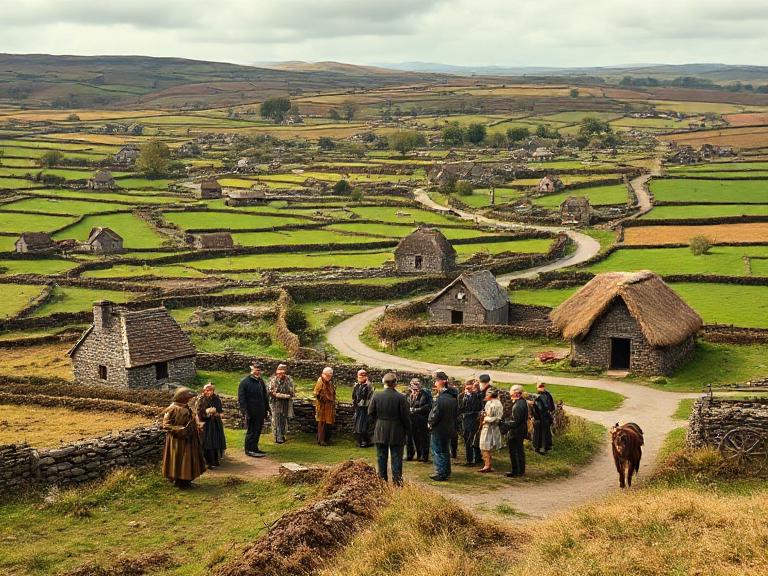

Land Dominates(c.1900s)
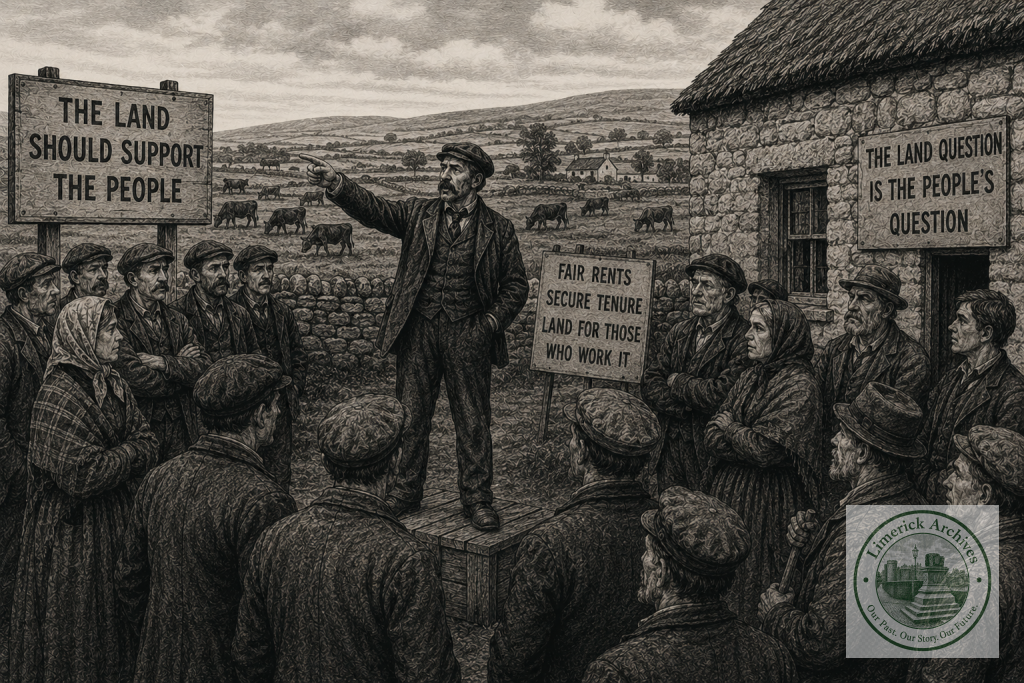
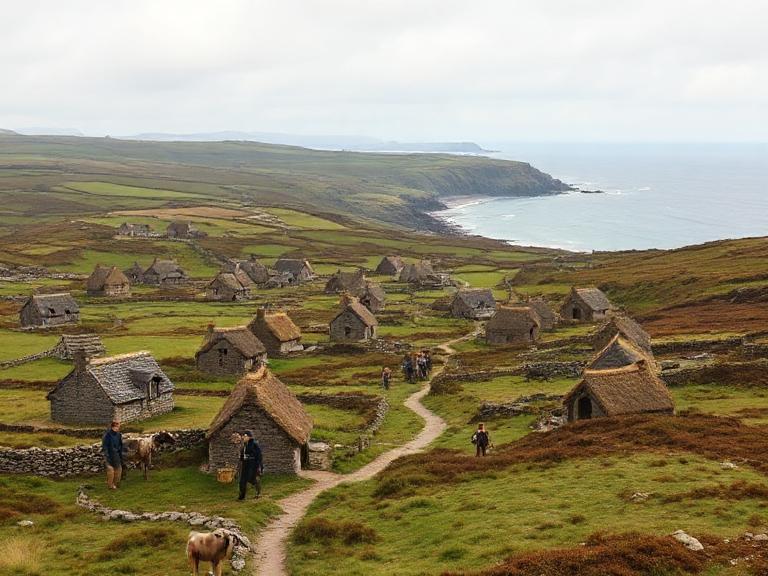
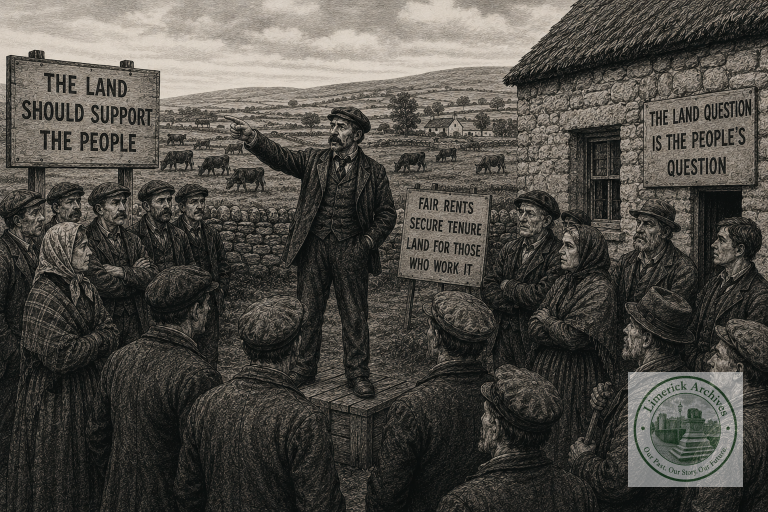
The land question remains the dominant economic and social issue across rural Ireland, shaping political organisation, family security and relations between landlords and tenant farmers. In County Limerick, holdings vary greatly in quality and size, while rents, arrears, grazing land and the prospect of tenant purchase remain constant subjects of discussion. Earlier Land Acts granted greater protection and introduced limited purchase schemes, but they did not complete the transfer of ownership sought by many farmers. Rural households continue to measure political promises against the practical questions of who owns the soil, who works it and who benefits from its produce.
Tenant farmers have gained important legal protections since the agitation of the Land War, including fair-rent procedures, greater security of tenure and recognition of the tenant’s interest in a holding. Yet many still occupy land owned by estates whose authority reaches into rents, improvements, inheritance and the sale of farms. Purchase legislation has allowed some tenants to become owners through state-supported advances, but progress remains uneven and often slow. In County Limerick, the possibility of ownership carries significance beyond financial calculation. A purchased farm promises independence from rent demands and greater security for children expected to inherit the holding.
The United Irish League has connected the land campaign with the wider demand for national self-government. Organisers argue that political unity must serve tenants, evicted families, labourers and communities weakened by emigration. William O’Brien and other leaders have used the League to rebuild nationalist organisation from the countryside upwards, making local branches important centres of pressure. Meetings concerning grazing farms, reinstatement and purchase frequently become tests of political loyalty. The land question therefore reaches beyond individual contracts between landlords and tenants. It influences parliamentary representation, local elections, public meetings and the authority claimed by nationalist leaders throughout rural Ireland.
Agricultural labourers occupy a more uncertain position within the struggle. Tenant purchase may improve the security of farmers without guaranteeing cottages, steady employment or adequate wages for those who own no land. Labourers depend upon seasonal hiring, local demand and access to small plots, while their families often inhabit cottages vulnerable to damp, overcrowding and poor sanitation. In Limerick, debates over ownership must therefore be considered alongside demands for better labourers’ housing and living conditions. A settlement benefiting substantial tenants alone would leave many rural households outside the promised transformation and could preserve inequality beneath a new pattern of ownership.
The continuing prominence of the land question reflects its place at the centre of rural life. Rent determines household expenditure, ownership shapes social standing, and access to land influences marriage, inheritance, employment and emigration. Government schemes have altered the legal position of tenants, but the broader settlement remains incomplete in 1900. Limerick farmers, labourers, shopkeepers and political organisers will continue judging national leadership by its ability to produce practical change. Until ownership, grazing, housing and rural poverty are addressed together, the land question will remain not merely an agricultural dispute but the principal measure of economic justice across the countryside.
Primary Sources
- Irish Land Commission, Annual Report for 1900, recording fair-rent decisions, purchase advances and the administration of Irish land legislation. Exact parliamentary-paper number and page should be confirmed before formal citation.
- Census of Ireland, 1901, County of Limerick tables concerning agricultural occupations, housing, population and rural households. Exact table and page should be confirmed before formal citation.
- Limerick Chronicle, 1900, reports concerning tenant meetings, land purchase, grazing disputes, evicted tenants and rural political organisation. Exact issue, page and column should be confirmed before formal citation.
- United Irish League records and contemporary reports concerning County Limerick branches, tenant agitation and land reform during 1900. Exact collection, file and folio should be confirmed before formal citation.
- Parliamentary Debates, House of Commons, Irish land legislation and tenant purchase debates, 1900–1901. Exact debate date, volume, column and speaker should be confirmed before formal citation.