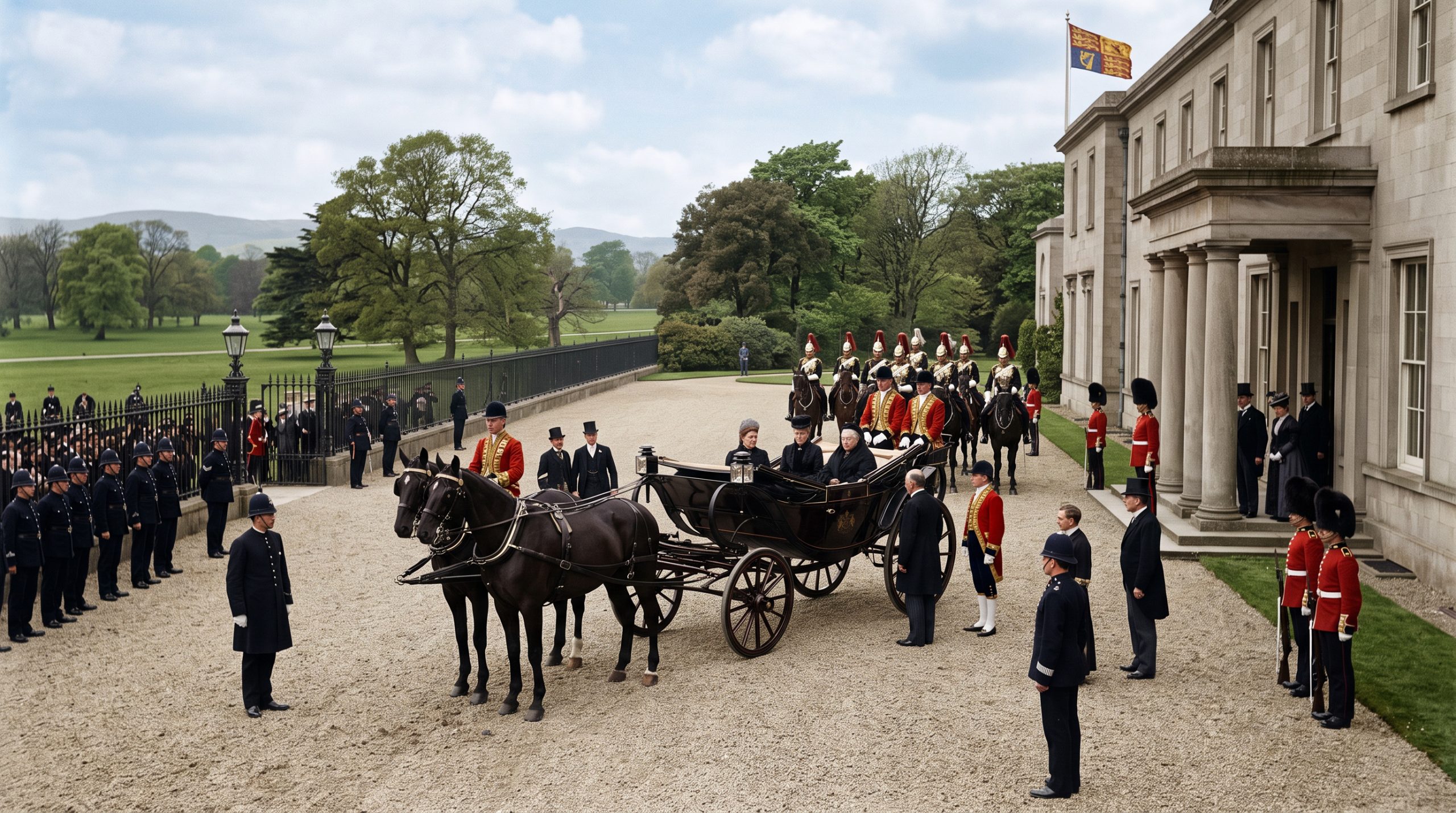
Queen Victoria has taken up residence at the Viceregal Lodge.
Royal Residence
Queen Victoria has taken up residence at the Viceregal Lodge in Phoenix Park following her arrival at Kingstown and ceremonial journey through Dublin. The house, normally occupied by the Lord Lieutenant of Ireland, will serve as the monarch’s principal residence throughout her final Irish visit. Situated within the extensive parklands west of the capital, the lodge provides both privacy and convenient access to the military, charitable and public engagements arranged for the coming weeks. Reports reaching Limerick describe an elaborate administrative operation involving royal officials, Dublin Castle, police forces, military escorts and household servants responsible for the Queen’s accommodation and security.
View RecordDublin Castle and unionist organisations have used Queen Victoria’s arrival.
Unionist Display
Dublin Castle and unionist organisations have used Queen Victoria’s arrival to affirm Ireland’s constitutional place within the United Kingdom. The administration directed an elaborate programme of ceremonial receptions, military escorts, civic addresses and public decoration intended to display loyalty to the Crown. Reports reaching Limerick describe streets filled with spectators and buildings dressed for the royal occasion. Unionist newspapers and public figures have welcomed the visit as proof that attachment to the monarchy remains substantial despite nationalist demands for Home Rule. The ceremonies present Ireland not as a nation awaiting separation, but as an established and valued part of the Union.
View Record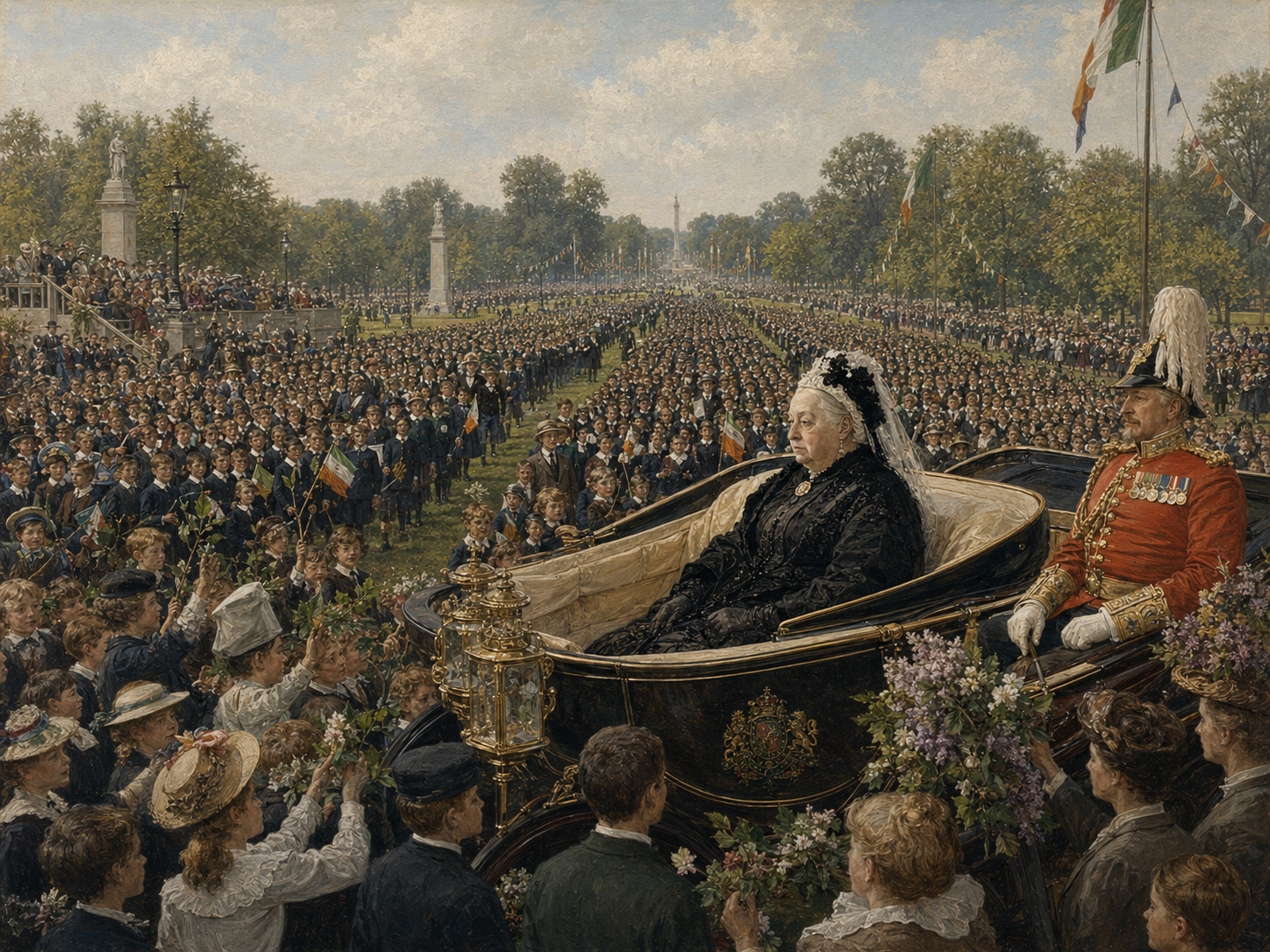
Large crowds have lined the route of Queen Victoria’s procession.
Cheering Crowds
Large crowds have lined the route of Queen Victoria’s procession from Kingstown towards Dublin, creating one of the most striking public spectacles witnessed during her final visit to Ireland. The royal carriage passed through heavily decorated streets while spectators filled pavements, windows and temporary viewing places. Reports reaching Limerick describe sustained cheering as the procession moved towards the capital and the Viceregal Lodge in Phoenix Park. The gathering revealed more than official organisation alone. Public curiosity drew thousands outdoors, while loyalist residents and supporters of the Union treated the Queen’s arrival as an opportunity to demonstrate attachment to the Crown and British Empire.
View Record
Queen Victoria arrived in Ireland today for what will become.
Royal Dublin
Queen Victoria arrived in Ireland today for what will become the final Irish visit of her long reign. The royal programme is centred principally upon Dublin, where streets, public buildings, railway approaches and the route towards the Viceregal Lodge have been extensively decorated. Crowds gathered at Kingstown and throughout the capital to witness the arrival and procession. Although Limerick is not included prominently in the itinerary, reports of the ceremonies are being followed closely throughout the city and county by loyalists, nationalists, soldiers’ families, clergy, merchants and political organisations.
View Record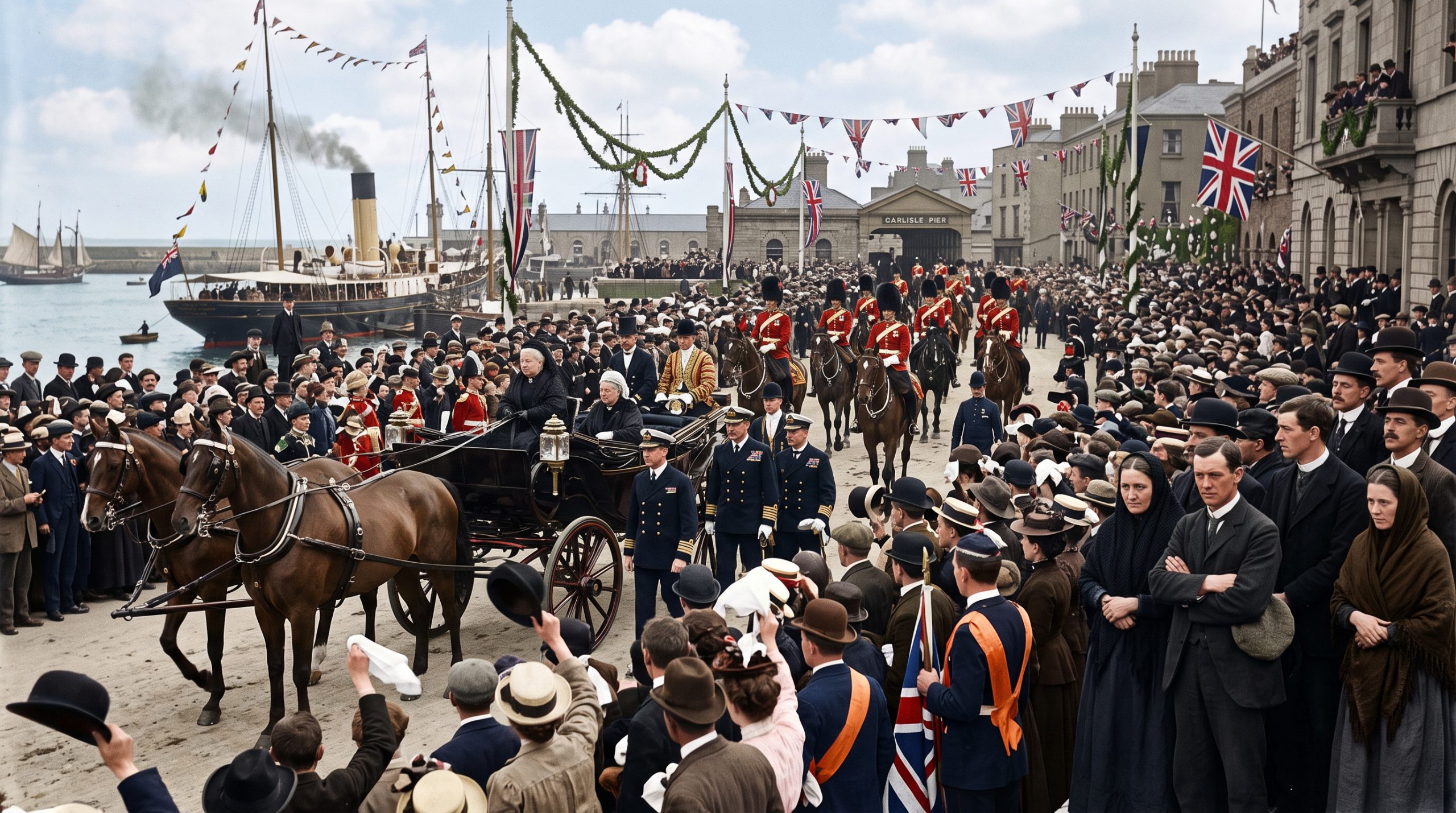
Queen Victoria arrived at Kingstown today for what would prove.
Royal Farewell
Queen Victoria arrived at Kingstown today for what would prove to be her final visit to Ireland, beginning a three-week residence centred largely upon Dublin and the Vice-Regal Lodge in Phoenix Park. Although the royal party will not travel to Limerick, accounts of the landing, the ceremonial procession and the extensive public decorations are already attracting attention throughout the city and county. Unionist residents may regard the visit as an affirmation of loyalty to the Crown, while nationalists are likely to judge it against continuing demands for Home Rule, land reform and recognition of Ireland’s political grievances.
View Record
George Wyndham has been appointed Chief Secretary for Ireland in.
Wyndham Appointed
George Wyndham has been appointed Chief Secretary for Ireland in succession to Gerald Balfour, placing a younger Conservative minister in charge of Irish administration at a moment of renewed nationalist organisation and growing agitation over the land. His appointment will be watched closely throughout Limerick city and county, where tenant ownership, congested holdings, rural poverty and the position of evicted families remain pressing political concerns. Wyndham enters office after the reunited Irish Parliamentary Party secured seventy-seven seats at the general election, although Lord Salisbury’s government remains firmly opposed to Home Rule and possesses a substantial Westminster majority.
View Record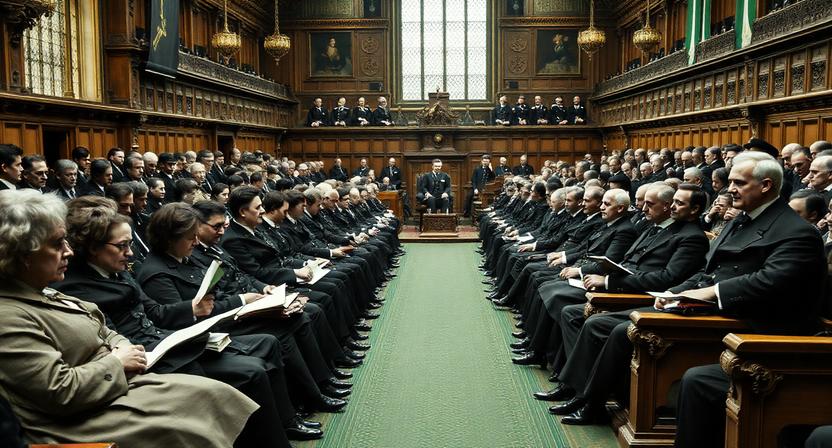
The opening of the new Parliament has confirmed that Home.
Home Rule Deferred
The opening of the new Parliament has confirmed that Home Rule remains outside the immediate programme of the government, despite the strong electoral recovery of John Redmond’s reunited Irish Parliamentary Party. Nationalists returned seventy-seven members from Ireland’s 103 constituencies, giving the demand for an Irish legislature a commanding parliamentary voice. Yet the administration of Lord Salisbury, strengthened by its general-election victory, has offered no proposal for restoring domestic government in Dublin. In Limerick city and county, where nationalist representatives were returned and Home Rule remains central to organised political life, the omission will be received as a deliberate refusal to recognise Ireland’s electoral verdict.
View Record
The completed general election has again demonstrated the weakness of.
British Absence
The completed general election has again demonstrated the weakness of the principal British political parties throughout nationalist Ireland. John Redmond’s reunited Irish Parliamentary Party has taken seventy-seven of Ireland’s 103 seats, while candidates standing directly for the British Liberal and Conservative parties made little impression across the south, west and much of the midlands. In Limerick, voters returned nationalist representatives without any prospect of an ordinary contest between the parties governing and opposing at Westminster. Irish political organisation remains shaped principally by the constitutional struggle between nationalism and unionism rather than by the divisions governing electoral life in Great Britain.
View Record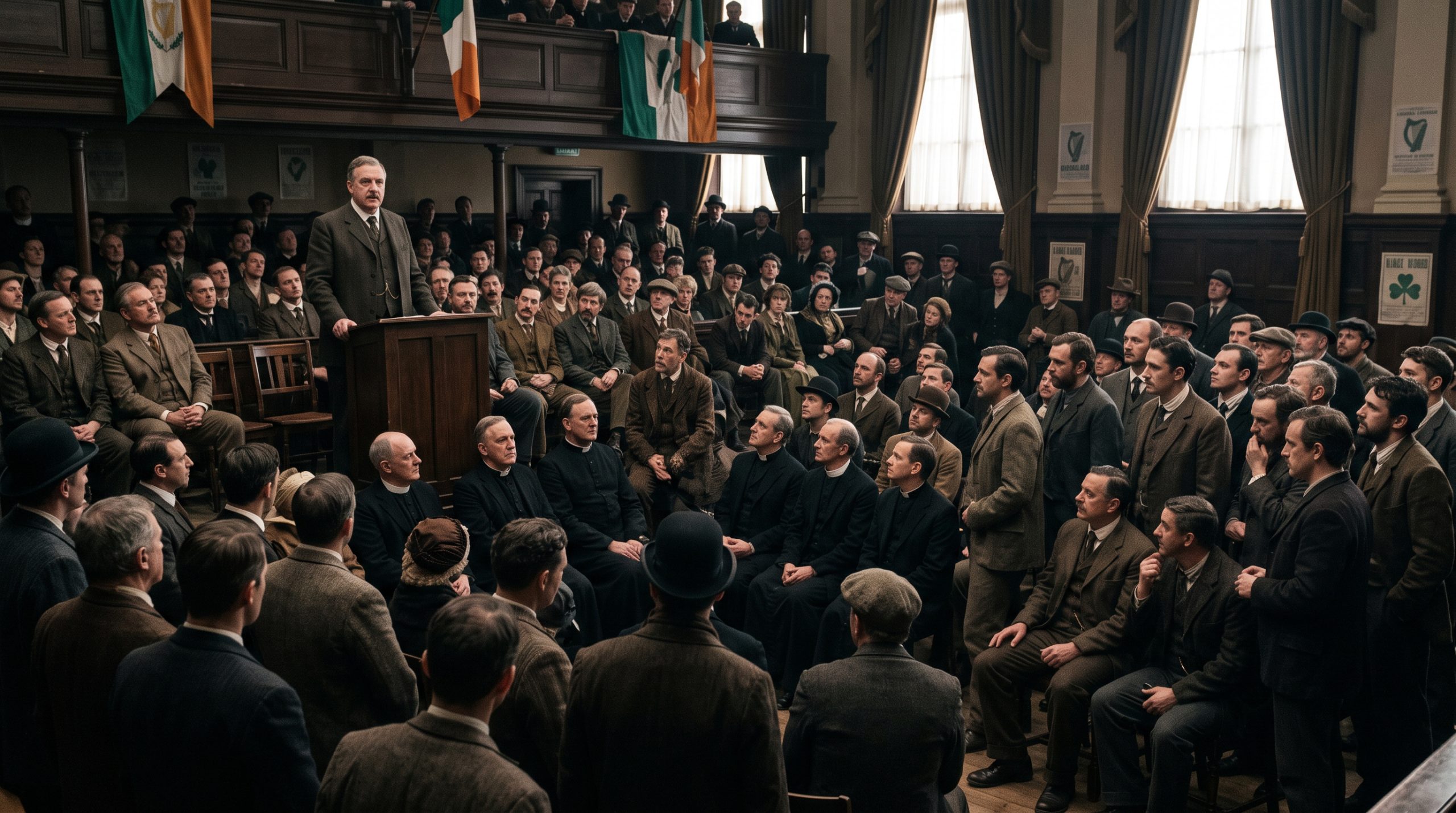
The completion of the general election has shown that the.
Unity Fractures
The completion of the general election has shown that the reunion of Irish parliamentary nationalism remains incomplete. Although John Redmond’s Irish Parliamentary Party has secured the overwhelming majority of nationalist seats, six supporters of Timothy Michael Healy have been returned outside the disciplined party organisation. The result will attract close attention among nationalists in Limerick city and county, where unity has been presented as essential to advancing Home Rule and land reform. Healy’s surviving parliamentary following demonstrates that the personal, clerical and local rivalries created during the bitter divisions of the 1890s have not been entirely overcome.
View Record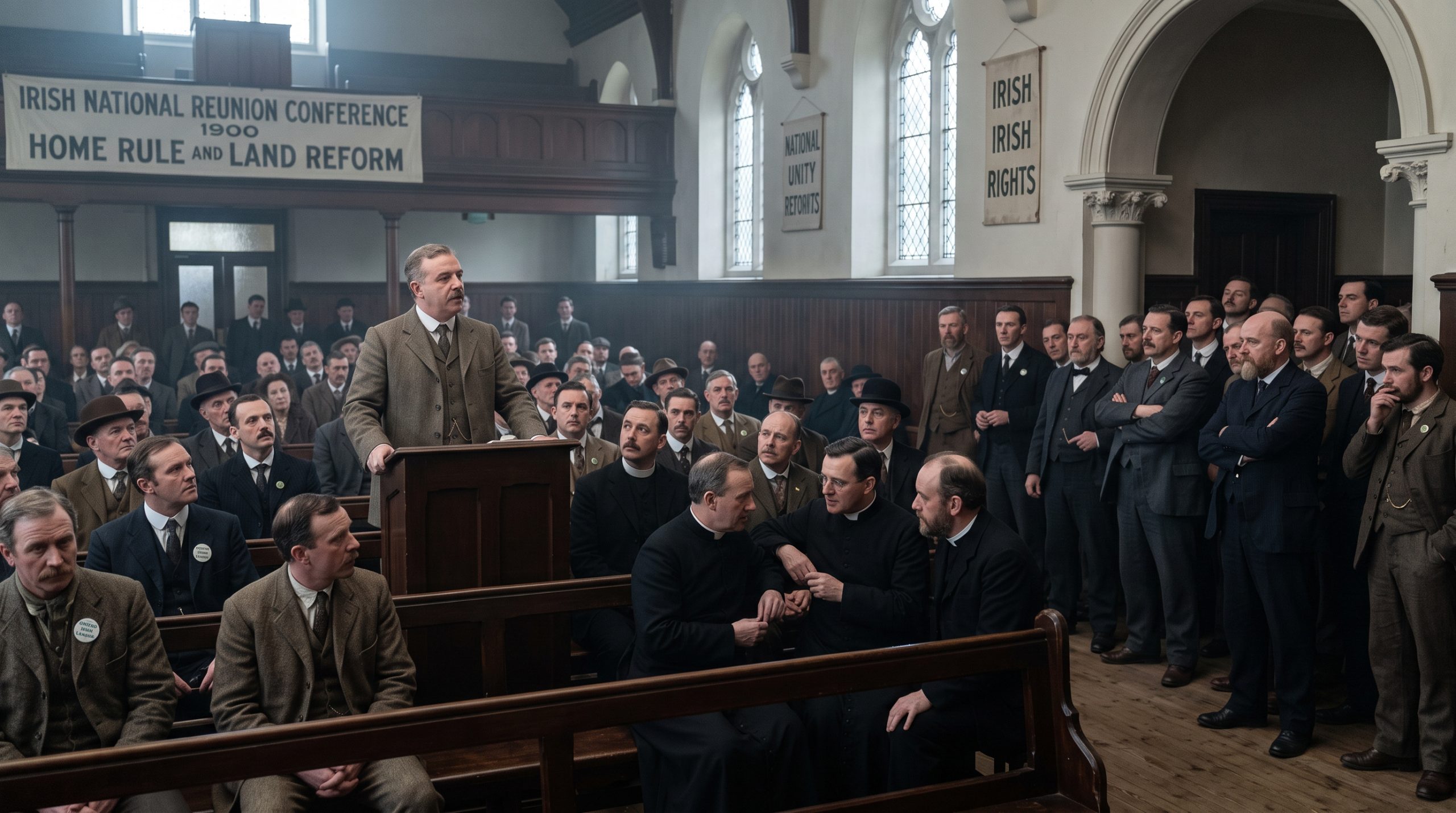
The general election has confirmed a widening political division between.
Ulster Divide
The general election has confirmed a widening political division between nationalist Ireland and the unionist strongholds of north-eastern Ulster. While the reunited Irish Parliamentary Party has secured overwhelming representation across most of the country, Unionist candidates have retained their commanding position in Belfast, Antrim, Down, northern Armagh and neighbouring districts. The result will be closely studied in Limerick, where Home Rule supporters regard an Irish legislature as the principal national demand. Unionist resistance in Ulster, however, demonstrates that constitutional settlement cannot be considered solely through the wishes of the nationalist majority elsewhere in Ireland.
View Record