
Wyndham Appointed(c.1890s)
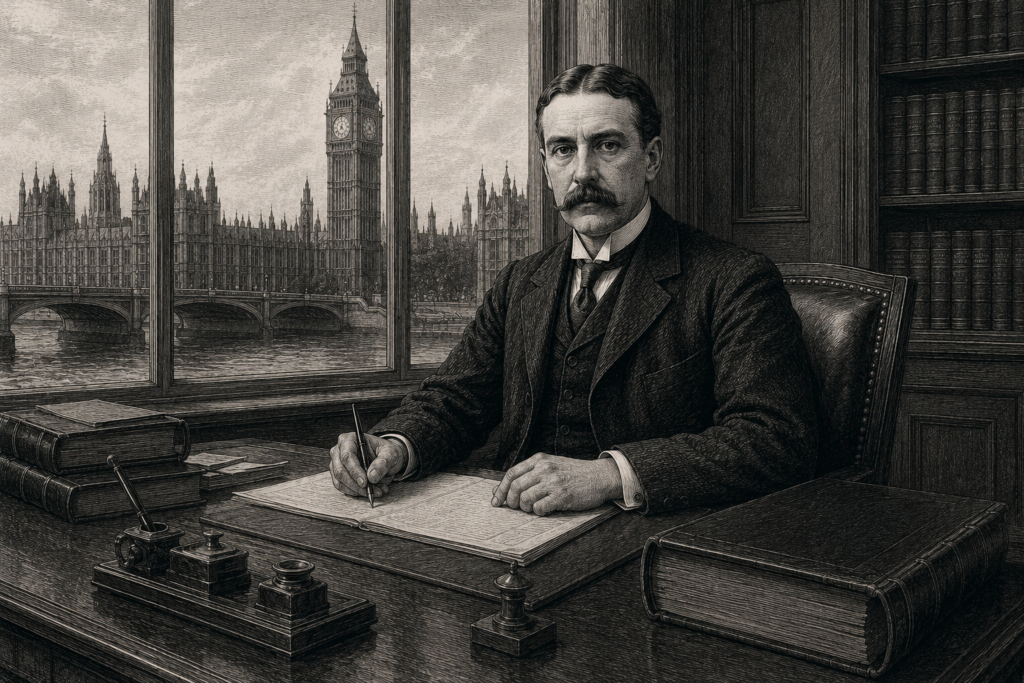
George Wyndham has been appointed Chief Secretary for Ireland in succession to Gerald Balfour, placing a younger Conservative minister in charge of Irish administration at a moment of renewed nationalist organisation and growing agitation over the land. His appointment will be watched closely throughout Limerick city and county, where tenant ownership, congested holdings, rural poverty and the position of evicted families remain pressing political concerns. Wyndham enters office after the reunited Irish Parliamentary Party secured seventy-seven seats at the general election, although Lord Salisbury’s government remains firmly opposed to Home Rule and possesses a substantial Westminster majority.
The Chief Secretary serves as the government’s principal minister for Irish affairs and answers in the House of Commons for administration conducted through Dublin Castle. Gerald Balfour held the office from 1895, overseeing the Local Government Act of 1898, which transferred important administrative responsibilities to elected county and district councils. His policy followed the Unionist belief that practical reform could reduce support for Home Rule without conceding an Irish legislature. Wyndham inherits that approach, but he also confronts a revitalised United Irish League, a reunited nationalist parliamentary movement and persistent dissatisfaction with the laws governing relations between landlords and tenant farmers.
Wyndham, Conservative member for Dover, previously served as Parliamentary Under-Secretary for War and is closely associated with Arthur Balfour, the government leader in the Commons. Though lacking long experience in Irish administration, he possesses an unusual family connection with Ireland as a great-grandson of Lord Edward FitzGerald, the United Irish leader who died during the rebellion of 1798. The association may attract public curiosity but offers no guarantee of sympathy with nationalist constitutional demands. Wyndham takes office committed to the Union, and his immediate authority will depend upon cooperation with the Lord Lieutenant, Dublin Castle officials and the government’s parliamentary leadership.
The land question is likely to provide the earliest and most difficult test of the new Chief Secretary. Existing purchase legislation has enabled some tenants to acquire their farms, but transactions remain too limited to settle the wider dispute. Nationalists demand easier purchase terms, assistance for evicted tenants and action against congestion, while landlords seek prices that will protect their financial interests. Wyndham has not yet announced the comprehensive settlement later associated with his name, and no outcome can be assumed in 1900. Nevertheless, the strength of agrarian organisation ensures that land reform will occupy a central place in his administration.
For County Limerick, Wyndham’s appointment carries practical importance beyond the formal politics of Dublin Castle. Farmers considering purchase, tenants burdened by rent, labourers seeking access to land and elected councillors administering the new local government system will judge him by measures rather than ancestry or promises. Nationalist representatives are expected to press both Home Rule and agrarian reform, while Unionists will look to the Chief Secretary to maintain public order and preserve the legislative union. Wyndham begins with no Irish mandate of his own, but decisions taken under his authority may shape landownership, rural security and political argument throughout Limerick.
Primary Sources
- The London Gazette, November 1900, official notice concerning George Wyndham’s appointment as Chief Secretary for Ireland. This can verify the appointment and ministerial succession. Exact issue, page and notice should be confirmed before formal citation.
- House of Commons Debates, November and December 1900, contributions and ministerial records concerning George Wyndham’s assumption of responsibility for Irish affairs. These can verify his office, parliamentary role and the Irish questions placed before him. Exact date, volume and columns should be confirmed before formal citation.
- The Times, 10 November 1900. Contemporary reporting can verify the ministerial appointment, Wyndham’s previous service and political reaction to the government reconstruction. Exact page and column should be confirmed before formal citation.
- Freeman’s Journal and Daily Commercial Advertiser, 10 November 1900. Contemporary Irish reporting can verify nationalist reaction to Wyndham’s appointment and expectations concerning land reform and Irish administration. Exact page and column should be confirmed before formal citation.
- Irish Land Act, 1903, 3 Edward VII, chapter 37. The enacted statute provides the definitive primary record of the major land-purchase legislation subsequently introduced under Wyndham, including government advances for tenant purchase and the administration of estate sales.