Bardan

Summon Bardan

Summon Bardan, our resident druid, and ask him any question about Limerick.
His ancient wisdom will answer as soon as the search is complete.

ChatGPT Image Jul 13, 2026, 09_51_33 AM (5)

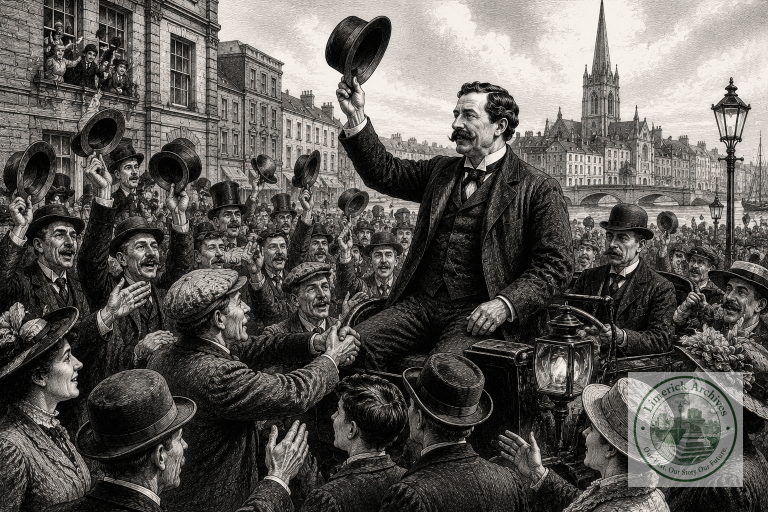
Large crowds have lined the route of Queen Victoria’s procession from Kingstown towards Dublin, creating one of the most striking public spectacles witnessed during her final visit to Ireland. The royal carriage passed through heavily decorated streets while spectators filled pavements, windows and temporary viewing places. Reports reaching Limerick describe sustained cheering as the procession moved towards the capital and the Viceregal Lodge in Phoenix Park. The gathering revealed more than official organisation alone. Public curiosity drew thousands outdoors, while loyalist residents and supporters of the Union treated the Queen’s arrival as an opportunity to demonstrate attachment to the Crown and British Empire.

The Queen recorded that the entire road from Kingstown was crowded and that the people cheered loudly as her carriage passed. She travelled with a military escort in a procession of four carriages, accompanied by members of the royal family and senior officials. Decorative arches, greenery, garlands and imperial emblems marked the route, transforming the approach to Dublin into a carefully arranged ceremonial landscape. Contemporary photographs and moving pictures preserved the density of the gathering and the scale of the preparations. For many spectators, the occasion offered a rare chance to see the elderly monarch whose reign had shaped Irish public life for more than sixty years.

The enthusiasm visible along the procession route should not be mistaken for unanimous Irish approval of British government. Dublin contained substantial loyalist, Protestant, military, commercial and administrative communities, while many constitutional nationalists sought Home Rule without necessarily rejecting the monarchy. Others may have attended from simple curiosity, drawn by the holiday atmosphere, decorations, music, soldiers and unusual movement through the streets. Railway and tram services carried additional visitors into the capital. The crowds therefore represented several impulses at once: sincere royal loyalty, imperial patriotism, fascination with ceremony, commercial opportunity and the ordinary human desire to witness an event that might never be repeated.

Opposition remained active beyond the cheering streets. Advanced nationalists condemned the visit as imperial propaganda during the South African War, while Maud Gonne and her associates invoked memories of famine, eviction and emigration in their protests. The Catholic hierarchy also maintained a cautious distance from some of the official celebrations. Such hostility did not prevent large numbers from attending, but it complicated claims that the procession proved complete Irish devotion to the Crown. In Limerick, where nationalist politics remained powerful but British military connections were deeply established, residents could recognise the same mixture of loyalties, resentments and personal curiosity displayed in Dublin.

The procession consequently revealed an Ireland more politically varied than either loyalist celebration or nationalist protest alone could suggest. The cheering was genuine, as were the decorations and the public excitement, yet attendance did not necessarily amount to approval of British rule. Some spectators honoured the Queen, others admired the display, and still others simply wished to observe history passing before them. For Limerick readers, the scene offers a reminder that imperial attachment and Irish nationalism could exist beside one another within the same city, family or individual. The royal carriage travelled through a crowd united briefly by spectacle, though divided profoundly over what the spectacle represented.

Primary Sources

  1. Queen Victoria, journal entry, 4 April 1900, Royal Archives, Windsor Castle; the Queen described the route from Kingstown to Dublin as heavily crowded, with loud cheering and extensive decoration. Exact archival volume and folio should be confirmed before formal citation.
  2. The Irish Times, 5 April 1900, contemporary report on Queen Victoria’s arrival, the decorated procession route and the crowds gathered throughout Dublin. Exact page and column should be confirmed before formal citation.
  3. Freeman’s Journal, 5 April 1900, contemporary nationalist newspaper coverage of the royal arrival, public attendance and political reactions. Exact page and column should be confirmed before formal citation.
  4. British Mutoscope and Biograph Company, Queen Victoria in Dublin, 4 April 1900, surviving actuality film showing the royal carriage, procession and spectators; preserved by the Irish Film Institute.
  5. Robert Augustus Henry L’Estrange, photographic series of Queen Victoria’s royal visit to Dublin, 4–26 April 1900, Queensland University of Technology Digital Collections, Robert Augustus Henry L’Estrange Collection.
Explore Emerald Archives

Share Your Thoughts

We welcome your thoughts, memories and local knowledge about this article. Perhaps you recognise a person, place, building or event, remember a related story, or can provide additional names, dates or details. Every contribution helps improve the historical record and may reveal information that would otherwise be lost. Please share your comments, corrections and personal recollections with us, whether they are brief observations or detailed accounts. Your knowledge can help connect families, communities and generations while strengthening Emerald Archives for future visitors. By taking part, you become an important contributor to preserving and sharing Limerick’s history with everyone worldwide today.

Your email address will not be published. Required fields are marked *

Books Supporting the Archive

Every Book Purchased Helps Support The Continuing Work Of Emerald Archives.

Cover of Ashes

Ashes

The Ashes Trilogy, Book One

Ashes begins the story of a group of children growing up in the streets and lanes of Limerick, where poverty and hardship are balanced by humour, imagination and fierce friendship. Their city is more than a setting: it watches, remembers and gives voice to lives often absent from official history. As the children explore their neighbourhood, they encounter family pressures, faith, hunger, danger and the first signs of a changing world. Through their adventures and loyalties, the novel captures the resilience of ordinary people and introduces the characters whose lives will unfold across the three volumes of The Ashes Trilogy.

View on Amazon UK
Cover of Gurriers

Gurriers

The Ashes Trilogy, Book Two

Gurriers continues the lives of the Limerick children introduced in Ashes as childhood freedom begins to give way to work, responsibility and harsher choices. Their friendships remain strong, but poverty, family expectations, faith and the pressures of growing older test loyalties once taken for granted. The streets and lanes still offer humour, adventure and belonging, yet the wider world increasingly intrudes upon their lives. Through vivid dialogue, memorable characters and the watchful voice of Limerick itself, the novel explores resilience, identity and change while showing how even the closest companions can be drawn towards futures by circumstances beyond their control.

Cover of Scattered

Scattered

The Ashes Trilogy, Book Three

Scattered concludes The Ashes Trilogy as the friends who once shared Limerick’s streets and lanes face adulthood, work, hunger, faith, family duty and emigration. Time has altered their ambitions, tested their loyalties and carried some beyond the city that formed them. Yet memory continues to bind Louie, Seamus, Joe, Sean, Peter, Tony, Bardy, Maura, Eileen, Nora, Lingo and the mysterious Gleamer. Narrated through the enduring presence of Limerick itself, the novel explores separation, sacrifice and survival while recognising the humour and affection that remain. Together, their scattered lives complete a moving portrait of friendship, community and change across changing generations.

Cover of Threshold

Threshold

The Troubles Trilogy, Book One

Threshold opens in Belfast in 1968, where the Catholic Devlins and Protestant Morrows confront a city divided by religion, memory and fear. Civil rights marches, police violence, riots and internment transform ordinary streets into dangerous frontiers while political conflict enters homes, workplaces and schools. At the centre are Aileen Devlin and Thomas Morrow, whose relationship challenges the boundaries their families regard as essential to survival. As loyalty hardens into suspicion, both must decide whether inherited allegiance excuses injustice. Through family arguments, upheaval and private courage, the novel explores love, conscience, division and survival during the opening years of the Troubles.

Cover of Hunger

Hunger

The Troubles Trilogy, Book Two

Hunger is Book Two of The Troubles Trilogy, set in Belfast during the 1980s. Aileen Devlin and Thomas Morrow have built a fragile life across the city’s sectarian divide, but the conflict threatens the home they created for their daughter, Claire. As hunger strikes, the Anglo Irish Agreement and violence reshape Northern Ireland, republican Declan and loyalist Billy exploit fear, grief and vulnerable young men. Against them stand Aileen, Kathleen and Elsie, whose quiet strength keeps their families human. This is a story of love, survival and the courage to place people before causes in a divided society under pressure.

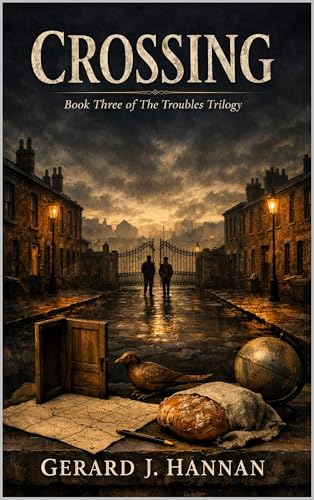
Cover of Crossing

Crossing

The Troubles Trilogy, Book Three

Crossing concludes The Troubles Trilogy during the decade from 1990 to 2000, as Belfast moves from violence towards negotiation, ceasefires and uncertain peace. The Devlin and Morrow families face political change alongside grief, ageing, divided loyalties and the consequences of choices made across three decades. Relationships once threatened by religious boundaries are tested by memory, mistrust and the fear that compromise may betray the dead. As the peace process gathers momentum, ordinary people must decide whether reconciliation is possible. The trilogy closes with a story of endurance, forgiveness, loss and hope beyond inherited division, proving that peace begins with courage.

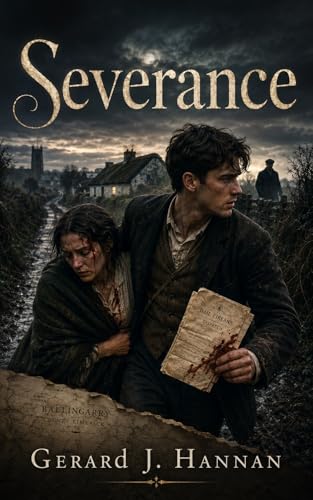
Cover of Severance

Severance

Historical Novel

Severance is a historical novel set in Ballingarry, County Limerick, during Ireland’s struggle for independence. A torn and bloodied dispatch passes through fields, kitchens, lofts and hidden routes, placing everyone who handles it in danger. Michael Enright carries the burden of trust, while Mary, Molly and their neighbours struggle to preserve the message and protect one another. Against them, Captain Edward Harcourt studies every delay, wound and fragment for clues. As loyalty, fear and betrayal tighten around the hidden network, ordinary people must decide what they are willing to risk when history enters their homes and silence itself becomes dangerous.

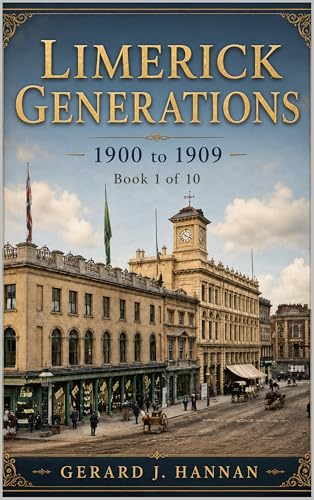
Cover of Limerick Generations: 1900 to 1909

Limerick Generations: 1900 to 1909

Limerick Decalogy, Book One

Limerick Generations: 1900 to 1909 opens the decade by documenting a city and county entering the twentieth century amid political debate, commercial activity, poverty, faith and technological change. Month by month, the book connects major Irish developments with local events, institutions, streets and communities. Public meetings, labour, transport, education, sport, business and everyday life reveal how national questions were experienced in Limerick. Historical reports and carefully reconstructed narratives bring forgotten moments and ordinary people into focus. As Book One of Limerick Decalogy, it establishes the foundation for a ten volume journey through one hundred years of local history and memory.

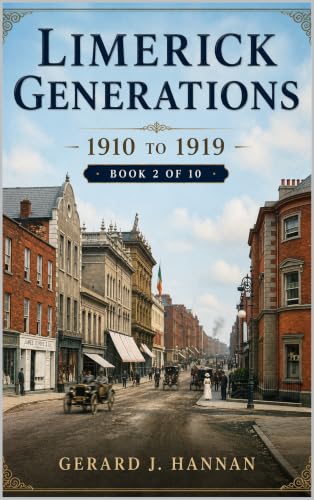
Cover of Limerick Generations: 1910 to 1919

Limerick Generations: 1910 to 1919

Limerick Decalogy, Book Two

Limerick Generations: 1910 to 1919 traces a decade of political transformation, labour conflict, war, revolution and social change across Limerick city and county. Home Rule, unionist resistance, trade union organisation and the First World War entered streets, farms, schools, workplaces and family life. The Easter Rising, conscription crisis, influenza pandemic and general election altered public loyalties and expectations. The decade culminated in the Limerick Soviet of 1919, when workers challenged military restrictions through organised collective action. As Book Two of Limerick Decalogy, the volume preserves local experiences of hardship, courage, grief, endurance and change during years of intense historic upheaval.

Associated Archives

Social Life and Customs People and Personalities Historic News Childhood and Family Life Transport War and Revolution

Restoring History

Emerald Archives preserves, enhances, restores and colourises historic photographs, sometimes presenting fresh angles on familiar scenes. When no suitable public-domain image exists, we create carefully researched AI illustrations for archive articles. We also invite the public to submit photographs for restoration and possible publication, with ownership always remaining entirely theirs.