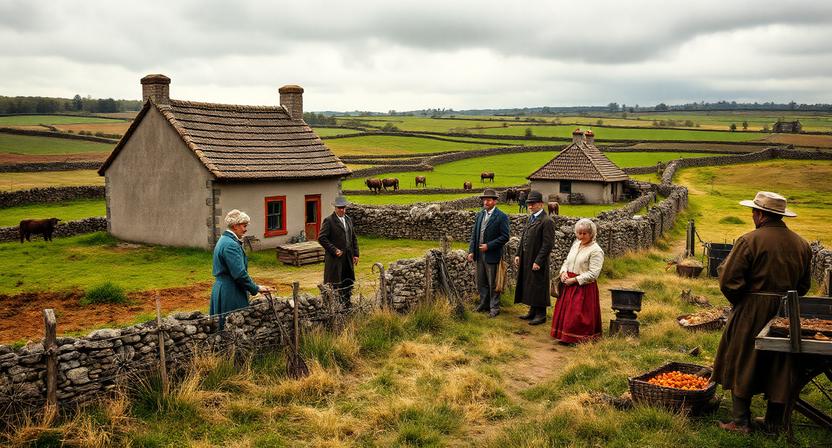
The land question remains the dominant economic and social issue.
Land Dominates
The land question remains the dominant economic and social issue across rural Ireland, shaping political organisation, family security and relations between landlords and tenant farmers. In County Limerick, holdings vary greatly in quality and size, while rents, arrears, grazing land and the prospect of tenant purchase remain constant subjects of discussion. Earlier Land Acts granted greater protection and introduced limited purchase schemes, but they did not complete the transfer of ownership sought by many farmers. Rural households continue to measure political promises against the practical questions of who owns the soil, who works it and who benefits from its produce.
View Record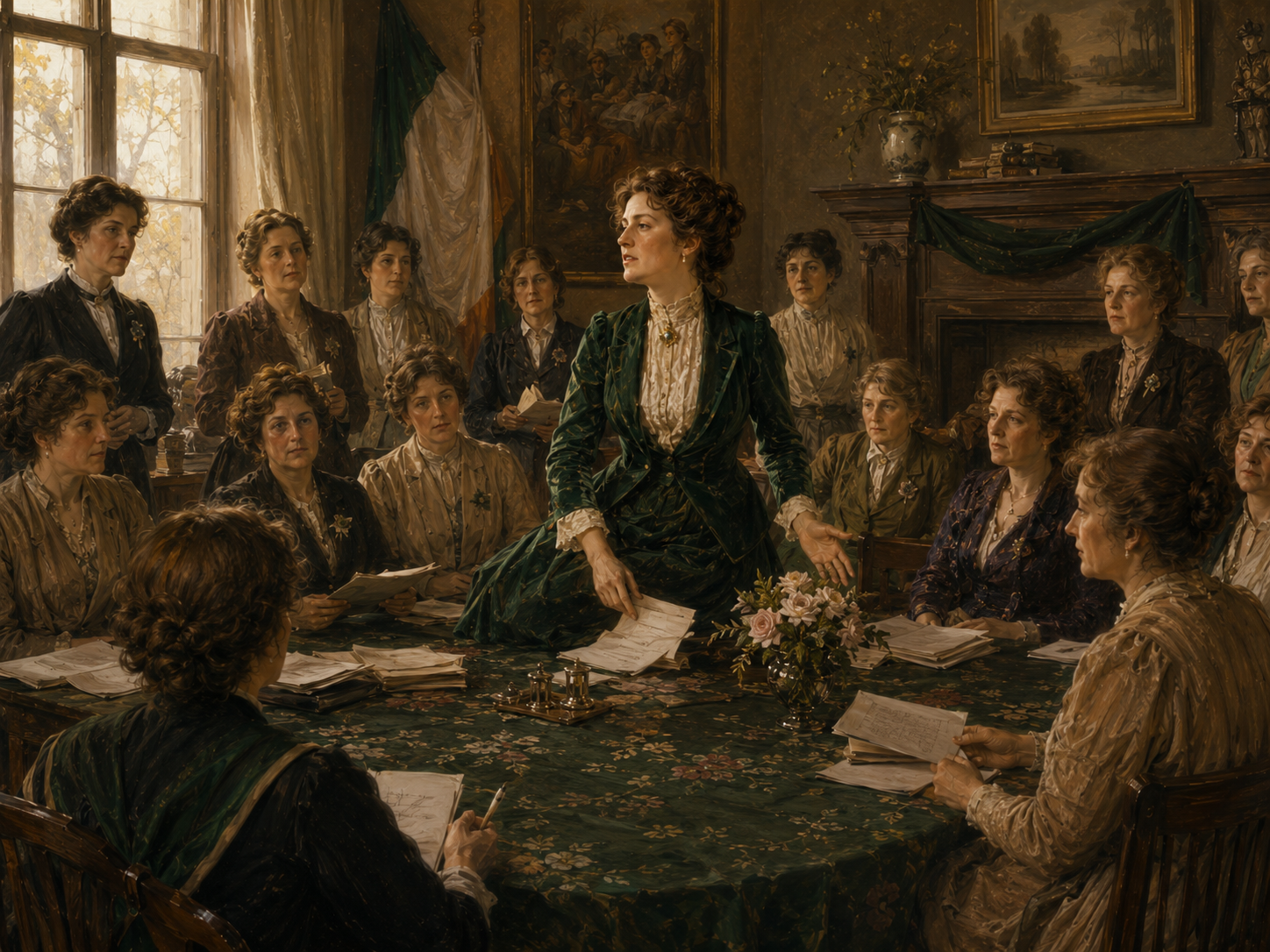
The establishment of Cumann na mBan has revealed how strongly.
Networks Endure
The establishment of Cumann na mBan has revealed how strongly the women’s nationalist networks created during Queen Victoria’s visit in 1900 have endured. Fourteen years ago, Maud Gonne and her associates organised resistance to the royal ceremonies, arranged an alternative patriotic celebration for children and founded Inghinidhe na hÉireann. Those efforts brought women together as fundraisers, teachers, speakers and political organisers. Many of the relationships, practical skills and separatist convictions formed during that campaign have now entered a broader organisation intended to support the Irish Volunteers and advance the cause of national independence.
View Record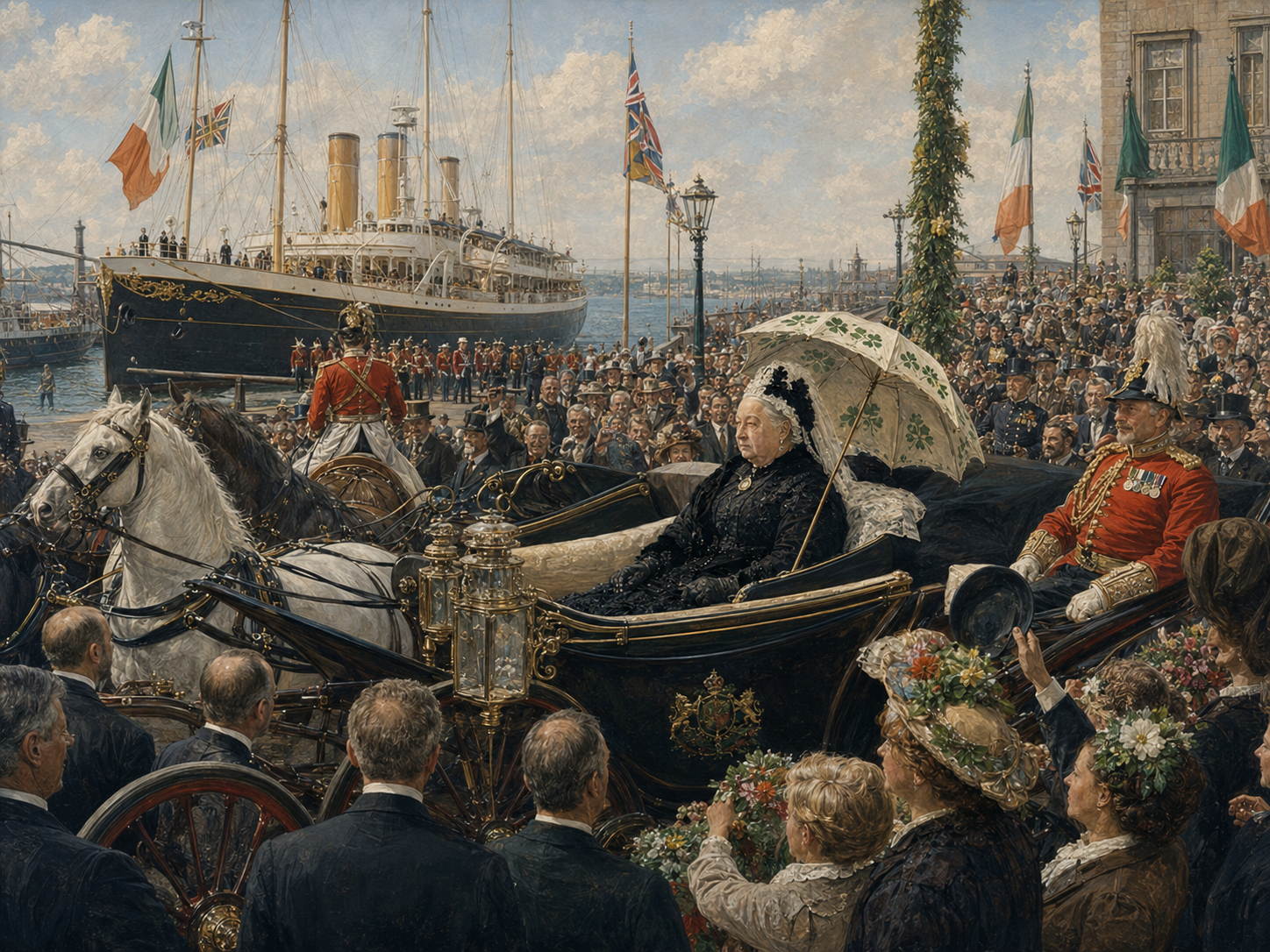
Women have assumed visible roles in the nationalist opposition surrounding.
Women Protest
Women have assumed visible roles in the nationalist opposition surrounding Queen Victoria’s arrival in Dublin, moving beyond the customary tasks of collecting money or assisting male political organisers. Maud Gonne and other advanced nationalists have used meetings, public agitation and organised community work to challenge the royal ceremonies and the claim that they represent a united and loyal Ireland. Their involvement will be noted in Limerick, where women already sustain charitable societies, cultural associations, schools and nationalist activity but rarely receive formal recognition as political participants.
View Record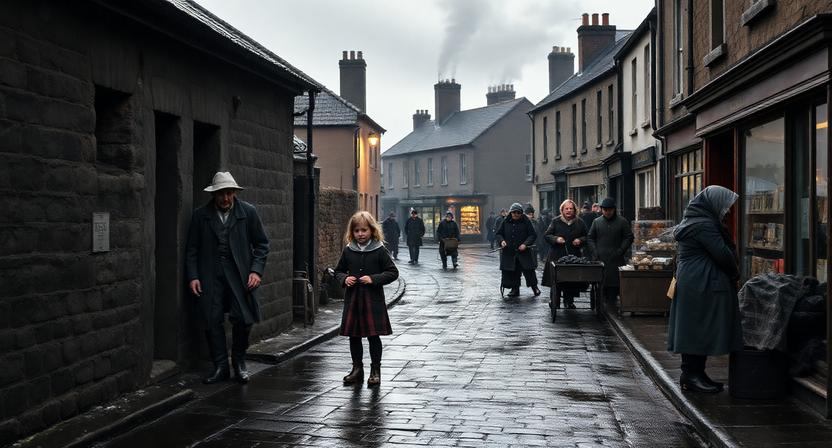
January came into Limerick without ceremony for most of the.
Cold Continuation
January came into Limerick without ceremony for most of the people who had to live through it. The arrival of a new century did not lift rent from a labourer’s door, provide sound boots for a schoolchild, warm a damp room, settle a shop debt, clear a fevered lane or make an uncertain wage secure. Across the city and county, families entered the year carrying the same burdens that had shaped the closing decades of the nineteenth century. Public celebration meant little where survival continued to depend upon bread, coal, credit, employment and the health of children.
View Record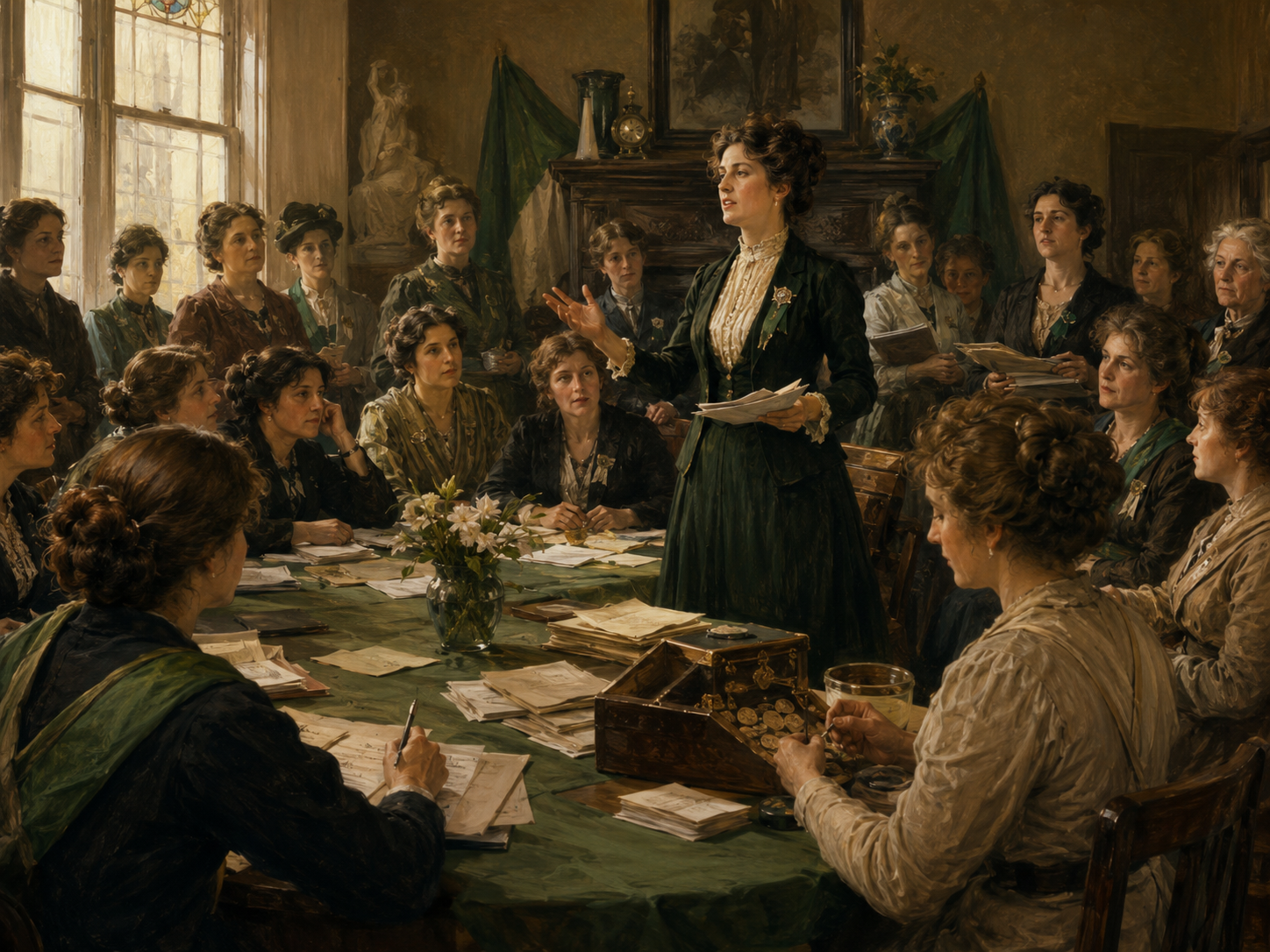
Inghinidhe na hÉireann has declared that women must take an.
Women Participate
Inghinidhe na hÉireann has declared that women must take an active part in Ireland’s political and civic life rather than remain auxiliaries to movements led entirely by men. Established under Maud Gonne’s leadership, the organisation gives women responsibility for deciding policy, addressing meetings, raising funds and arranging public campaigns. Its exclusively female membership provides a political space in which women may develop confidence and organisational experience despite their exclusion from parliamentary elections. The Daughters of Ireland therefore challenges British rule while also questioning conventions that restrict women’s influence within nationalism, local affairs and public debate.
View Record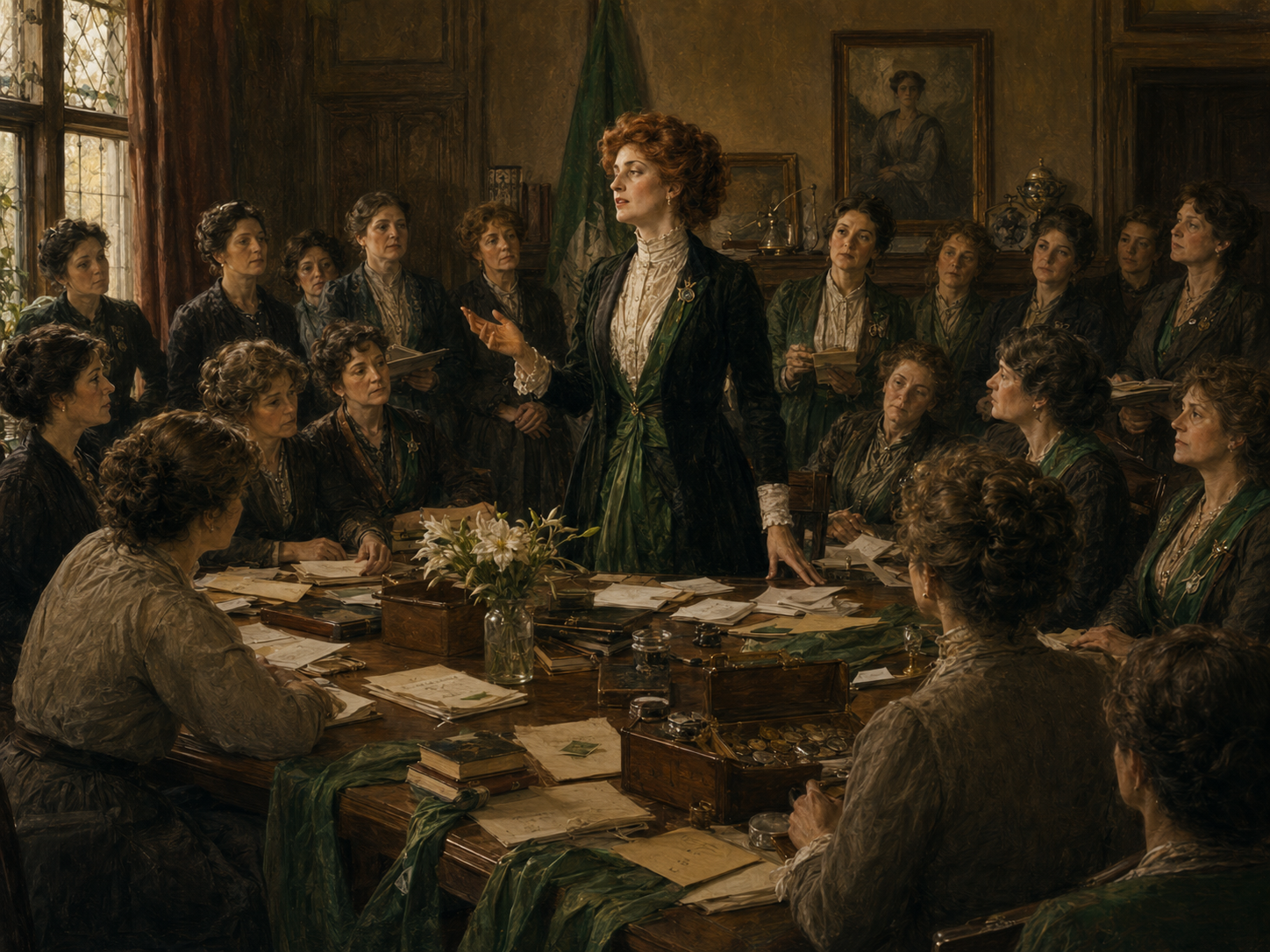
Inghinidhe na hÉireann has linked its demand for national independence.
Children Fed
Inghinidhe na hÉireann has linked its demand for national independence with practical concern for poor children, arguing that political freedom must include protection from hunger, neglect and unequal education. Members of the women’s organisation have drawn attention to children arriving at school without adequate food and have pressed for organised meals in the poorest districts of Dublin. Their campaign places social welfare beside language, culture and sovereignty. For the Daughters of Ireland, a nation claiming the right to govern itself must also demonstrate that it can care for children whose health and education are damaged by poverty.
View Record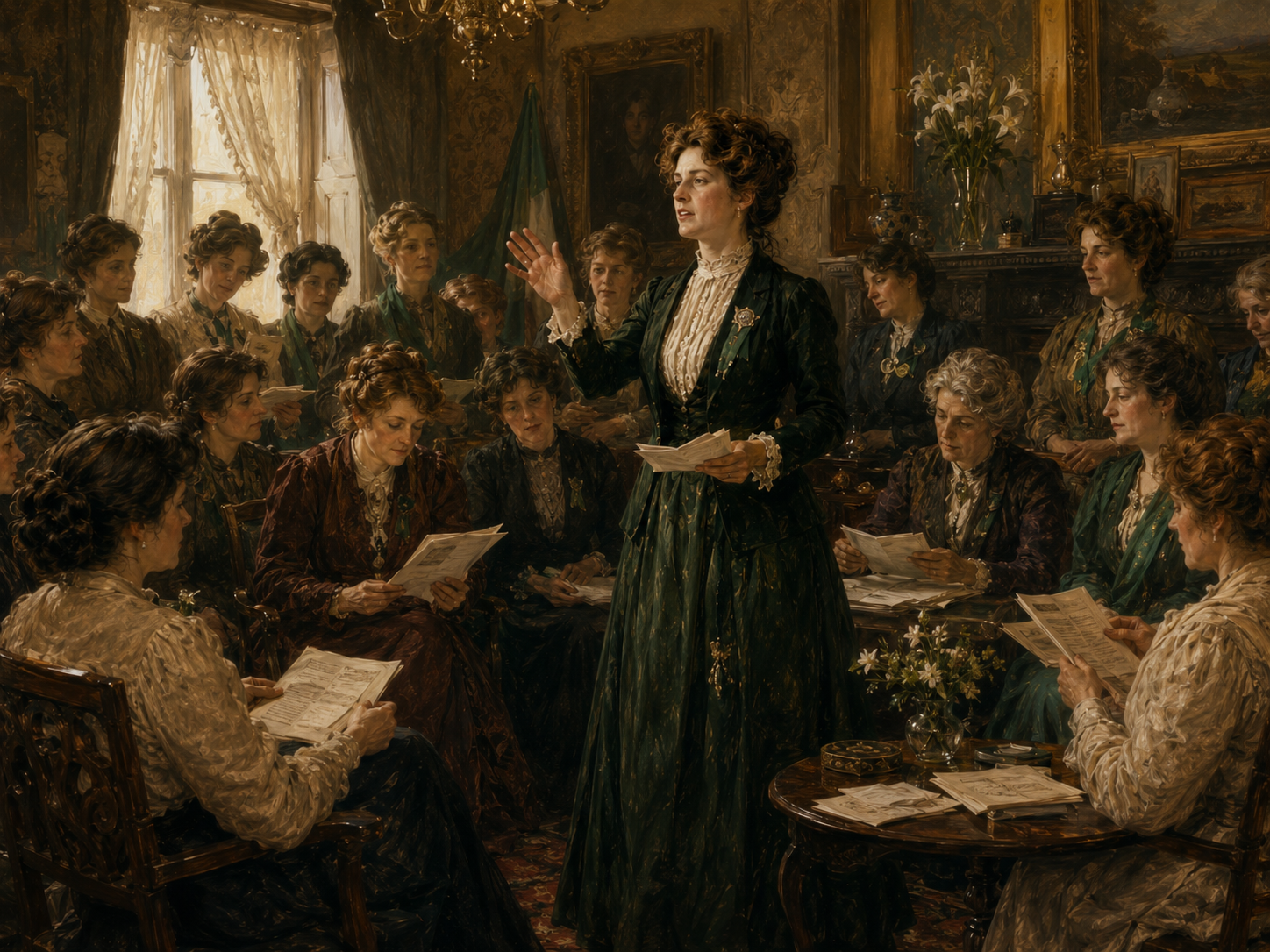
Inghinidhe na hÉireann has placed the Irish language, national culture.
Culture Revived
Inghinidhe na hÉireann has placed the Irish language, national culture and economic self-reliance at the centre of its programme for complete independence. Established under Maud Gonne’s leadership, the women’s organisation argues that political freedom cannot be secured by parliamentary action alone while Irish people continue to neglect their own language, history, literature and industries. Members intend to cultivate national confidence through education and practical organisation, especially among children. Their approach joins separatist politics with everyday choices concerning speech, reading, entertainment and household spending, giving women a direct role in shaping the cultural foundations upon which an independent Ireland might eventually stand.
View Record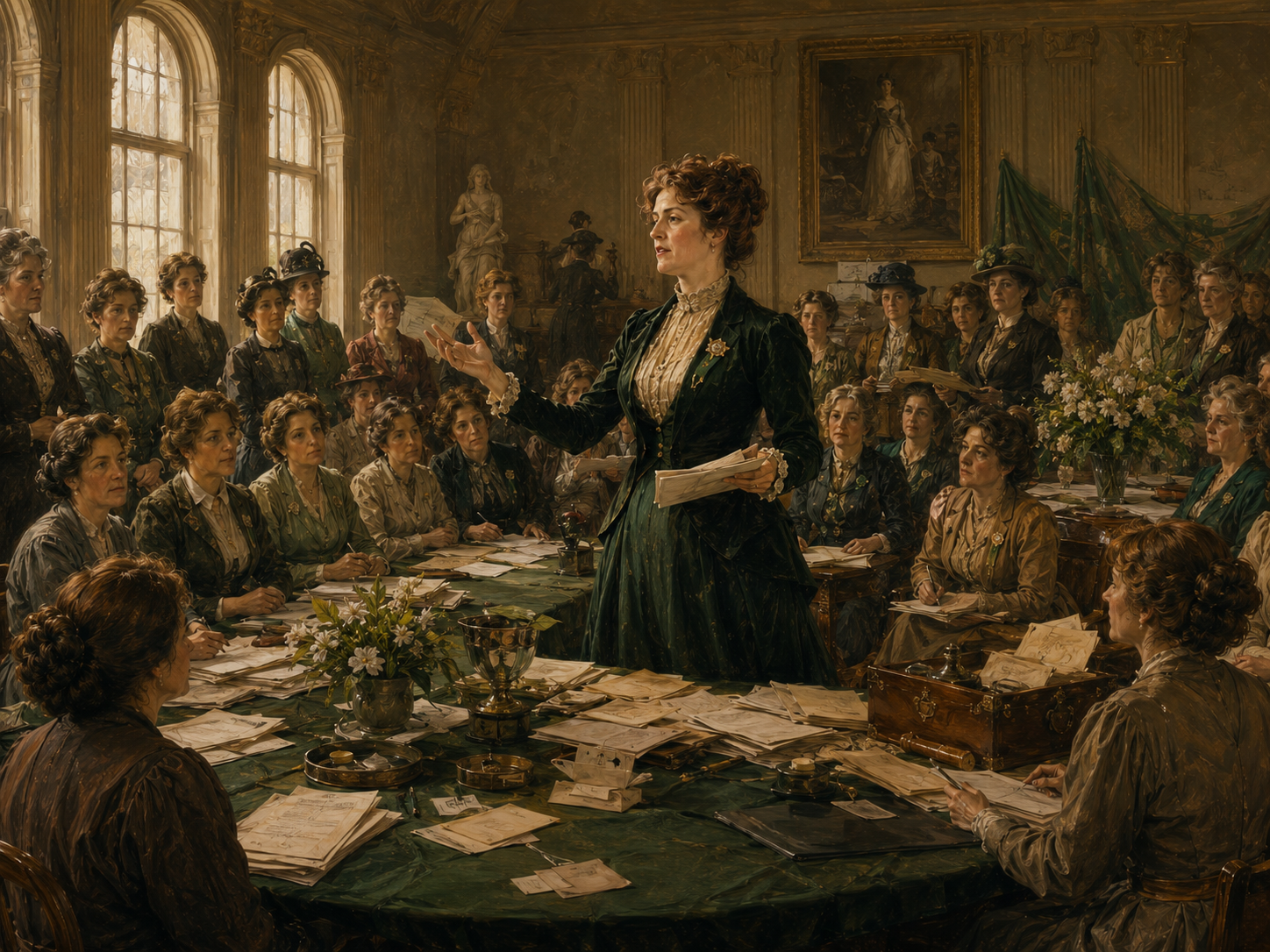
Inghinidhe na hÉireann has declared that the restoration of an.
Independence Demanded
Inghinidhe na hÉireann has declared that the restoration of an Irish legislature under Home Rule would not satisfy its political programme. The women’s organisation established under Maud Gonne’s leadership seeks the complete independence of Ireland rather than limited self-government within the United Kingdom. Its members argue that an Irish parliament remaining subject to Westminster and the Crown would leave the central question of national sovereignty unresolved. The declaration places the Daughters of Ireland firmly within advanced nationalism and separates the new movement from the constitutional programme pursued by John Redmond and the reunited Irish Parliamentary Party.
View Record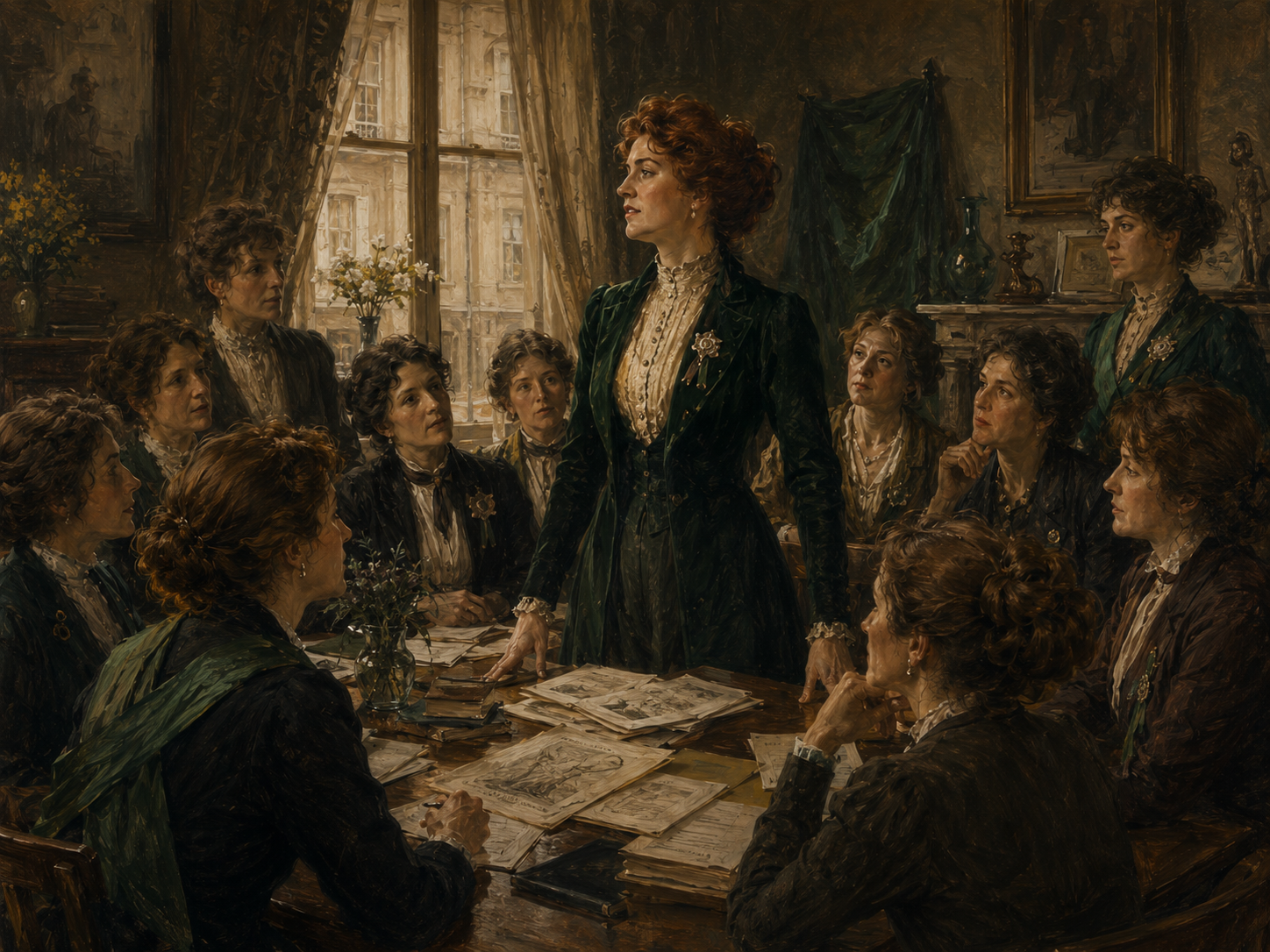
The establishment of Inghinidhe na hÉireann has provided women with.
Women Organise
The establishment of Inghinidhe na hÉireann has provided women with a distinct and independent place in advanced-nationalist politics. Founded under the leadership of Maud Gonne, the Daughters of Ireland differs from political organisations in which women are permitted only to collect subscriptions, prepare refreshments or assist male speakers. Its members intend to organise, educate and campaign in their own name. The organisation’s appearance during opposition to Queen Victoria’s visit demonstrates that women are no longer willing to remain silent observers of Ireland’s constitutional struggle. Nationalist women in Limerick will watch closely as this new political association develops.
View Record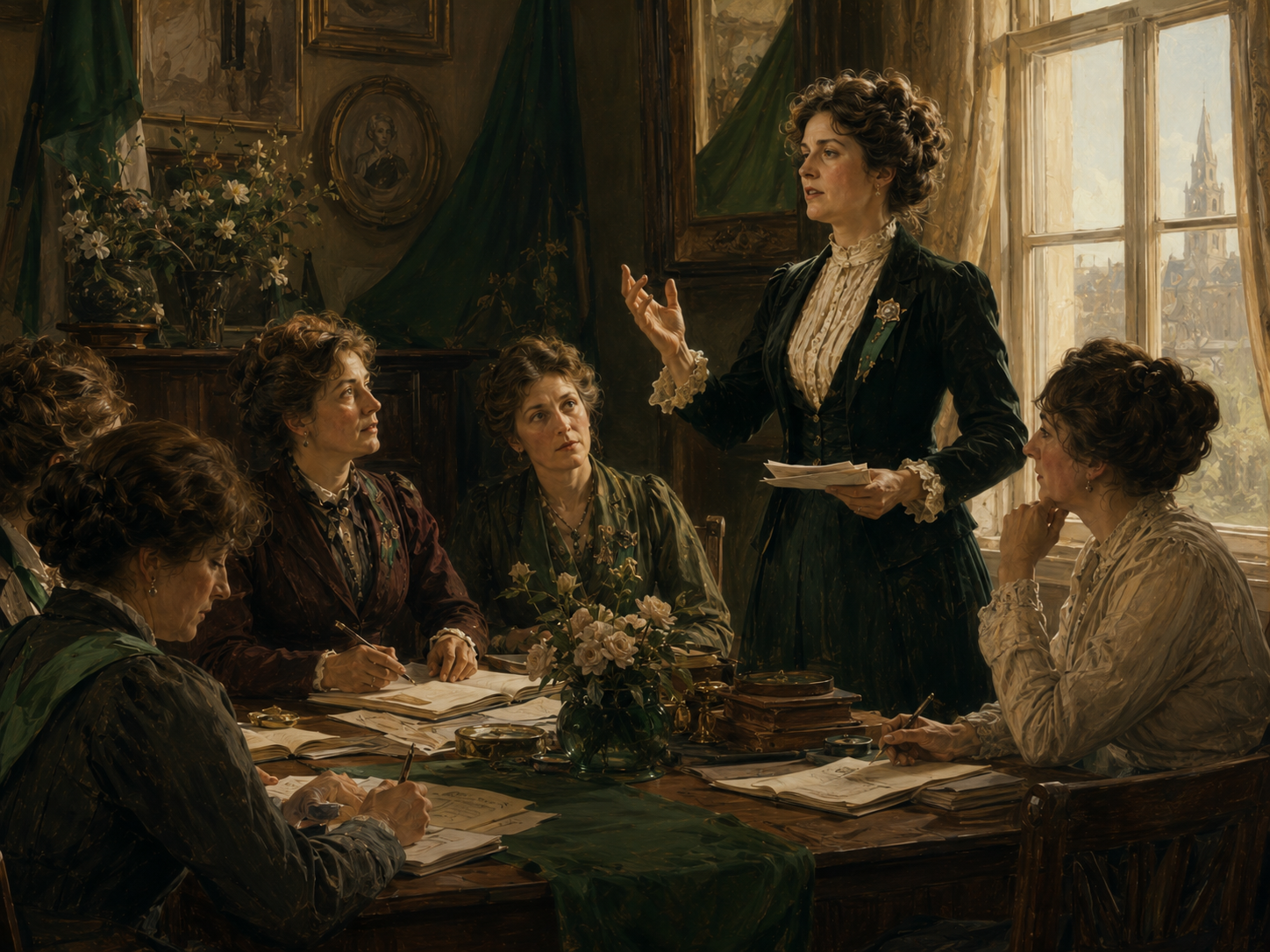
Inghinidhe na hÉireann, translated as the Daughters of Ireland, has.
Daughters Founded
Inghinidhe na hÉireann, translated as the Daughters of Ireland, has been established in Dublin under the leadership of Maud Gonne. The women’s nationalist organisation emerged from a meeting held in the rooms of the Celtic Literary Society on Easter Sunday, where participants discussed practical opposition to Queen Victoria’s visit and its accompanying children’s celebrations. The founders intend to give women an independent place within advanced nationalism rather than restricting them to supporting roles in organisations directed by men. News of the initiative will attract attention in Limerick among women already active in cultural, charitable and political life.
View Record