
2000–2025 CE

Dundalk, Devolution and £4.40
In 2000, Northern Ireland’s new power-sharing Executive was suspended over IRA decommissioning, then restored after commitments and arms inspections, though no weapons were destroyed. Saville’s Bloody Sunday hearings began, while policing reform advanced through the Police (Northern Ireland) Act. In the Republic, Celtic Tiger growth brought low unemployment, inflation and infrastructure pressures, prompting the National Development Plan and Science Foundation Ireland. A national minimum wage, equal-status protections, human-rights legislation and child-abuse inquiry strengthened social accountability. Clinton visited Dundalk supporting peace. Sporting finals sustained shared rituals, but fragile devolution and unresolved arms left the peace process dependent on continuing international reassurance.

Proleek, Nice and New Policing
In 2001, Celtic Tiger prosperity exposed Ireland’s vulnerabilities and transformations. Foot-and-mouth disease at Proleek, County Louth, prompted cross-border controls, slaughter and trade restrictions. Voters rejected the Treaty of Nice in a low-turnout referendum. Northern Ireland’s devolved institutions repeatedly neared collapse over policing and IRA arms, requiring temporary suspensions, before verified IRA decommissioning in October. The RUC became the PSNI in November, while Holy Cross schoolchildren faced loyalist protest and the GAA abolished Rule 21. Census and employment figures recorded social change, euro starter packs anticipated currency conversion, and cultural commemoration and mourning marked national life across the island and abroad.
The Euro in Irish Hands
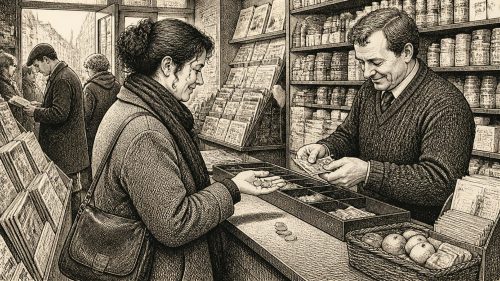
In 2002, euro notes and coins replaced the Irish pound, symbolising deeper European integration. Ireland’s Celtic Tiger economy remained strong in GDP terms, but weak GNP growth exposed dependence on foreign-owned firms. Census results recorded rapid population growth, immigration and Dublin-centred expansion, straining housing and services. Voters rejected tighter abortion provisions but approved the Nice Treaty, enabling EU enlargement. Bertie Ahern’s coalition won re-election. Clerical abuse controversies intensified scrutiny of Church authority. Northern Ireland’s institutions faltered despite IRA decommissioning, leading to suspension of devolved government. Ireland’s World Cup run provided national unity amid profound wider social, economic and constitutional change.

Shannon, Stormont and Croke Park
In 2003, Ireland debated neutrality as United States forces continued using Shannon Airport during the Iraq invasion, prompting protests, parliamentary conflict and an unsuccessful legal challenge. Northern Ireland’s devolved institutions remained suspended despite British-Irish initiatives and IRA decommissioning; November’s election advanced the DUP and Sinn Féin. The Special Olympics World Summer Games, hosted across Ireland, celebrated athletes with intellectual disabilities and volunteering, while Tyrone won an Ulster all-Ireland final. Slowing Celtic Tiger growth nevertheless brought housing construction, immigration and pressure on services. Government plans for smoking restrictions provoked debate, and the Derrybrien peat slide exposed risks associated with wind-energy development.

Phoenix Park Welcomes Europe
In 2004, Ireland’s EU Presidency culminated in Phoenix Park’s welcome for ten new member states and agreement on a proposed European constitution. At home, prosperity, migration and infrastructure expansion reshaped society: Dublin’s Luas lines opened, while a workplace smoking ban transformed pubs and other enclosed venues. Voters approved the Twenty-seventh Amendment, ending unconditional birthright citizenship and leading to new nationality legislation. Elections strengthened Fine Gael and gave Sinn Féin its first European seat. Diarmuid Martin became Archbishop of Dublin, and Scouting Ireland formed. Northern Ireland’s institutions remained suspended; failed talks, paramilitary concerns and the Northern Bank robbery further deepened mistrust.
Rossport and the Last Arsenal
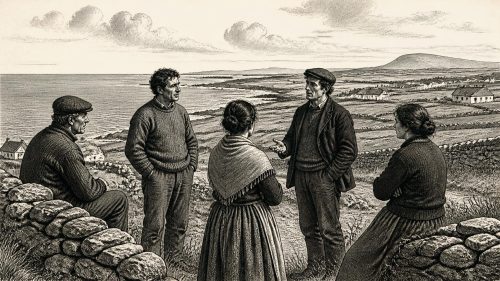
In 2005, Ireland’s transformation exposed tensions between peace, prosperity and accountability. The Provisional IRA ended its armed campaign and decommissioned its entire arsenal, although Northern Ireland’s devolved institutions remained suspended amid distrust following the Northern Bank robbery and Robert McCartney’s murder. In the Republic, the new Health Service Executive, citizenship rules and Disability Act reflected institutional and demographic change. Celtic Tiger growth, construction and immigration reshaped society, while the Irish Ferries dispute highlighted labour standards. Imprisonment of the Rossport Five crystallised opposition to the Corrib gas project. Cork’s cultural year and Irish’s EU recognition affirmed cultural confidence and European standing.

St Andrews and the Port Tunnel
In 2006, Ireland’s boom brought record housebuilding, low unemployment, migration and pressure on infrastructure and services. The census recorded 4,239,848 people, with non-Irish nationals comprising about one tenth, reflecting profound social and religious change. Government responded through employment-permit, strategic-planning and social-partnership measures, while the Dublin Port Tunnel opened to improve freight access. In Northern Ireland, the St Andrews Agreement created a route towards restoring devolved power-sharing, although Stormont remained suspended; a Transitional Assembly began preparatory work. The High Court rejected recognition of Katherine Zappone and Ann Louise Gilligan’s Canadian marriage. Europe’s Ryder Cup victory at the K Club projected confidence.

Paisley and McGuinness
In 2007, Northern Ireland’s devolved government returned, with DUP leader Ian Paisley and Sinn Féin’s Martin McGuinness jointly heading an Executive, turning power-sharing into practical administration. In the Republic, Bertie Ahern won a third election and formed a coalition with the Greens and Progressive Democrats amid Celtic Tiger prosperity. However, cooling house prices and reliance on construction exposed economic vulnerability. Census results highlighted immigration, changing households and religious diversity, while Irish gained EU official-language status. Corrib gas protests, scrutiny of Ahern’s finances and criminal-justice legislation raised questions of trust and authority. Cultural initiatives and smoke-free rules reflected wider social change.
Dublin’s Guarantee Night
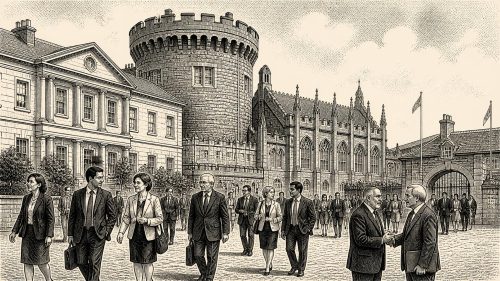
In 2008 Ireland moved from Celtic Tiger confidence to recession and banking crisis. Bertie Ahern resigned, succeeded by Brian Cowen, while Brian Lenihan became Finance Minister. Voters rejected the Lisbon Treaty, delaying European ratification, yet Dublin successfully concluded the Convention on Cluster Munitions. Northern Ireland's devolved institutions endured Paisley’s replacement by Peter Robinson, though policing and justice remained unresolved. Construction collapse, unemployment and falling revenues exposed economic fragility, prompting an austerity-focused budget. On 29–30 September, government guaranteed liabilities of six Irish banks, tying public finances to their losses. New trafficking, welfare and transport laws nevertheless reflected institutional activity amid uncertainty.

Anglo, Lisbon and Ryan
In 2009, Ireland’s property-led collapse prompted State intervention, including Anglo Irish Bank’s nationalisation, pension deductions and NAMA legislation. Employment and construction fell sharply, while unemployment and household insecurity increased. Voters approved Lisbon Treaty after EU guarantees addressed earlier concerns. Dissident republican killings tested Northern Ireland’s peace settlement, though leaders condemned them. Ryan and Murphy reports exposed institutional and clerical abuse, accelerating demands for accountability and reform. Civil partnership legislation was introduced but not enacted. H1N1 influenza and severe flooding compounded hardship, whereas Ireland’s Six Nations Grand Slam provided national celebration. The year reshaped relations between State, society, Church and Europe.
Saville, Civil Partnership, Bailout
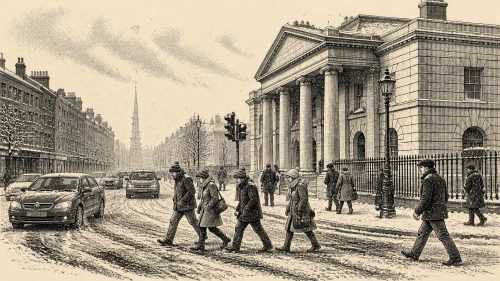
Ireland faced financial collapse as bank rescues, NAMA loan transfers, austerity and unemployment eroded confidence. In November, the Government sought an €85 billion EU–IMF assistance programme, followed by Budget 2011 cuts and taxes. Emigration rose sharply amid household insecurity. Civil partnership legislation recognised same-sex couples, while clerical-abuse revelations sustained scrutiny of Church authority. In Northern Ireland, policing and justice powers devolved, and the Saville report found Bloody Sunday killings unjustified, prompting Britain’s apology. Improving Anglo-Irish relations included plans for a royal visit. Tipperary and Cork won All-Ireland titles, while severe December cold disrupted life nationwide and severely strained public services.
Croke Park, Cloyne, Moneygall
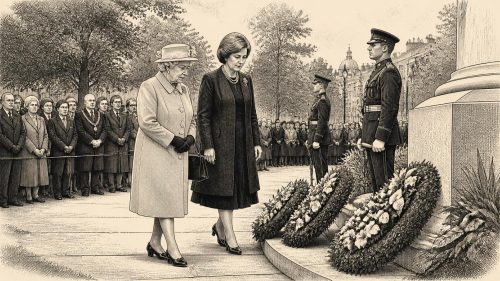
In 2011, Ireland underwent political, economic and social upheaval. Fine Gael and Labour replaced Fianna Fáil after an election dominated by the banking crisis, EU–IMF programme, austerity, unemployment and emigration. Census 2011 recorded a growing, increasingly diverse population. Civil partnership commenced, extending legal recognition to same-sex couples. Queen Elizabeth II’s State visit, including Croke Park, and Barack Obama’s visit to Moneygall symbolised reconciliation and international connection, although dissident violence persisted in Northern Ireland. The Cloyne report exposed grave failures over clerical abuse allegations, damaging institutional trust. Michael D. Higgins became President, promising ethical citizenship and solidarity amid continuing national hardship.
Titanic, Treaty and Savita
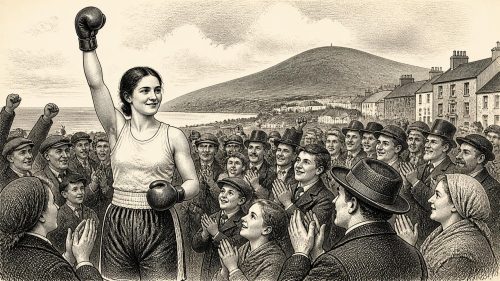
In 2012, Ireland pursued recovery under EU–IMF bailout conditions while households faced austerity, unemployment and renewed emigration. Voters approved the Fiscal Compact, reinforcing permanent budgetary discipline, and endorsed the Children’s Referendum, though it had not commenced by year’s end. The Government introduced the household charge, employment activation measures, constitutional convention and Gaeltacht legislation. Savita Halappanavar’s death during miscarriage complications intensified demands for abortion-law clarity and healthcare accountability. Dublin hosted the Eucharistic Congress amid diminished Church authority, while Katie Taylor’s Olympic gold lifted morale. In Northern Ireland, Titanic Belfast opened, McGuinness met the Queen, and flag protests exposed enduring identity tensions.
Lough Erne and the Laundries
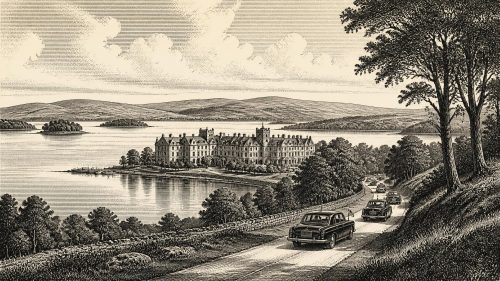
In 2013, Ireland combined cautious economic recovery with public reckoning. The Fine Gael–Labour government restructured IBRC debt, chaired the EU Council, introduced Local Property Tax, promoted tourism through the Gathering, and exited the EU–IMF bailout. Yet unemployment, emigration and household strain persisted. Following the McAleese Report, Enda Kenny apologised to Magdalen laundry survivors and backed redress. The Protection of Life During Pregnancy Act legislated limited abortion provision. Constitutional debates included marriage equality and referendums retaining the Seanad while creating a Court of Appeal. Lough Erne hosted the G8, while Northern Ireland faced flag and parade tensions. Seamus Heaney was mourned.
Water Meters and Stormont House
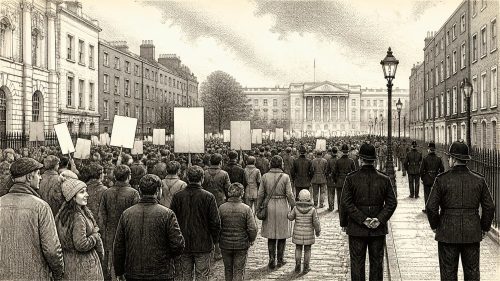
Ireland in 2014 emerged economically from crisis, but austerity and distrust fuelled protests against Irish Water’s meters and household charges. The Government delayed charges, capped bills and legislated safeguards, while electoral losses reflected wider discontent. Severe Atlantic storms caused flooding, coastal damage and power failures. Garda controversies prompted ministerial resignations and reforms including protected-disclosure, human-rights and freedom-of-information measures. Catherine Corless’s Tuam research provoked national reckoning with mother-and-baby institutions. President Higgins’s state visit to Britain affirmed improving relations. In Northern Ireland, the Stormont House Agreement addressed finances, institutions and conflict legacies. The Wild Atlantic Way promoted coastal tourism amid uneven recovery.
The Marriage Equality Mandate
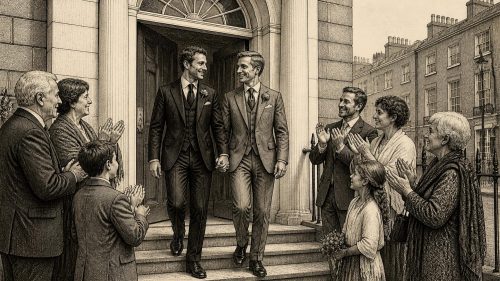
In 2015, Ireland experienced uneven recovery from the financial crash amid water-charge protests, emigration and approaching elections. Voters overwhelmingly approved marriage equality in May, followed by legislation enabling same-sex marriage, while family-law and gender-recognition reforms broadened legal recognition. The State established an inquiry into mother-and-baby homes, confronting institutional abuses. Economic growth and falling unemployment coexisted with insecurity, outward migration and misleading GDP expansion driven by multinational restructuring. Ireland expanded Mediterranean rescue and refugee commitments, supported Northern Ireland's Fresh Start Agreement, and enacted climate-governance legislation. The year combined change with disputes over austerity, historical accountability, public services, peace and international responsibility.

The GPO and Brexit Shock
Ireland’s 2016 combined the Easter Rising centenary with political fragmentation and Brexit uncertainty. After an inconclusive election, Enda Kenny led a Fine Gael minority government sustained by Fianna Fáil confidence and supply, amid disputes over water charges, housing and public services. Inclusive commemorations at the GPO, Kilmainham and elsewhere examined 1916’s contested legacy. Britain’s EU withdrawal vote revived concerns about the border, trade, the Common Travel Area and the peace process. Economic recovery, falling unemployment and immigration coincided with homelessness and housing shortages. Ireland challenged the European Commission’s Apple tax ruling, established a Citizens’ Assembly, and joined the Paris Agreement.

The Tuam Chambers and Border
Ireland in 2017 faced political, social and constitutional uncertainty amid economic recovery. Leo Varadkar became Taoiseach, leading a fragile Fine Gael minority after Frances Fitzgerald’s resignation. Northern Ireland’s Executive collapsed, while Brexit negotiations elevated the border, producing commitments to avoid a hard border and protect the Belfast Agreement. Citizens’ Assembly and Oireachtas processes advanced debate on repealing the Eighth Amendment. Tuam excavations revealed infant and child remains, intensifying scrutiny of mother-and-baby homes. Growth coexisted with severe housing need and homelessness. Census profiles highlighted education and diversity; Storm Ophelia caused disruption and deaths; Creative Ireland promoted cultural participation across communities nationwide.
The Repeal Vote and Backstop
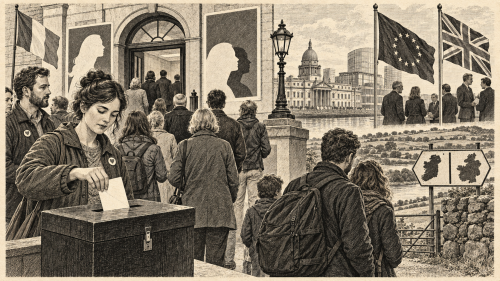
In 2018, Ireland experienced major constitutional, social and political change amid economic growth and persistent inequality. In May, voters repealed the Eighth Amendment by 66.4 per cent, enabling legislation for abortion services from 2019; October also removed blasphemy from the Constitution and returned Michael D. Higgins as President. Brexit negotiations centred on an Irish border backstop, while Northern Ireland remained without devolved government. Housing shortages and homelessness intensified despite Project Ireland 2040 and new development initiatives. Pope Francis’s visit highlighted abuse-related criticism of the Church. Alcohol legislation, broadband planning and severe autumn storms further shaped a consequential, unresolved national year.

Mansion House, Creggan, Backstop
In 2019, Ireland faced Brexit, social reform and uneven recovery. The Government enacted contingency legislation and pursued arrangements preventing a hard border, while the revised Northern Ireland Protocol replaced the backstop, though Brexit remained unresolved. Lyra McKee’s murder in Creggan exposed continuing dissident violence and Northern Ireland’s institutional vacuum, during which Westminster advanced abortion and marriage equality reforms. Republic voters liberalised divorce rules, and abortion services began. Employment and population grew, but homelessness and housing pressures persisted. Climate emergency measures and the National Broadband Plan signalled policy ambitions. First Dáil centenary commemorations connected democratic origins, revolutionary conflict, and constitutional uncertainty.

Two Kilometres From Home
In 2020, Ireland experienced political realignment, pandemic emergency and Brexit transition. February’s inconclusive election saw Sinn Féin lead first-preference votes, Fianna Fáil win most seats, and caretaker Taoiseach Leo Varadkar govern until Fianna Fáil, Fine Gael and Greens formed an unprecedented coalition under Micheál Martin in June. COVID-19 transformed daily life: closures, lockdowns, the two-kilometre exercise rule, remote work and restricted funerals accompanied 1,928 deaths. Schools adopted remote teaching and calculated Leaving Certificate grades; emergency payments addressed severe job losses amid housing pressure. Northern Ireland restored devolution; Brexit ended in EU-UK trade agreement; Ireland returned to Level 5 awaiting vaccination.

Tuam, Passes and Protocol
In 2021, Ireland emerged unevenly from COVID-19 restrictions as vaccination expanded, COVID passes enabled reopening, and Omicron prompted renewed limits. A cyberattack on the Health Service Executive exposed institutional strain and pandemic inequalities. Publication of the Mother and Baby Homes report and the State apology intensified disputes over redress, records and Tuam. Brexit’s Northern Ireland Protocol fuelled loyalist unrest and Democratic Unionist Party leadership turmoil. Housing shortages prompted Housing for All, while climate legislation, corporate-tax reform and Security Council work shaped policy. Treaty centenary commemorations highlighted partition and civil-war legacies, underscoring recovery’s social, constitutional and international dimensions across the island.
Five Million and Stormont
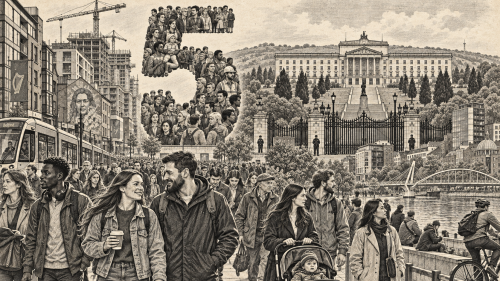
In 2022, Ireland lifted most Covid restrictions, restoring public life while health services retained pandemic pressures. Russia’s invasion of Ukraine brought sanctions, temporary protection and more than 64,000 arrivals, intensifying housing shortages and inflation; government introduced energy and welfare supports. Census results recorded 5,123,536 residents, the first population above five million since 1851. Housing, homelessness and maternity-hospital governance remained contentious. Sinn Féin became Northern Ireland’s largest Assembly party, but DUP opposition to the Protocol prevented an Executive. Ireland experienced its warmest recorded year, set emissions ceilings, marked cultural and revolutionary centenaries, and completed the orderly Martin-Varadkar Taoiseach rotation in December.

Parnell Square and Five Million
In 2023, Ireland’s population surpassed five million, intensifying pressures on housing, homelessness, public services and migration accommodation. Employment remained strong despite inflation and multinational-led GDP contraction, while housing completions rose without easing rental scarcity. Government introduced domestic-violence leave, revised electoral boundaries and launched an anti-racism plan. Ireland marked the Good Friday Agreement’s twenty-fifth anniversary during continuing political deadlock in Northern Ireland, highlighted by President Biden’s visit. Sporting successes and Sinéad O’Connor’s death shaped public culture, while the RTÉ payments controversy damaged trust. November’s Parnell Square riot exposed misinformation, racism and policing concerns. Record warmth, rainfall and flooding underscored climate vulnerability.
The Two No Votes
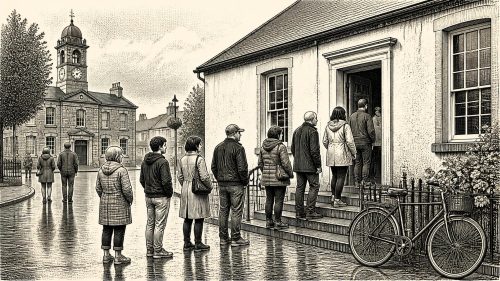
Ireland’s 2024 combined constitutional rebuff, electoral change and social pressures. In March, voters rejected Family and Care amendments, citing unclear wording and limited practical value. Simon Harris succeeded Leo Varadkar as Taoiseach, while local, European and November general elections produced fragmented representation; government formation remained unresolved. Population growth and migration intensified housing, service and international-protection accommodation shortages despite construction and economic resilience. Cuan expanded domestic-violence provision. Ireland recognised Palestine, challenged UK legacy legislation, and Northern Ireland’s Executive returned. Cultural achievements included Cillian Murphy’s Oscar. Education initiatives and a stormy year highlighted environmental concerns, reinforcing tensions between activity and inadequate capacity.

Éowyn and Martin’s Return
Ireland’s 2025 combined economic strength with social and infrastructural pressures. Micheál Martin returned as Taoiseach, leading a Fianna Fáil–Fine Gael coalition supported by independents, which prioritised housing, services, security and competitiveness. Ireland pursued prominent legal and diplomatic action concerning Gaza, while Shared Island and research funding encouraged practical north–south cooperation. Population growth, employment and tax revenues intensified demand for homes, schools and healthcare. Housing completions rose, alongside a new long-term building plan and planning reforms. Cultural and language initiatives continued. Storm Éowyn caused severe disruption, and an exceptionally warm year highlighted climate risks. Dependence on multinational corporation tax remained vulnerability.